Finnish Physicists Finally Build a Quantum Crystal Theorists Predicted Over a Decade Ago
By growing a film just two atomic layers of tin telluride thick, researchers realized a long-sought 2D topological crystalline insulator — a milestone on the road to room-temperature quantum devices.

Physicists in Finland have built a quantum material that theorists first predicted more than a decade ago, turning a long-standing prediction on paper into an object they can actually grow and measure in the lab.
The material is a two-dimensional topological crystalline insulator — a class of substance whose interior behaves as an electrical insulator while its edges carry current in special, protected channels dictated by the crystal's symmetry. Such states are prized because they can shuttle electrons without the losses that plague ordinary conductors, a property physicists hope to harness for robust, low-power quantum electronics. Predicted years ago, the 2D version had resisted every attempt to make it, stymied by the difficulty of producing exactly the right material in exactly the right form.
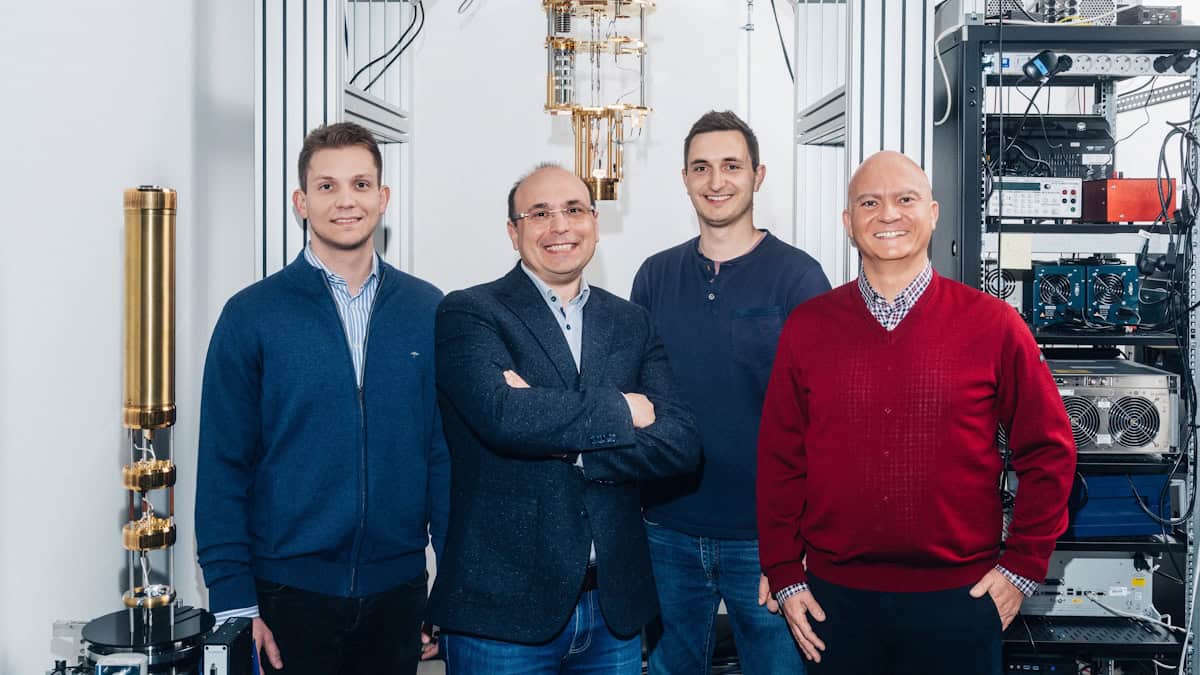
The breakthrough came from researchers at the University of Jyväskylä and Aalto University, who fabricated the crystal by growing an atomically thin film consisting of just two layers of tin telluride (SnTe). The work was led by Associate Professor Kezilebieke Shawulienu in collaboration with Aalto's Professor Peter Liljeroth and Professor Jose Lado, combining precise film-growth techniques with the theoretical framework needed to confirm the exotic electronic state.
Getting to that point required overcoming the fabrication hurdles that had kept the material theoretical for so long. Coaxing tin telluride into a stable, two-layer sheet — thin enough to express two-dimensional physics but ordered enough to host the protected edge states — is a delicate feat of materials engineering, and earlier efforts had stumbled on developing the right recipe.
The payoff is more than a checked box on a physicist's wish list. Topological materials are a leading candidate platform for quantum technologies precisely because their edge conduction is shielded by symmetry, making it resistant to the noise and imperfections that scramble fragile quantum states. Demonstrating a working 2D topological crystalline insulator gives experimentalists a concrete system to probe, tune and eventually integrate into devices.
Researchers framed the achievement as a step toward practical room-temperature quantum devices — the long-sought goal of components that exploit quantum effects without the elaborate cooling most quantum hardware demands today. That remains a distant target, and this result is a fundamental advance rather than a finished gadget. But realizing a material that physicists had only been able to describe in equations is exactly the kind of foundation the field needs, converting a decade-old prediction into a platform that others can now build on.