Picosecond Current Pulses Push Superconductors to the Point Electron Pairs Break
Max Planck researchers in Hamburg used trillionth-of-a-second electrical pulses to drive current past the usual limit, reaching the intrinsic threshold where the pairs of electrons that carry the current are torn apart.
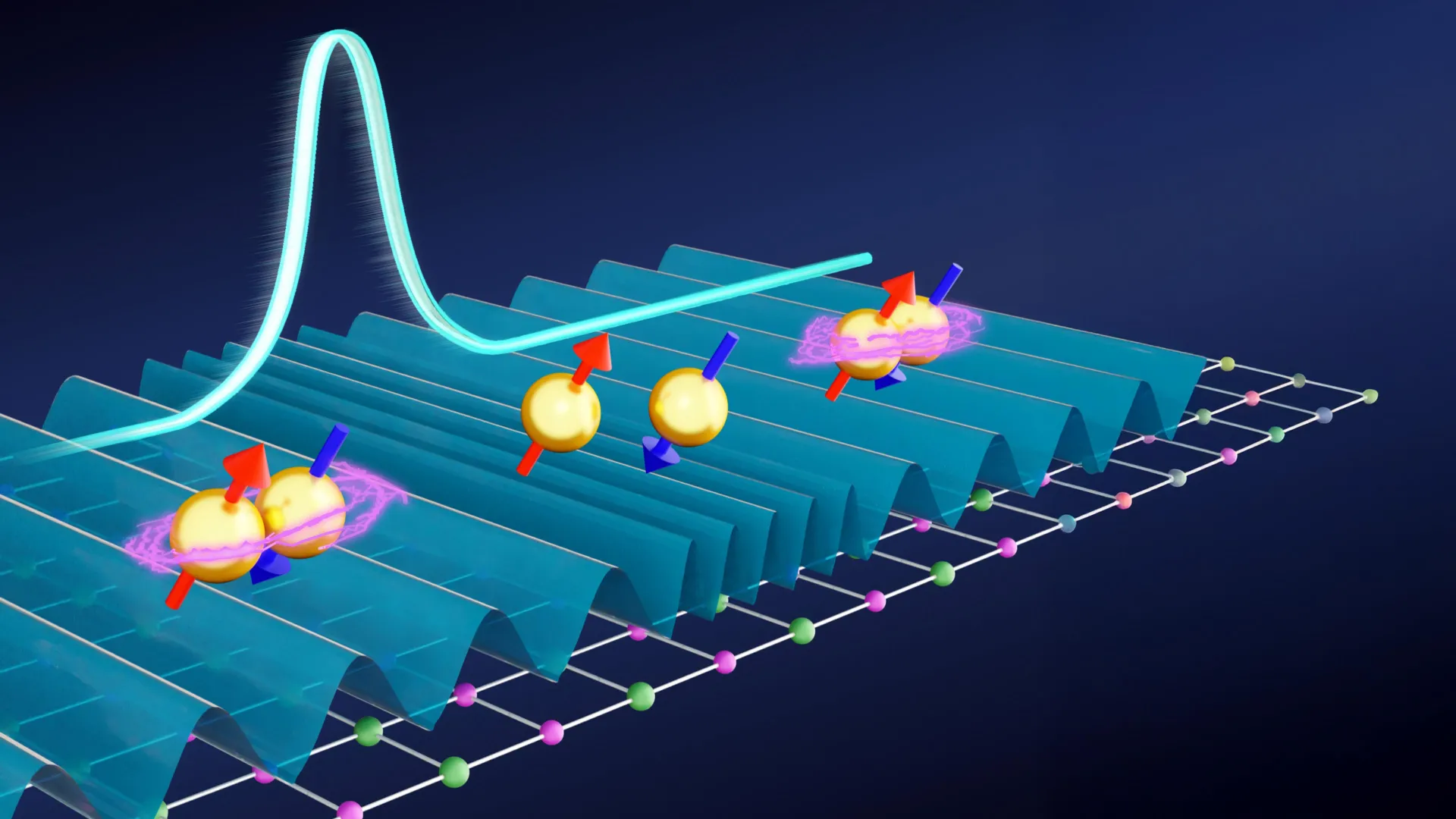
Physicists at the Max Planck Institute for the Structure and Dynamics of Matter in Hamburg have pushed superconductors past the current limit that normally stops them, using electrical pulses lasting only a few trillionths of a second. The work, published in Nature Physics, lets researchers reach the point where the paired electrons that carry a superconducting current finally break apart.
A superconductor carries electricity with no resistance because its electrons bind into so-called Cooper pairs. Every superconductor has a theoretical ceiling called the depairing current, the point at which the current is strong enough to rip those pairs apart. In practice, ordinary measurements never get there. In the type of material studied here, called a type-II superconductor, magnetic vortices form and begin to move as the current rises, generating heat and killing the superconducting state long before the true limit.
"Our strategy was to outrun the vortex dynamics," said Eryin Wang, a scientist at the institute. Vortices move at tens of kilometers per second, which means that in one picosecond they travel only tens of nanometers. A pulse short enough passes through before the vortices have time to move, so the current can climb to enormous densities without the sample overheating.
To make such pulses, the team used a photoconductive switch triggered by 300-femtosecond green laser flashes with a wavelength of 515 nanometers. Each flash produced a picosecond electrical pulse that was guided through superconducting samples only micrometers across. The team included Guido Meier, who leads a research group at the institute, and Andrea Cavalleri, the institute's director.
The researchers tested two very different materials. In niobium nitride, a conventional superconductor, the superconducting state stayed robust up to a sharply defined threshold far above the usual direct-current critical current. Past it, the response changed abruptly, a sign that Cooper pairs were breaking. In YBCO, a copper-oxide high-temperature superconductor, the superconducting state weakened gradually as the current rose instead.
The team ties that contrast to the materials' internal structure: niobium nitride has a uniform energy gap, while YBCO's gap depends on direction.
The technique gives physicists a new way to measure properties of superconductors that are normally hidden by slower processes. The authors say it could inform the design of quantum circuits, magnetic devices and optoelectronics, where knowing how much current a superconductor can truly carry matters. It also offers a direct test for theories of how pairing works in the high-temperature materials that remain one of physics' open problems.