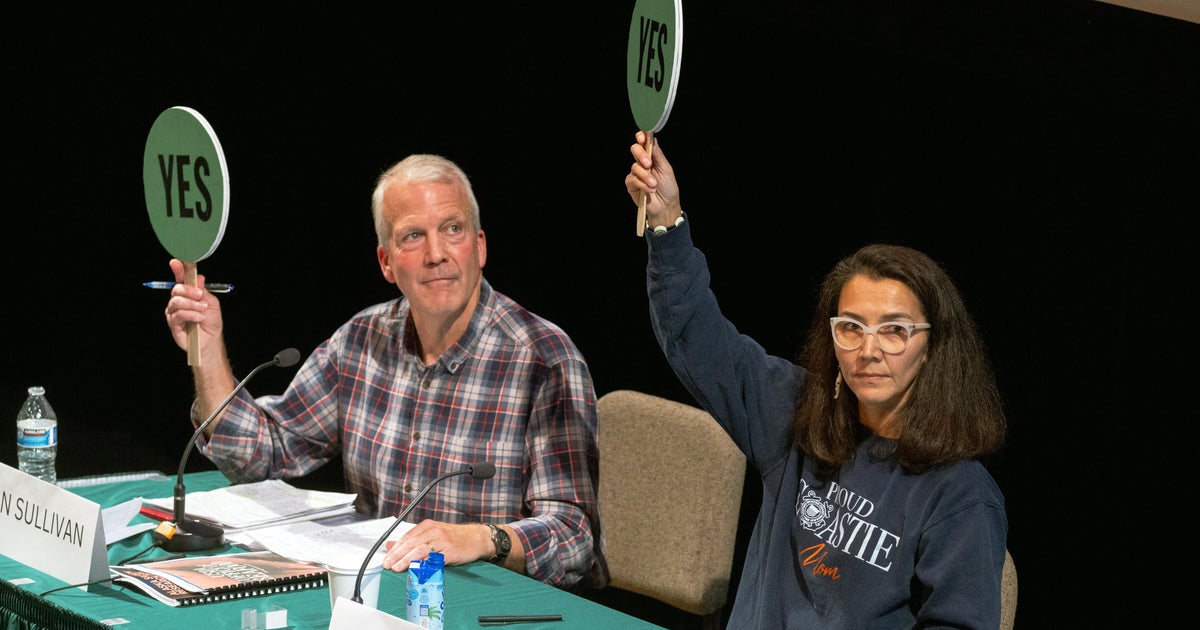
Peltola Sits 157 Votes From an Outright Win in Alaska as Sullivan's Path Narrows
With about 97 percent of ballots counted, the Democrat leads the Republican incumbent by more than 11,000 first-choice votes, and the last ballots arrive Nov. 18.

Democrat Mary Peltola ended the weekend within a few hundred votes of winning Alaska's Senate race outright, leaving Republican Sen. Dan Sullivan with a shrinking path to a third term in one of the last congressional contests in the country still undecided.
Alaska Public Media reported Saturday that Peltola, a former U.S. representative, held 49.9 percent of first-choice votes to Sullivan's 46 percent. The Associated Press estimated that about 97 percent of the vote had been counted and had not yet called the race. A Newsweek analysis put Peltola just 157 votes short of the 50 percent-plus-one majority that would end the contest without a ranked-choice runoff, and showed Sullivan trailing by 11,213 first-choice votes with too few ballots outstanding to close that gap. The Alaska Division of Elections added another 4,290 ballots to the tally on Saturday alone.
The race has been tight since Election Day on Nov. 3. Early on, preliminary calculations by the Alaska Beacon showed that Sullivan could overtake Peltola once ranked-choice redistribution was applied. That changed on Monday, Nov. 9, when the Division of Elections released an update that left Peltola ahead by 2,517 votes out of 219,342 cast, a margin large enough to outweigh Sullivan's advantage from redistributed ballots. A much bigger batch of absentee and early ballots followed on Tuesday. By then the total count exceeded 245,000, and Peltola led by 4,250 first-choice votes, with 118,926 votes, or 49 percent, according to the Anchorage Daily News.
Under Alaska's system, a candidate who wins more than half of first-choice votes is declared the winner. If nobody does, the candidate with the fewest first-choice votes is eliminated and those voters' ballots go to their next-ranked choice. The process repeats until two candidates remain. Two minor candidates are on the ballot: Gerald Heikes, a Republican perennial candidate from Palmer, who had 5,318 first-choice votes, or 2.2 percent, and Dan J. Sullivan, a retired teacher from Petersburg and namesake of the senator, who had 4,027 votes, or 1.7 percent. Their ballots would be redistributed first if no one crosses 50 percent.
The retired teacher's name has been a flashpoint for weeks. President Trump ordered the Justice Department to sue to block certification of the Senate race on the theory that two candidates named Sullivan confused voters, and the Alaska governor ordered a criminal probe of the Peltola campaign over the second Dan Sullivan's presence on the ballot. A federal judge threw out the effort to block certification on Nov. 2. Peltola's side has dismissed the investigations as baseless. Sullivan's campaign circulated a memo before the later batches arrived arguing that he would narrowly win a ranked-choice count of the ballots then in hand, 105,037 to 104,709, and alleged cheating. That projection predates Peltola's gains.
Counting is not finished. Overseas ballots can still arrive through Nov. 18, which is also the date the final ballots are scheduled to be counted, and the results are expected to be certified on Nov. 25. If Peltola crosses 50 percent once the last ballots are tallied, no runoff will be needed. If she stays just below it, the ranked-choice count will settle the winner, and the arithmetic now favors her because her first-choice lead is far larger than the pool of minor-candidate ballots that could be redistributed.
The outcome carries weight beyond Alaska. Democrats have already won control of the Senate and the House after a Republican collapse in the Nov. 3 midterms, driven by voter anger over Trump's policies, including the costly war with Iran, according to the Anchorage Daily News. A Peltola win would add another seat to the Democratic majority in a state Trump carried in 2024, and would end Sullivan's career in the chamber he has served in since 2015.