Felix Gallardo, Mexico's 'Boss of Bosses' Behind the Murder of a U.S. Agent, Dies at 80
The Guadalajara cartel founder who was jailed for the 1985 killing of DEA agent Kiki Camarena died of multiple organ failure in a Jalisco hospital after being moved from prison.
Miguel Angel Felix Gallardo, the architect of modern Mexican drug trafficking known as "the boss of bosses," who transformed the global cocaine trade and orchestrated the murder of a U.S. agent, died Sunday at age 80, officials said.
The former police officer died in a hospital where he had been transferred from prison two days earlier. "After remaining under observation with a guarded prognosis, he died on November 15 at the medical facility" after "he suffered multiple organ failure," according to a statement from the security ministry of Jalisco state, where he was being held. His health had deteriorated markedly in recent years, with conditions including high blood pressure, diabetes and deafness. In 2022, then-President Andres Manuel Lopez Obrador said he was in very poor health. A judge granted him house arrest, but technical problems with electronic ankle monitoring prevented his transfer.
Felix Gallardo was born Jan. 8, 1946, in Sinaloa state. His criminal career went almost hand in hand with his career in state and federal police, and he even served as a bodyguard to a Sinaloa governor, a role experts say may have helped him secure protection from powerful politicians. He partnered with veteran kingpin Rafael Caro Quintero, and together with other crime bosses they united gangs trafficking drugs to the United States and formed the Guadalajara cartel. According to InSight Crime, a website that specializes in the drug trade, the cartel was built on a "hegemonic model" and laid "the roots for nearly all of today's drug trafficking activities." Felix Gallardo partnered with Colombian traffickers such as Pablo Escobar and became Escobar's most important Mexican associate. His nicknames, "El jefe de jefes" and "El Padrino," translate to "the boss of bosses" and "the Godfather."
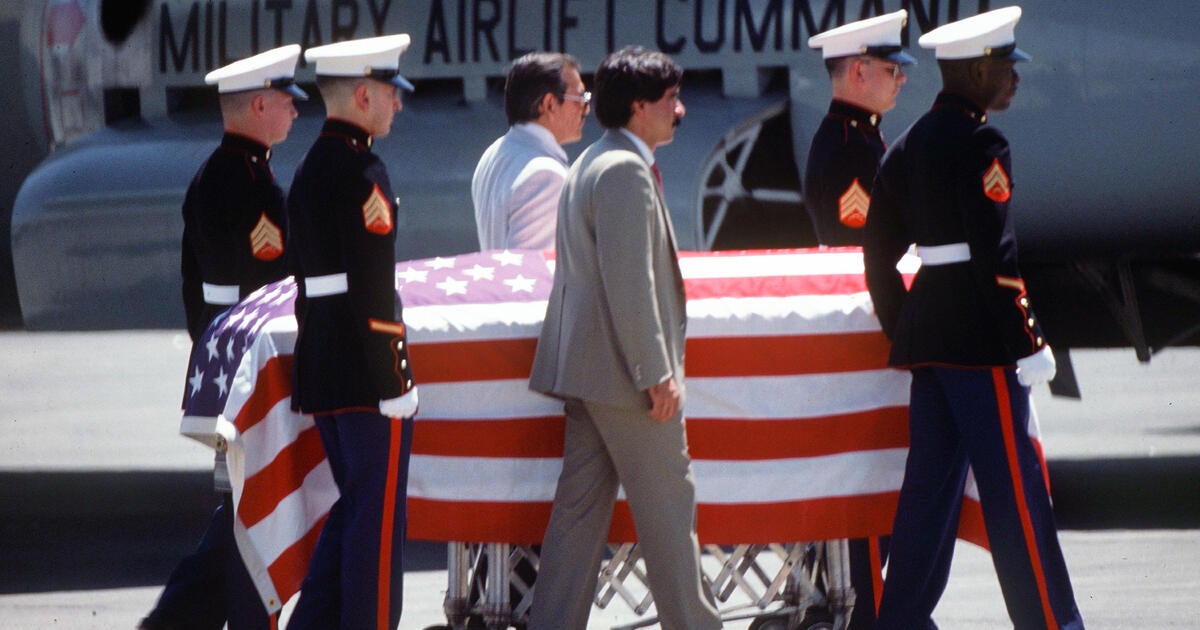
His downfall began with a crime that still stings in Washington. In February 1985, undercover Drug Enforcement Administration officer Enrique "Kiki" Camarena Salazar was kidnapped and tortured to death in Guadalajara, where he had spent four years on the trail of the country's biggest marijuana and cocaine traffickers. Camarena was a father of three sons. His son Enrique, who became a judge in San Diego in 2014, told CBS News in a 2017 interview that he carries his father's lessons into the courtroom. "He taught us to treat everyone fairly," he said. A memorial to Camarena was created in Los Angeles in 2014.
Intense pressure from Washington led to the 1985 arrest of Caro Quintero. Felix Gallardo was arrested in April 1989 and was serving a 40-year sentence for the Camarena murder at Puente Grande prison in Jalisco. Experts say he continued to control parts of the business from behind bars. Last year, Caro Quintero was transferred to the United States along with 28 other prisoners requested by the U.S. government, and he now faces charges of drug trafficking and the agent's murder.
The Guadalajara cartel imploded in the 1990s, and its local leaders formed regional organizations, including the Sinaloa cartel, which was built up by Joaquin "El Chapo" Guzman and Ismael "El Mayo" Zambada. Both men were sentenced to life in prison in the United States. Felix Gallardo stayed alive in the popular imagination through narcocorridos, or drug ballads, such as "El jefe de jefes," which is banned in public spaces, and through Netflix dramas about the drug trade in which Mexican actor Diego Luna portrayed the kingpin. His death closes the book on the generation of traffickers who first turned Mexico into the main supply route for cocaine bound for the United States, though the networks that grew out of his cartel remain a central security problem for both countries.