Rice University Scientists Discover New Quantum State of Matter That Is Both Topologically Protected and Quantum Critical
A study in Nature Physics reveals that strong electron interactions can produce topological behavior — bridging two previously separate fields of quantum physics in a finding with implications for quantum computing and sensing.

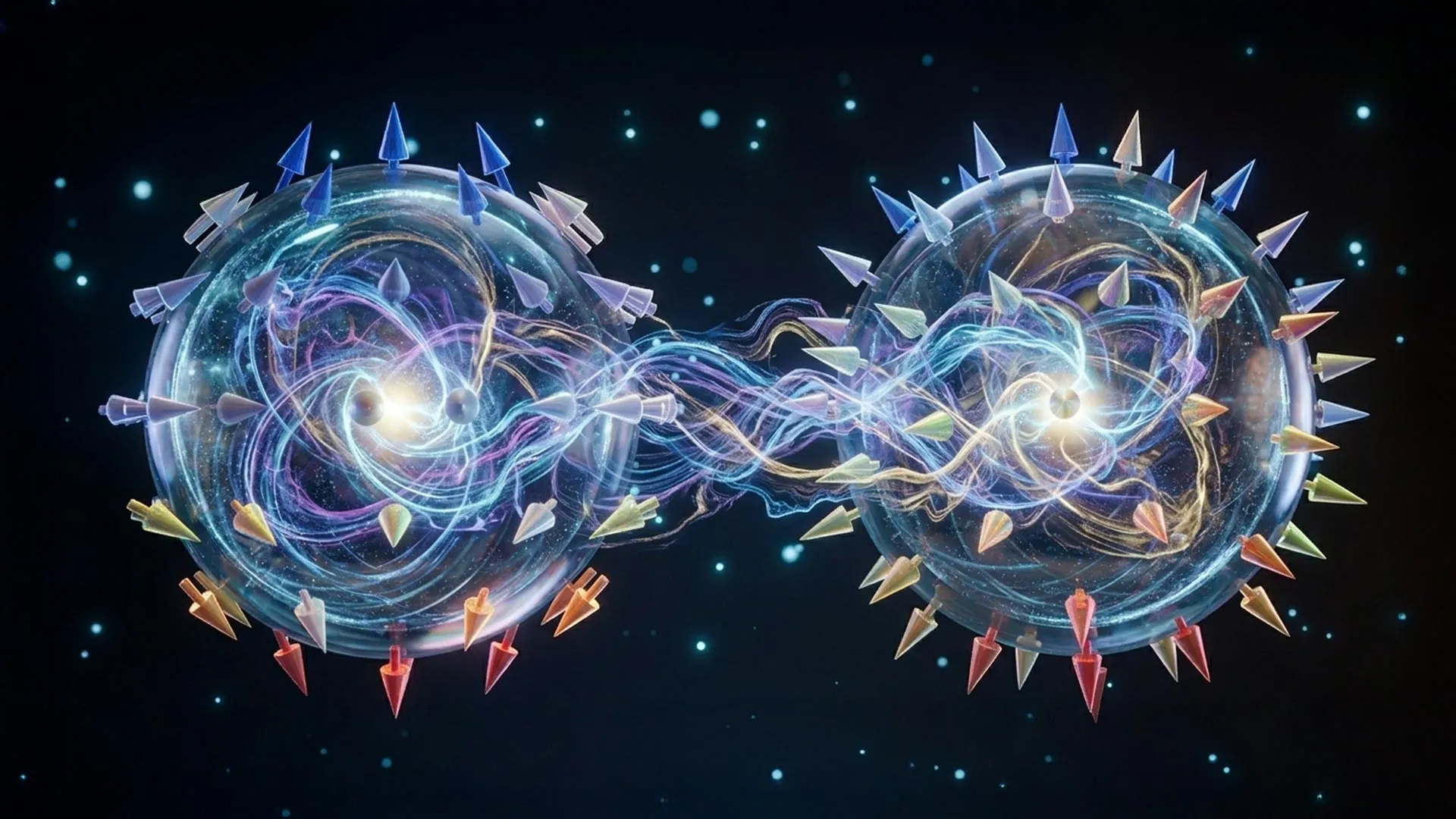
Scientists at Rice University have discovered a new state of matter that fuses two previously separate domains of quantum physics — quantum criticality and electronic topology — in a finding that could transform quantum computing, sensing, and low-power electronics. The discovery, published in Nature Physics and co-led by Rice Professor Qimiao Si, provides a theoretical framework predicting the existence of what the researchers call a "topological quantum critical" state, in which electrons simultaneously fluctuate wildly between different quantum phases and organize themselves into topological configurations that are inherently resistant to disturbance. Experimental researchers at the Vienna University of Technology, led by Silke Paschen, immediately confirmed the theory's predictions in a real material, making this one of the more striking theory-experiment convergences in quantum materials science in recent years.
Quantum criticality — the phenomenon in which electrons at the boundary between two distinct phases of matter fluctuate continuously between those phases — has been studied for decades and is associated with some of the most exotic behaviors in condensed matter physics, including unconventional superconductivity and strange metal behavior. Topology in quantum materials describes a different and seemingly unrelated property: a form of global quantum order based on the wave structure of electrons rather than their local interactions, making certain materials spectacularly stable against external disruptions like heat, magnetic fields, and electrical noise. Until now, these phenomena were considered mutually exclusive. Topology was observed in materials with weak electron interactions; quantum criticality appeared in strongly interacting systems. Si's group found a way to reconcile them.
The key to the discovery lies in so-called "heavy fermion" materials — compounds in which electrons behave as though they carry hundreds of times the mass of a free electron because of their strong interactions with surrounding atomic lattices. Working through detailed theoretical analysis, Si's team showed that strong electron-electron correlations of the kind found in heavy fermion systems can, under the right conditions, give rise to topological order rather than suppressing it. The resulting topological quantum critical state is a genuinely new phase of matter, distinct from both conventional topological insulators and from previously known quantum critical systems.
Paschen's experimental group in Vienna confirmed the theory's predictions by studying a specific heavy fermion compound using electrical transport measurements. They observed anomalous Hall effect signatures — a fingerprint of topological behavior in which an electrical current deflects in a specific direction in the presence of a magnetic field — in a material that was clearly also at a quantum critical point. The match between theoretical predictions and experimental data was described by the authors as "striking," and was reproduced across multiple samples to rule out material-specific artifacts. The identification of a real compound hosting the topological quantum critical state opens the door to engineering new devices based on its properties.
The practical implications are potentially far-reaching. Topological materials are inherently robust against decoherence, meaning that quantum states stored in topologically protected structures resist the random disturbances that plague conventional quantum bits. Quantum criticality, meanwhile, enhances entanglement between particles, making materials at the critical point exquisitely sensitive to external stimuli — ideal for quantum sensors capable of detecting single photons, minute magnetic fields, or individual molecules. A material that combines topological robustness with quantum critical sensitivity would, in principle, support both reliable quantum computers and sensors of extraordinary precision. Researchers envision applications ranging from quantum computing architectures that tolerate imperfect fabrication to ultra-low-power transistors that exploit topological protection against thermal noise. The discovery, coming from a combination of deep theoretical insight and careful experimental confirmation, represents one of the more consequential advances in the physics of quantum materials in the past decade.