Speed of Sound Sets How Well Glass Conducts Heat, Tohoku Team Finds
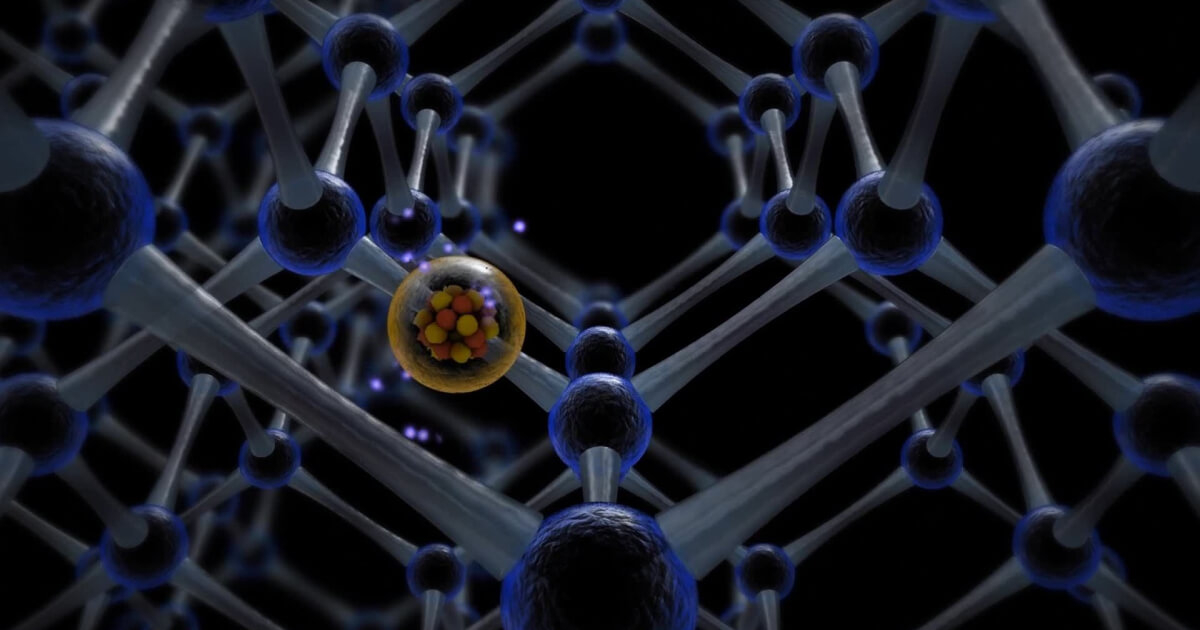
Measurements across 13 silicate glasses show thermal conductivity tracks the speed of sound through the material, giving designers a shortcut for heat-managing glass in electronics.
Topic
16 stories from Planck Standard. Latest: October 25, 2026.

Measurements across 13 silicate glasses show thermal conductivity tracks the speed of sound through the material, giving designers a shortcut for heat-managing glass in electronics.

The eight-pole magnetic order is invisible to standard probes, but it leaves a signature in how a crystal's atoms vibrate, which could lead to new kinds of computer memory.

Quantum jumps were seen in trapped ions in 1986 and in photons in 2007. Sound took another 19 years. The team paired a chip-scale resonator with a superconducting qubit that checked hundreds of times whether one phonon was still there.

Marko Lončar's lab 'dressed' a silicon-vacancy spin with phonons instead of microwave pulses. The technique works inside the phononic cavities that would link nodes of a chip-scale quantum network, letting sound do both jobs at once.

Jianjun Dong and Yi Zeng replaced Fourier's 200-year-old law with a spatiotemporal kernel. In silicon at room temperature, where the heat came from mattered more than when.

Researchers at Oak Ridge, Ohio State and Amphenol found that switching on an electric field in a relaxor ferroelectric ceramic can steer and triple its heat conduction, a tunable effect that could reshape how chips and devices stay cool.

A McGill University team coaxed electrons to sprint through a crystal just a few atoms thick, releasing tunable packets of quantum vibration that could power a new class of 'sound lasers.'

McGill physicists forced electrons through an atom-thin crystal near absolute zero and got precise bursts of quantum 'sound' — in a regime existing theory says should stay silent.

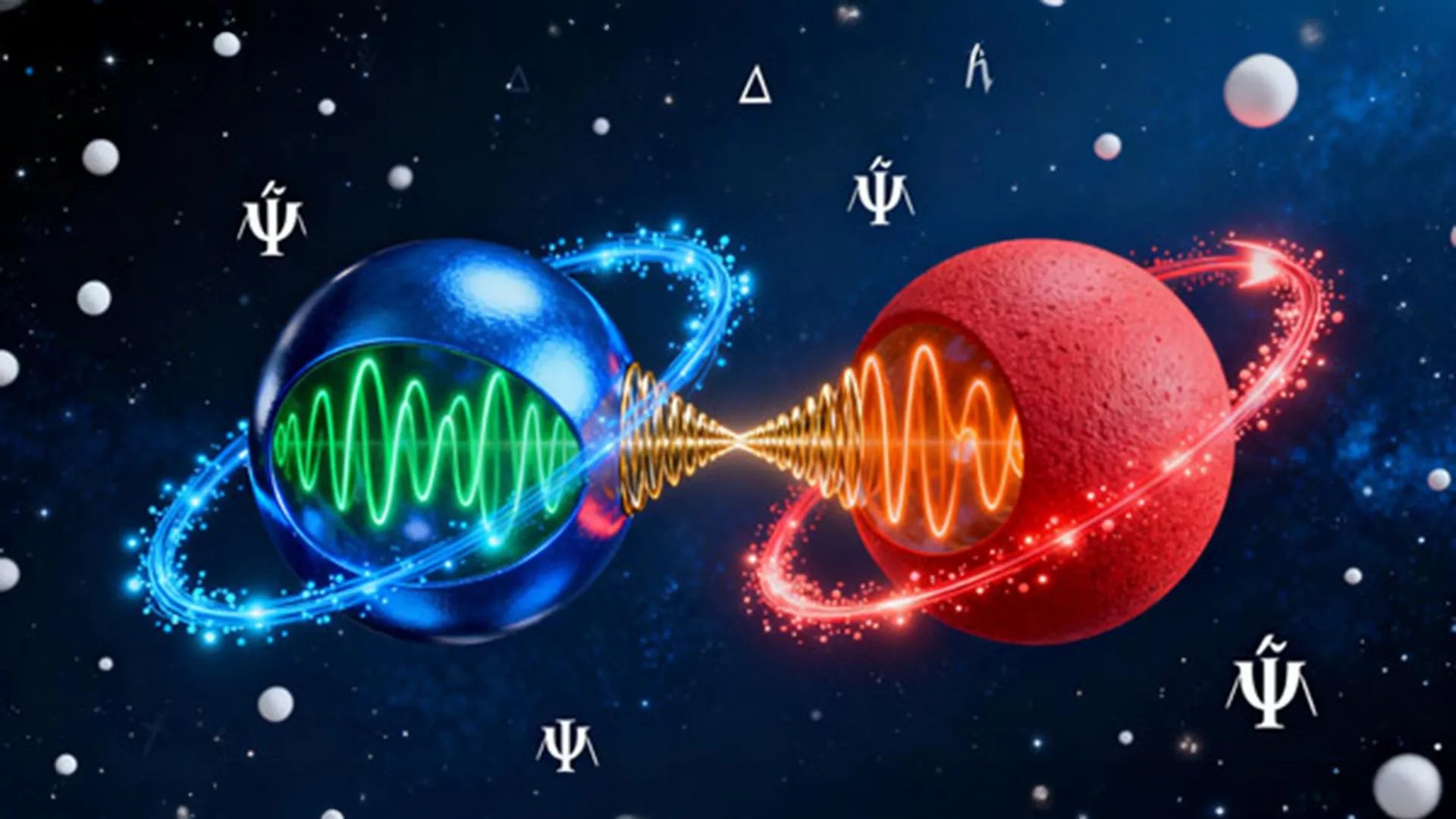
RIKEN scientists develop technique for quantum systems to synchronize in only one direction while remaining stable against manufacturing flaws and environmental noise.

RIKEN researchers develop technique combining quantum effects to create robust nonreciprocal synchronization for practical quantum technologies.

RIKEN researchers developed a breakthrough method that maintains quantum synchronization despite manufacturing flaws and environmental noise, potentially advancing practical quantum technologies.

RIKEN researchers develop breakthrough technique combining two quantum effects to create stable nonreciprocal synchronization of sound particles, advancing practical quantum technologies.
Using terahertz laser pulses on bismuth selenide, German researchers watched angular momentum flip direction as it passed between a crystal's own vibrations — a first that could help control quantum bits.
Using terahertz laser pulses, a German-led team caught angular momentum reversing direction as it moved through a crystal — a quantum effect they say could sharpen control of next-generation memory and quantum materials.

Researchers at Dresden's HZDR and Berlin's Fritz Haber Institute fired terahertz laser pulses at bismuth selenide and directly observed angular momentum being passed between atomic vibrations — with the direction of rotation flipping mid-transfer, a long-predicted 'Umklapp process.'
Breakthrough discovery shows chiral phonons can transfer motion to electrons, opening door to revolutionary orbitronics computing that doesn't require batteries or electricity.