Auburn Physicists Wrote One Equation for Heat That Covers Diffusion, Waves and Everything Between
Jianjun Dong and Yi Zeng replaced Fourier's 200-year-old law with a spatiotemporal kernel. In silicon at room temperature, where the heat came from mattered more than when.

Joseph Fourier's law of heat conduction, written in 1822, says heat flows down a temperature gradient at a rate set by a single number: the material's thermal conductivity. It works beautifully for a copper pot. It fails badly inside a transistor, and physicists have spent decades patching it with a collection of separate theories that each cover one failure mode.
Two Auburn University physicists have now folded those patches into one framework. Jianjun "JJ" Dong, the Thomas and Jean Walter Professor in Auburn's physics department, and Yi Zeng, an Auburn Ph.D. graduate now at the Department of Energy's National Laboratory of the Rockies, published "Unified Statistical Theory of Heat Conduction in Nonuniform Media" in Physical Review B on September 3.
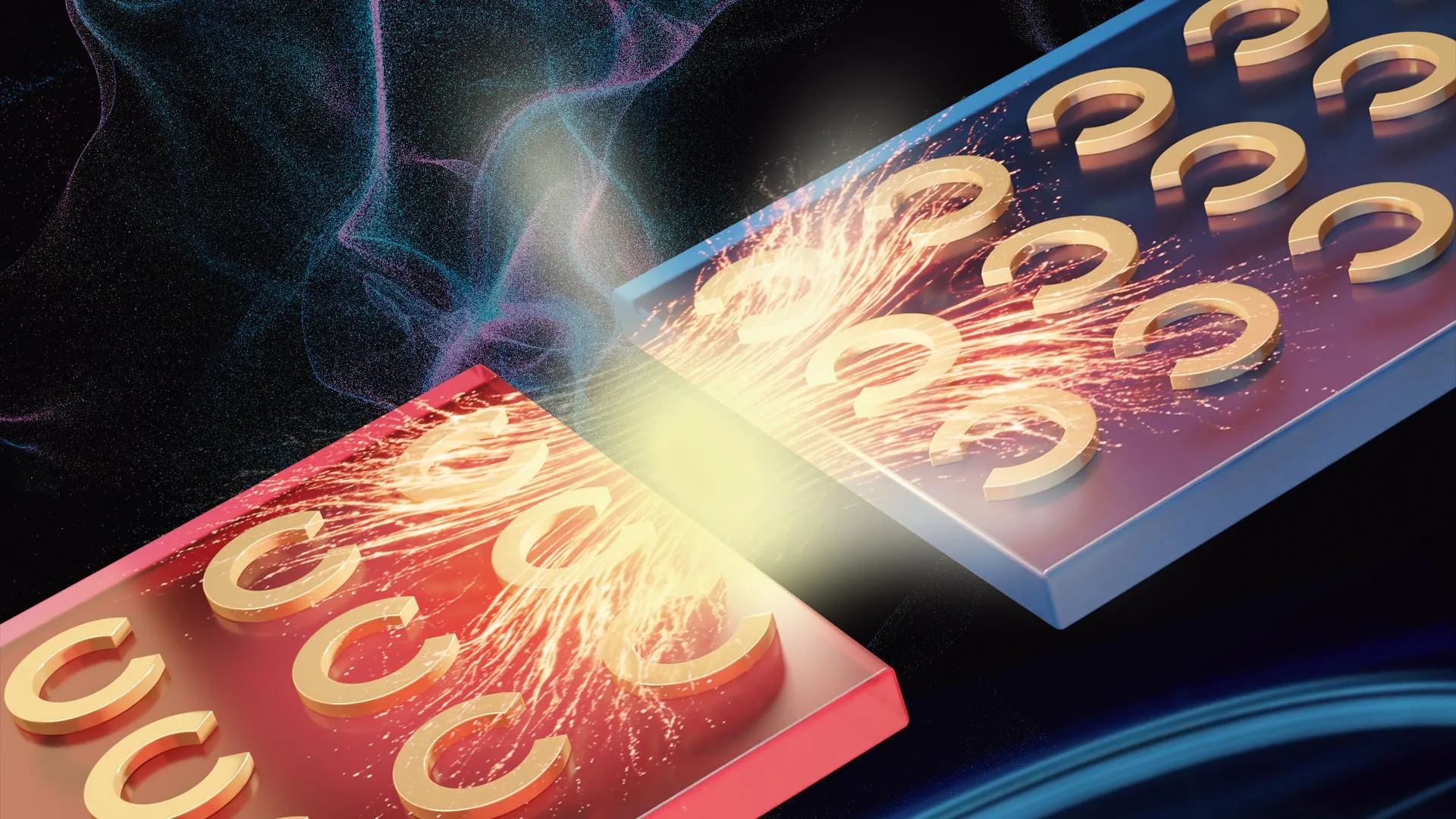
The move at the center of the paper is to replace the single conductivity number with what the authors call a spatiotemporal kernel — a thermal response map that describes how a temperature gradient at some earlier moment and some distance away contributes to the heat flowing through a point right now. That one object absorbs four behaviors that had been treated separately: ordinary diffusion, quasi-ballistic transport, nonlocal transport, and wave-like heat propagation.
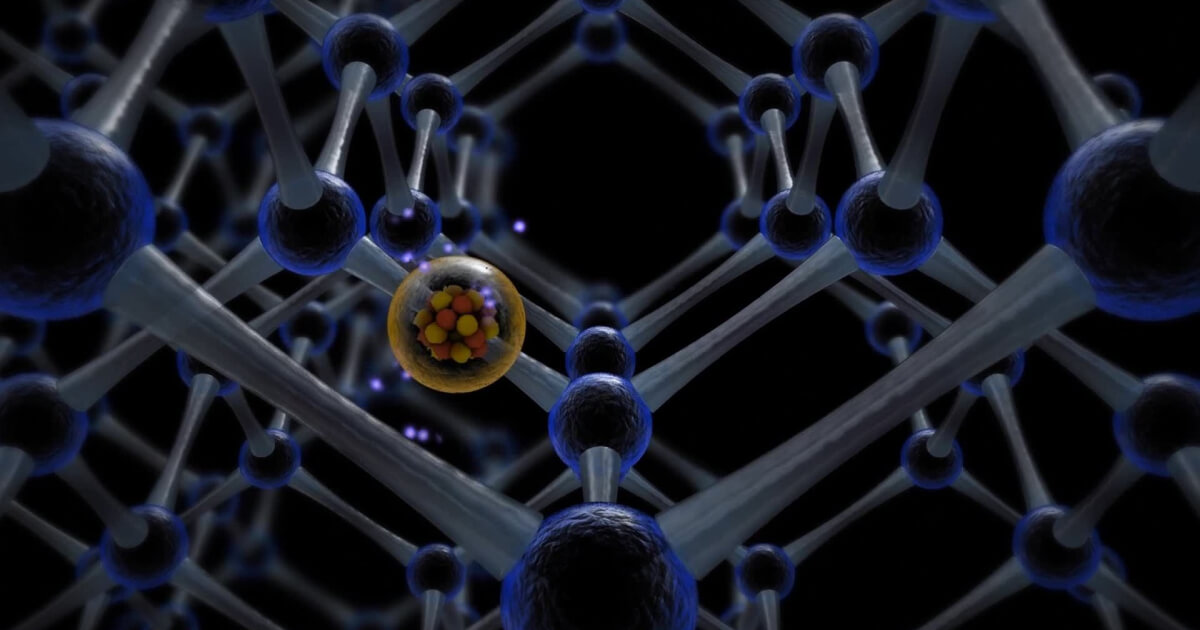
"Heat does not remember in the way that we remember," Dong said. "Its memory is stored in the microscopic motion of the material." The physical carrier of that memory is the phonon — a quantized vibration of the crystal lattice. Phonons in a solid have a wide spread of mean free paths, the average distance one travels before scattering. When a device is smaller than the longest of those paths, some phonons cross it without scattering at all, and Fourier's picture of a local, instantaneous response stops describing anything real.
Applying the framework to crystalline silicon at room temperature produced a result the authors did not assume going in: spatial nonlocality dominates. At nanometer scales, where the heat came from matters more than when it arrived. Temporal memory shows up mainly in the earliest stage of a thermal response and fades quickly afterward.
The theory also punctures a common inference. Wave-like oscillations in a temperature field have often been read as evidence of hydrodynamic phonon transport, an exotic regime in which heat sloshes like a fluid. Dong and Zeng show that spatial dephasing alone — phonons with different mean free paths falling out of step — can produce the same oscillations with no hydrodynamics involved.
The practical target is chip design. Transistor features are now measured in a few nanometers, and thermal management has become one of the binding constraints on clock speed and packaging density. Engineers modeling those devices still mostly feed a single conductivity value into a simulator, and that value is a fiction at those dimensions. A framework that says which correction dominates, and when, is the difference between guessing at a hot spot and calculating it.