An AI Named PACMAN Took the Controls of a Fusion Reactor and Saw a Plasma Tear Coming 200 Milliseconds Early
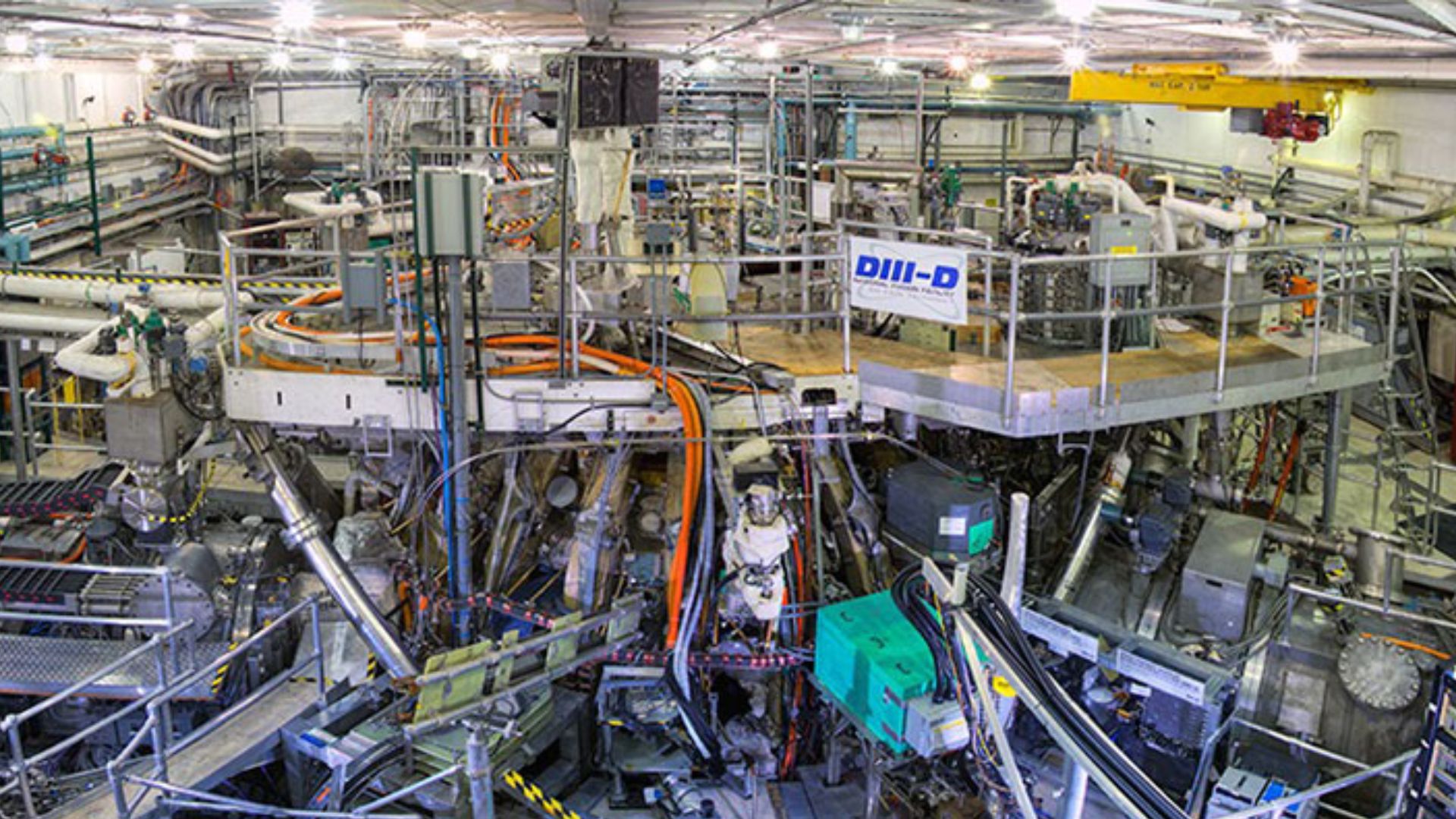
Princeton physicists ran the framework in five experiments on the DIII-D tokamak in San Diego. Its full read-decide-act loop takes about 20 milliseconds — far faster than any human at the console.

The plasma inside a tokamak can come apart faster than a person can notice it is going wrong. A tearing mode — a magnetic island that opens up inside the swirling ring of ionized gas — can grow from harmless to reactor-terminating in a few thousandths of a second. Physicists at Princeton have now handed that reaction time to software, and in one experiment the software saw a tearing mode coming roughly 200 milliseconds before it formed and reshaped the plasma to keep it from happening.
The system is called PACMAN, for Prediction And Control using MAchiNe learning, and it comes out of the Princeton Plasma Physics Laboratory and Princeton University. Its purpose is less glamorous than the headline result: it is a framework that lets different machine-learning models plug directly into a fusion machine's real-time control system, read the plasma diagnostics and issue commands back to the hardware. The full loop takes about 20 milliseconds and repeats continuously for the length of a shot.
The team tested it in five experiments on the DIII-D National Fusion Facility in San Diego, the largest tokamak operating in the United States. Across those runs PACMAN coordinated all six of the machine's gyrotrons at once, managed heating through reinforcement learning, detected and controlled bursts of energy at the plasma edge, and drove density and rotation to targets the physicists specified. The framework's design and first results appear in Nuclear Fusion.
What the group is selling is not the individual controllers but the plumbing. Building PACMAN and getting the first model running inside it took months. Installing the second model took a couple of days. In a field where every control scheme has historically been hand-built against one machine's particular hardware, that difference is the actual advance.
The researchers are also explicit that the AI is not in charge. PACMAN enforces hard safety limits regardless of what a model recommends, so a controller that asks for something the machine cannot survive simply does not get it. Physicists review each shot and retune the controllers before the next one. Co-lead authors Hiro Farre Kaga, of Princeton's Program in Plasma Physics, and Andy Rothstein, of the mechanical and aerospace engineering department, worked under principal investigator Egemen Kolemen. The work was funded by the Department of Energy's Office of Science and an NSF Graduate Research Fellowship.
That framing matters for what comes next. ITER, the international reactor under construction in southern France, and the private machines chasing it will run plasmas hotter and denser than anything DIII-D can make, in regimes where disruptions carry enough stored energy to damage the vessel. Nobody plans to let those machines fail and try again. Control software that can predict trouble and steer around it — with a hard-coded floor under what it is allowed to do — is a prerequisite, not a convenience.