Radio Waves Drive Current Inside a Fusion Plasma, a First That Could Keep Reactors Running
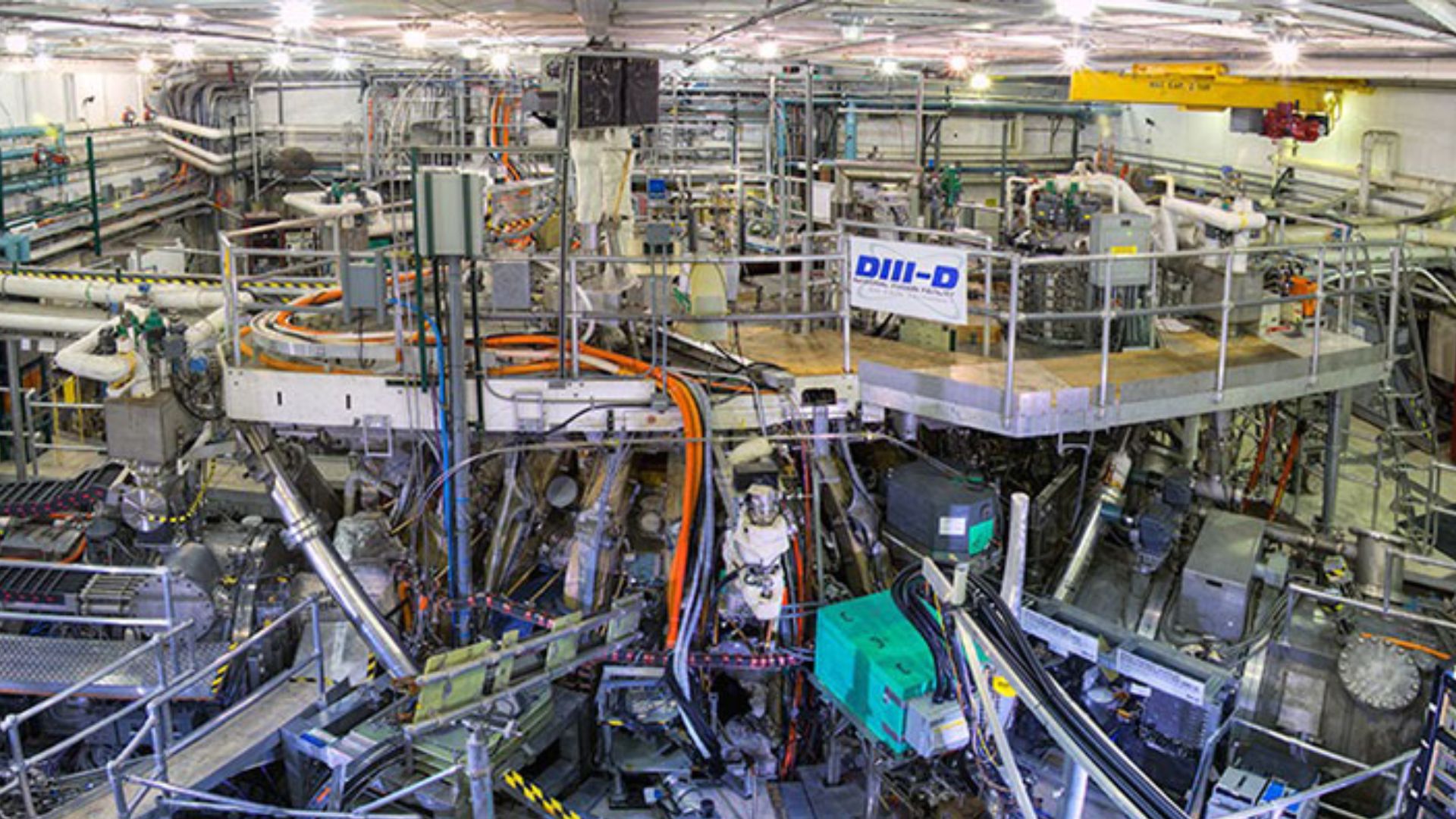
General Atomics physicists showed 'helicon' waves can be absorbed deep in the DIII-D tokamak's plasma and push electrons, a goal pursued since the 1980s.
Topic
14 stories from Planck Standard. Latest: October 27, 2026.

General Atomics physicists showed 'helicon' waves can be absorbed deep in the DIII-D tokamak's plasma and push electrons, a goal pursued since the 1980s.

Princeton physicists ran the framework in five experiments on the DIII-D tokamak in San Diego. Its full read-decide-act loop takes about 20 milliseconds — far faster than any human at the console.

Researchers at PPPL discovered that plasma rotation — not just cross-field particle drifts — explains why tokamak exhaust hits one side far harder than the other, a finding critical for designing divertors that can survive in working power plants.

Researchers found that plasma core rotation—not just cross-field drift—causes uneven heat loading in tokamak divertors, enabling better designs for future fusion plants.
Researchers found that the spinning motion of plasma inside a tokamak — not just cross-field particle drift — drives the stubborn exhaust asymmetry that has defied simulation for decades, clearing a key path for commercial fusion.
Plasma spinning at 88.4 kilometers per second was the overlooked factor that explains why tokamak divertors wear unevenly — a fix that could affect the design of every future fusion reactor.
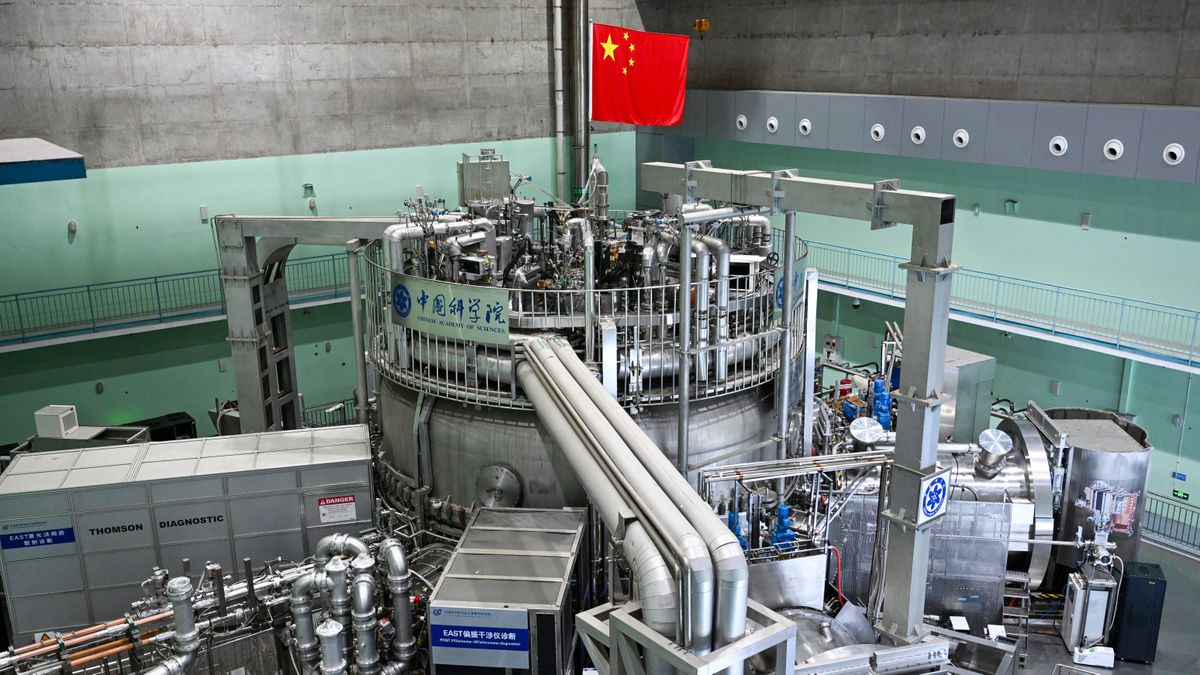
The EAST tokamak achieved stable plasma at densities beyond the long-standing Greenwald limit, validating a new theory of plasma-wall self-organization and opening new routes to fusion ignition.
Breakthrough discovery explains why escaping plasma particles hit one side of fusion exhaust systems harder than the other, crucial for reactor design.

PPPL researchers found that the rotating core of tokamak plasma drives particle flows that previous models ignored, finally explaining why fusion exhaust slams one side of the reactor far harder than the other.

Breakthrough discovery reveals how plasma rotation creates uneven particle distribution in tokamaks, finally matching experimental data with computer models.
Discovery explains why particles hit fusion reactor walls unevenly, advancing practical reactor design by combining rotation with drift effects.

The EAST tokamak achieved stable plasma at 1.65 times the Greenwald density limit — a barrier physicists had long considered nearly unbreakable — in a result published in Science Advances.
Researchers finally explain why tokamak exhaust systems show uneven particle distribution, breakthrough could improve future reactor design.

Scientists at China's EAST tokamak achieved stable plasma at 1.65 times above the Greenwald density limit — a ceiling considered impassable for decades — using a technique that could scale to future commercial fusion reactors.