Radio Waves Drive Current Inside a Fusion Plasma, a First That Could Keep Reactors Running
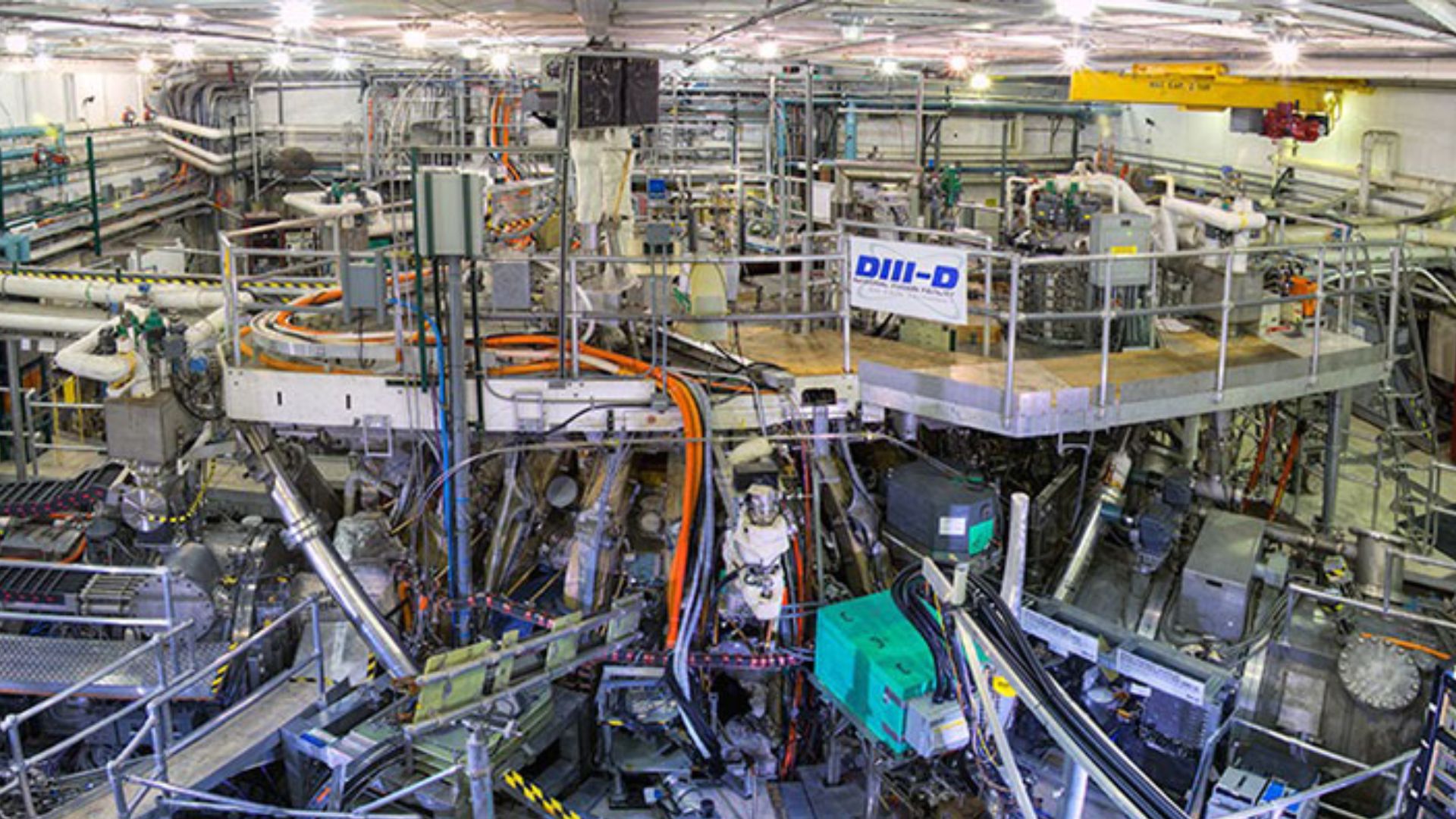
General Atomics physicists showed 'helicon' waves can be absorbed deep in the DIII-D tokamak's plasma and push electrons, a goal pursued since the 1980s.
Topic
10 stories from Planck Standard. Latest: October 27, 2026.

General Atomics physicists showed 'helicon' waves can be absorbed deep in the DIII-D tokamak's plasma and push electrons, a goal pursued since the 1980s.

Researchers found that plasma core rotation—not just cross-field drift—causes uneven heat loading in tokamak divertors, enabling better designs for future fusion plants.

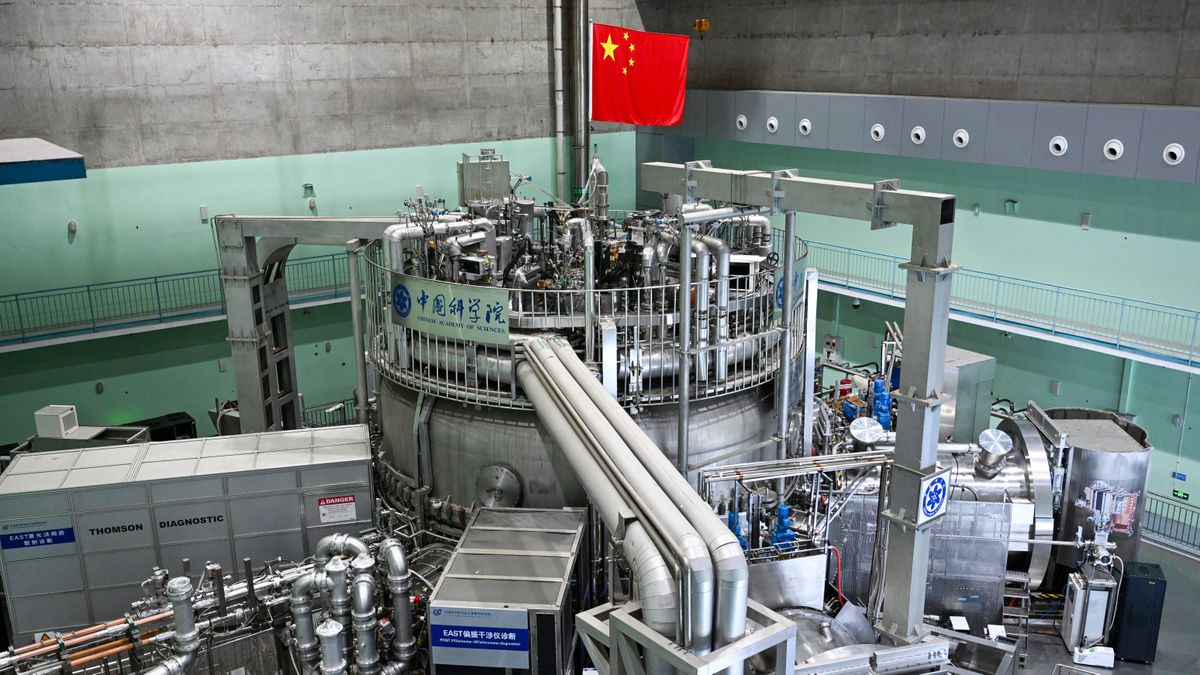
Scientists using China's EAST tokamak achieved stable plasma at 1.65 times the density barrier that fusion researchers had treated as a hard ceiling for four decades.
Scientists in Hefei achieved stable plasma at 1.65 times the Greenwald limit — a threshold never before crossed — opening the door to compact high-density reactors.
The EAST tokamak achieved stable plasma at densities beyond the long-standing Greenwald limit, validating a new theory of plasma-wall self-organization and opening new routes to fusion ignition.

PPPL researchers found that the rotating core of tokamak plasma drives particle flows that previous models ignored, finally explaining why fusion exhaust slams one side of the reactor far harder than the other.

Breakthrough discovery reveals how plasma rotation creates uneven particle distribution in tokamaks, finally matching experimental data with computer models.

The EAST tokamak achieved stable plasma at 1.65 times the Greenwald density limit — a barrier physicists had long considered nearly unbreakable — in a result published in Science Advances.
Researchers finally explain why tokamak exhaust systems show uneven particle distribution, breakthrough could improve future reactor design.
New 3D simulations reveal how stellar rotation dramatically boosts element mixing across previously impenetrable barriers inside massive stars.