Princeton Physicists Crack Decades-Old Fusion Mystery: Plasma Rotation Was the Missing Key
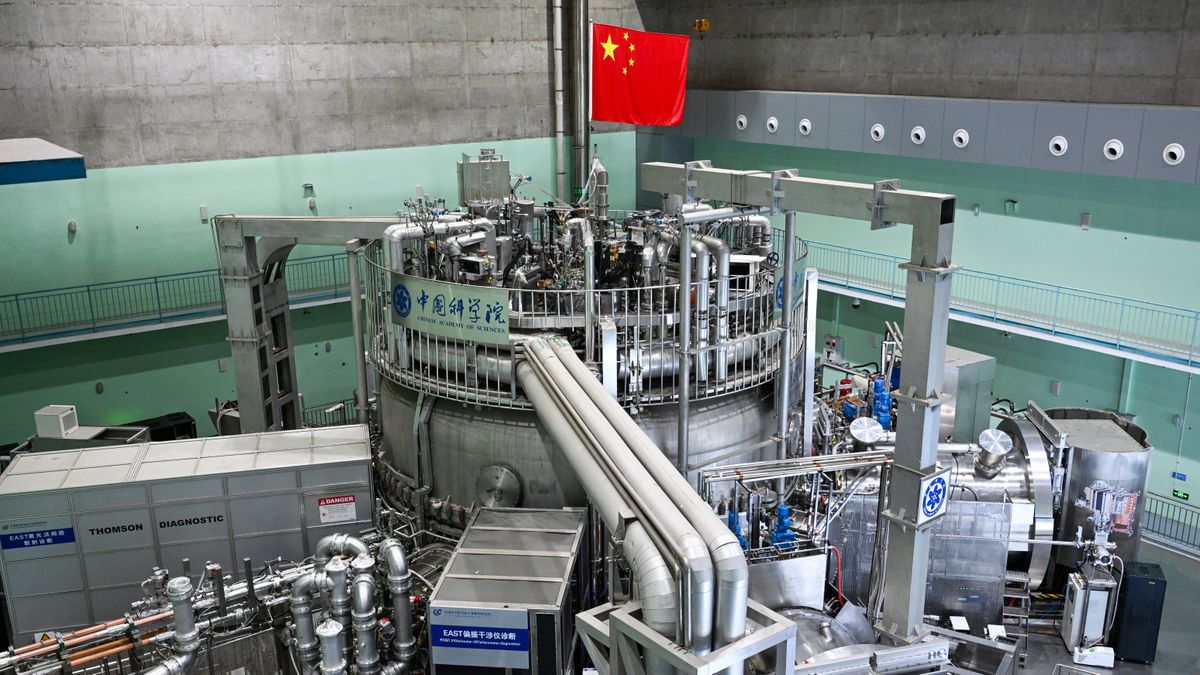
PPPL researchers found that the rotating core of tokamak plasma drives particle flows that previous models ignored, finally explaining why fusion exhaust slams one side of the reactor far harder than the other.
Scientists at Princeton University's Plasma Physics Laboratory have solved a decades-old mystery that has bedeviled nuclear fusion research: why plasma particles inside tokamak reactors consistently strike one side of the exhaust system far more than the other. The finding, published in Physical Review Letters, reveals that the rotating motion of the plasma core is the critical missing factor that previous models had failed to account for, and it has major implications for the design of future fusion power plants.
For years, engineers and physicists observed a stubborn asymmetry inside tokamaks — the donut-shaped magnetic containers designed to confine superheated plasma for fusion reactions. Particles escaping from the plasma consistently slammed into the inner divertor target far more frequently than the outer one, but computer simulations using only the known physics of cross-field particle drift could not reproduce this pattern. The mismatch between models and experimental reality raised serious concerns about whether engineers could accurately predict where extreme heat and particles would concentrate in a full-scale fusion reactor.
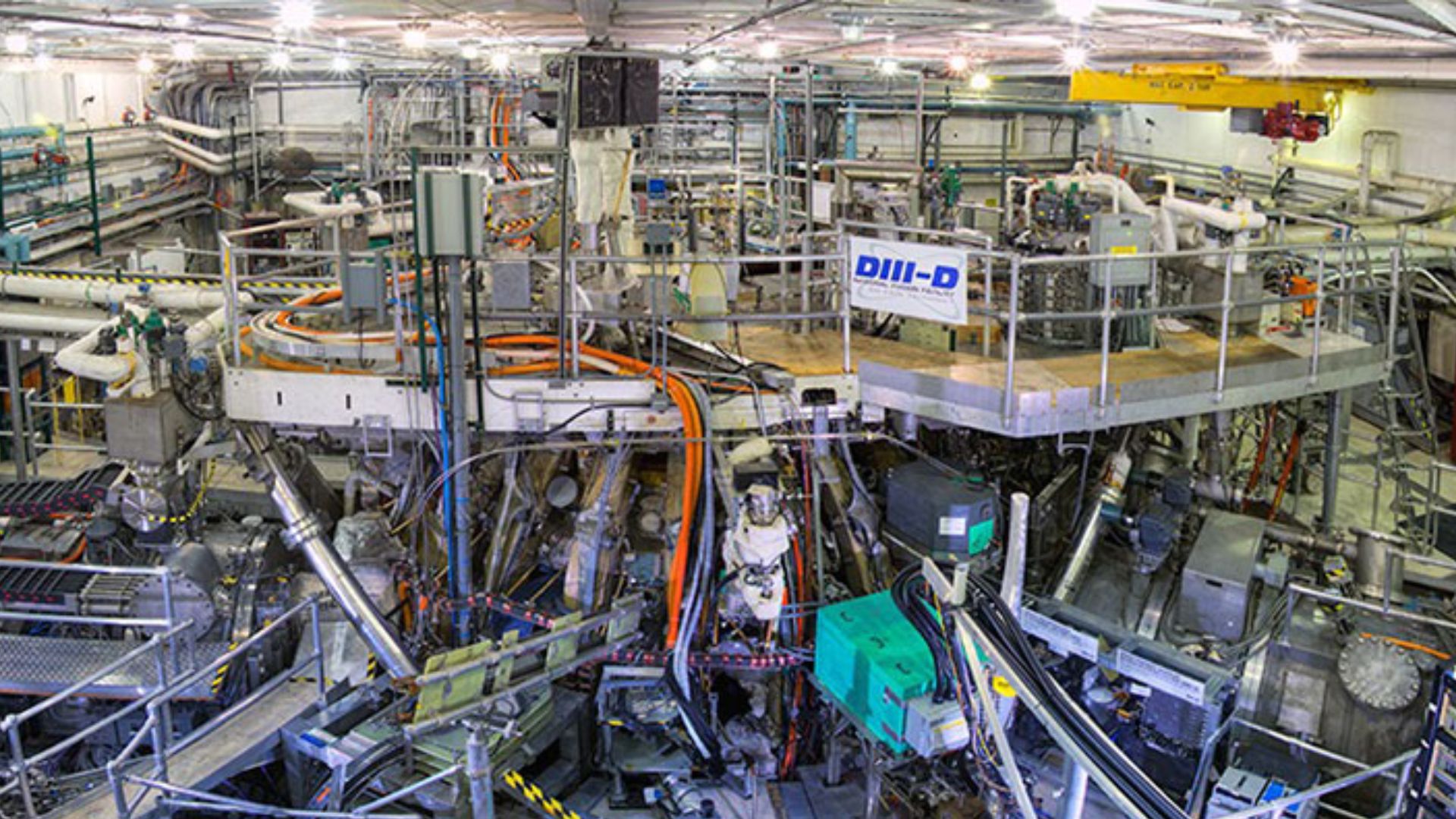
Lead researcher Eric Emdee and his team at PPPL found the answer by running four computational scenarios using the SOLPS-ITER modeling code and data from California's DIII-D tokamak — one of the world's most advanced fusion research facilities. Only when they incorporated the measured toroidal rotation speed of the plasma core — 88.4 kilometers per second — alongside the previously modeled cross-field drift effects did their simulations finally match the experimental observations. As Emdee explained, "parallel flow, driven by the rotating core, matters just as much" as the sideways particle drift that researchers had previously focused on.
The physics mechanism works like this: as the plasma spins toroidally around the tokamak at high speed, it creates parallel flows along magnetic field lines that push particles preferentially toward one side of the divertor — the exhaust component designed to handle the punishing heat load from escaping particles. When cross-field drifts and core rotation combine, they create a far more pronounced asymmetry than either effect produces alone. Without accounting for both, no simulation can accurately predict where the most extreme stresses will occur inside the reactor.
The practical stakes of this discovery are enormous. The divertor is one of the most technically challenging components in any fusion reactor design because it must withstand conditions that few materials can survive. In a commercial fusion power plant, divertor components will face sustained heat fluxes and particle bombardment far exceeding anything tested in current research machines. The ability to accurately predict, through validated computer models, exactly where these loads will be most intense allows engineers to design more resilient components, choose better materials, and potentially reduce the frequency of maintenance shutdowns. For ITER — the international fusion experiment under construction in southern France and expected to begin full plasma operations in the 2030s — this finding provides new confidence that simulations used to guide its design are on firmer footing.