China's 'Artificial Sun' Shatters Fusion's Most Stubborn Physical Limit — Opens Practical Path to Clean Energy
The EAST tokamak achieved stable plasma at 1.65 times the Greenwald density limit — a barrier physicists had long considered nearly unbreakable — in a result published in Science Advances.
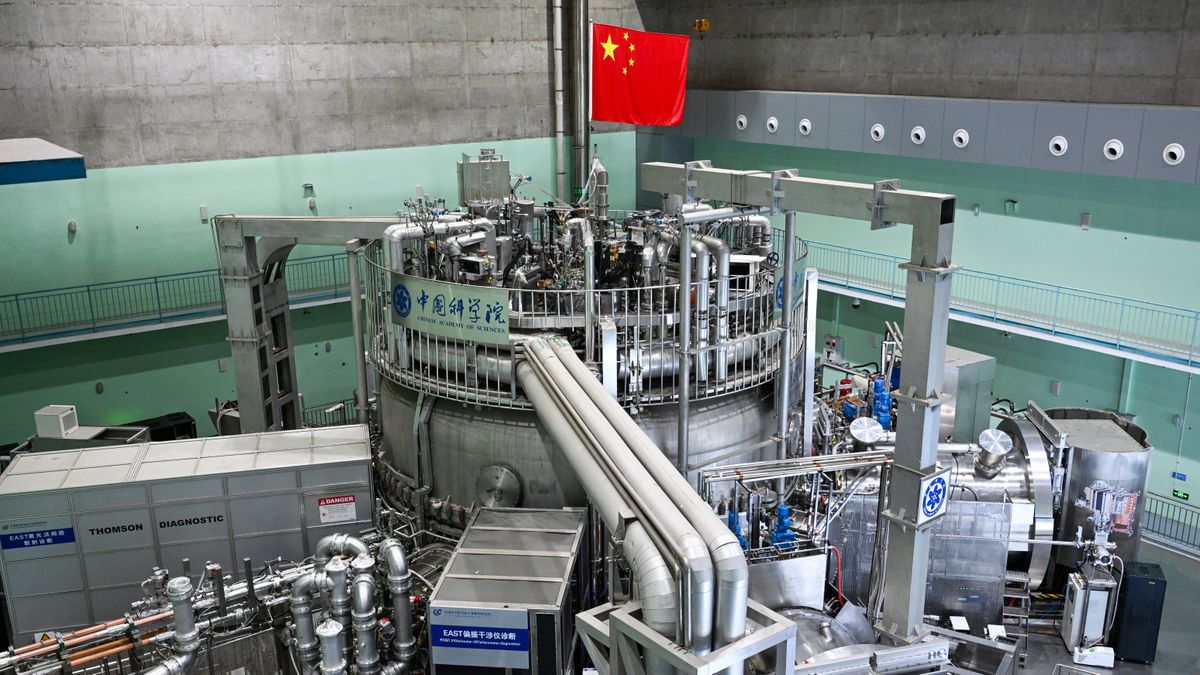
Chinese physicists have shattered one of nuclear fusion's most persistent barriers, achieving stable plasma operation at densities 1.3 to 1.65 times the so-called Greenwald limit in the Experimental Advanced Superconducting Tokamak, or EAST, at the Hefei Institutes of Physical Science. The results, published in the journal Science Advances in January 2026, have been hailed by fusion researchers as a landmark demonstration that a practical pathway to commercial fusion energy is closer than many had believed.
The Greenwald limit is a fundamental constraint in tokamak physics — the maximum plasma density a magnetic confinement device can sustain before the plasma destabilizes violently, often damaging reactor components and ending the fusion experiment. Named after MIT plasma physicist Martin Greenwald, who identified the empirical relationship in the 1980s, the limit had long been treated as a practical ceiling for tokamak operation. Exceeding it reliably and stably was considered by most researchers to be extremely difficult if not effectively impossible under normal operating conditions.
The EAST team's approach centered on a technique called electron cyclotron resonance heating, or ECRH, applied during the plasma discharge startup phase. By carefully controlling the initial fuel gas pressure while applying ECRH, the researchers optimized how the plasma interacted with the reactor's tungsten inner wall — a process the team describes as Plasma-Wall Self-Organization, or PWSO. This self-organization naturally reduced the buildup of tungsten impurities in the plasma, which are typically one of the mechanisms that trigger instabilities at high densities. The result was a stable plasma state that the researchers called a "density-free regime" — one in which the normal Greenwald ceiling ceased to apply.
The physics significance is substantial. Fusion power output scales approximately with the square of plasma density, meaning that operating at 1.5 times the Greenwald limit theoretically allows more than twice the power output of a reactor operating at the limit. For decades, fusion reactor designers have had to work around the density ceiling by using larger machines, stronger magnetic fields, or higher temperatures to compensate. The EAST result suggests an alternative path: optimize the plasma-wall interaction to unlock higher stable densities without requiring larger or more powerful devices.
"The findings suggest a practical and scalable pathway for extending density limits in tokamaks" toward fusion ignition, said Professor Ping Zhu of Huazhong University of Science and Technology, one of the study's lead researchers. Associate Professor Ning Yan of the Chinese Academy of Sciences, who led the experimental work on EAST, noted that the technique was reproduced across multiple plasma conditions, suggesting it is robust rather than an experimental artifact.
EAST, sometimes called China's "artificial sun," has been a workhorse of fusion research for two decades. It holds the world record for sustained plasma operation at fusion-relevant temperatures — in January 2023, it maintained a plasma at 70 million degrees Celsius for 1,066 seconds. The new density results complement that thermal record, addressing a different dimension of the challenge of achieving burning plasma conditions. For fusion energy to be commercially viable, reactors must achieve a state where the fusion reactions themselves sustain the plasma temperature — a self-sustaining "burning plasma." Higher densities, maintained stably at high temperatures, are a necessary prerequisite for reaching that threshold, and EAST's demonstration that the Greenwald limit is not an immovable barrier represents a meaningful step toward that goal.