Princeton Physicists Crack Decades-Old Fusion Reactor Mystery That Has Stymied Commercial Power Development
Researchers at PPPL discovered that plasma rotation — not just cross-field particle drifts — explains why tokamak exhaust hits one side far harder than the other, a finding critical for designing divertors that can survive in working power plants.

Physicists at the U.S. Department of Energy's Princeton Plasma Physics Laboratory have solved a stubborn engineering mystery that has puzzled fusion scientists for decades: why do the particles escaping from a tokamak's plasma almost always strike one side of the exhaust system far harder than the other? The answer, published this month in a peer-reviewed physics journal, turns out to involve a factor that earlier simulations had largely ignored — the rotation of the plasma itself. When researchers included plasma rotation alongside the better-understood cross-field particle drifts in their computational models, the simulations finally matched what experiments had been showing all along. The finding carries significant practical implications for the design of future commercial fusion power plants.
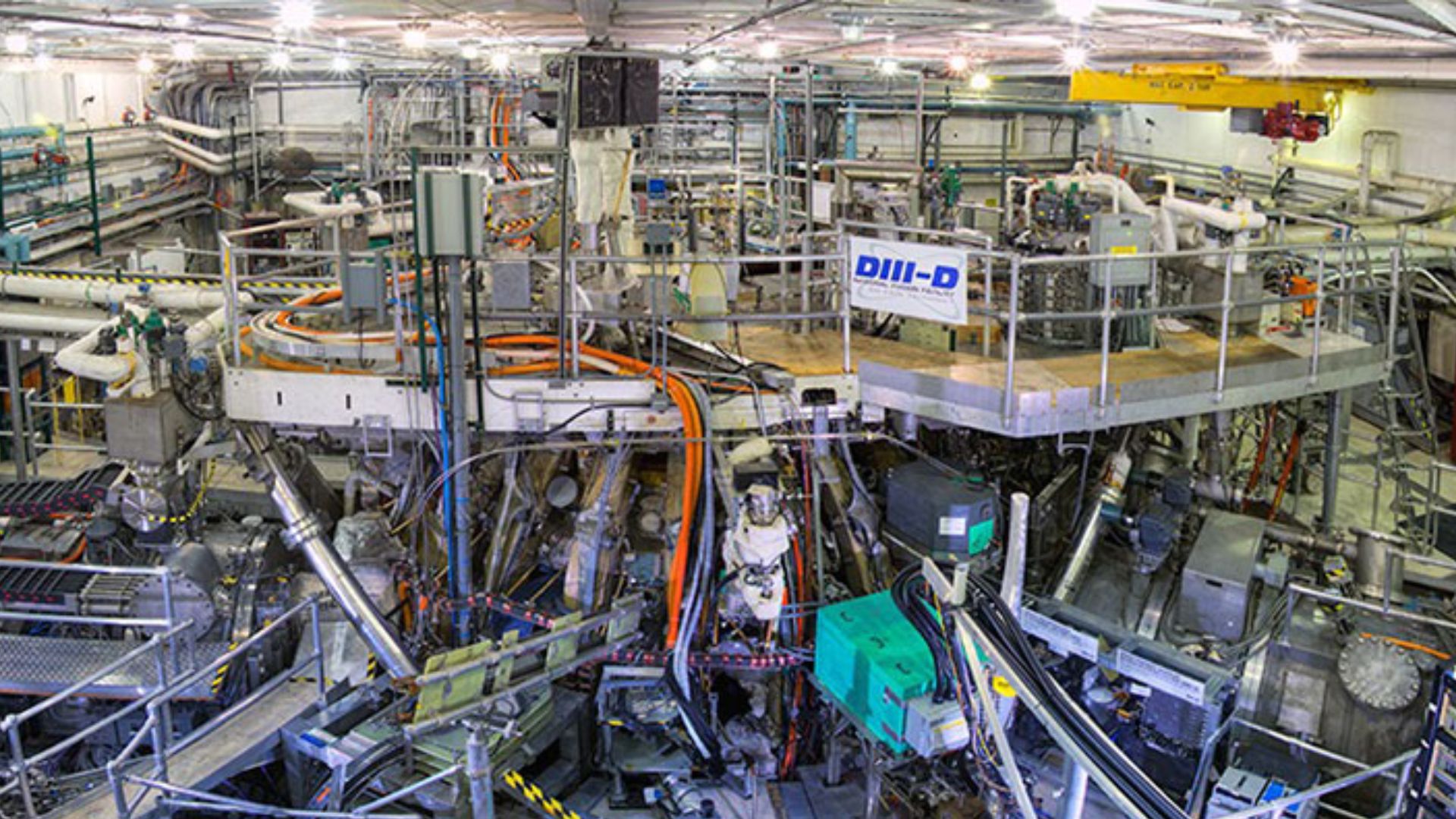
The exhaust system in a tokamak — the donut-shaped magnetic confinement vessel used by most of the world's major fusion energy projects — is called a divertor. It is designed to handle the enormous heat and particle flux escaping from the plasma's edge, channeling those particles harmlessly away before they can damage the reactor wall. In practice, experiments have consistently shown that a disproportionate share of that flux strikes the inner divertor target rather than being distributed evenly between inner and outer targets. The imbalance is not a minor engineering curiosity: it creates hot spots that can erode divertor materials far faster than even distributions would, raising serious questions about how long real divertor components could survive in a working fusion reactor. Understanding and correcting the imbalance is essential to building machines that last.
Physicists had long suspected that cross-field particle drifts — the tendency of charged particles in a magnetic field to drift perpendicular to both the magnetic field and any gradients in it — were responsible for the asymmetry. Simulations incorporating these drifts improved on earlier models but still couldn't fully reproduce the experimental observations. The Princeton team, led by researchers at PPPL, began looking more carefully at the role of toroidal rotation — the large-scale swirling motion of the plasma as it circulates around the inside of the tokamak's torus. When they added toroidal rotation to their simulations alongside the cross-field drifts, the models snapped into agreement with experimental data. The rotation, it turned out, was strongly determining where the particles ended up, steering them preferentially toward the inner target.
The implications for fusion energy development are immediate and practical. Engineers designing the divertor systems for ITER — the massive international fusion experiment under construction in southern France — and for proposed demonstration power plants like ARC and SPARC have been working with incomplete models of where heat loads will concentrate. The PPPL finding gives them a more accurate predictive framework, allowing them to design materials and geometries that can withstand realistic operating conditions rather than idealized ones. The divertor is already one of the most challenging components in a fusion reactor from an engineering standpoint; it must handle heat fluxes comparable to the surface of the sun while being replaceable without a complete reactor shutdown.
The Princeton finding is part of a broader surge of progress in fusion energy science. Separately, China's EAST tokamak announced in April 2026 that it had achieved stable plasma operation at densities well beyond what was previously thought achievable under the Greenwald density limit — a long-standing empirical ceiling on how dense a tokamak plasma can be before it becomes unstable. That result, if confirmed, could allow future fusion reactors to operate at higher power densities than current designs assume, improving their economic viability. Private fusion companies, including Commonwealth Fusion Systems, TAE Technologies, and Helion Energy, have been closely watching both findings as they develop their own reactor designs, which diverge in important ways from the government-funded mainstream approach but face similar fundamental physics challenges.