Physicists Solve Tokamak Mystery Using Plasma Rotation in Fusion Breakthrough
Discovery explains why particles hit fusion reactor walls unevenly, advancing practical reactor design by combining rotation with drift effects.

Scientists have solved a long-standing puzzle in fusion energy research by discovering how plasma rotation inside tokamak reactors creates unexpected particle distribution patterns. The breakthrough explains why escaping plasma particles consistently hit one side of the exhaust system far more than the other, a phenomenon that has challenged fusion engineers for years. Researchers found that toroidal rotation, the circular motion of plasma around the tokamak's doughnut shape, works together with sideways particle drift to create this imbalance, finally allowing computer simulations to match real-world experimental data.
The research, led by Eric Emdee at Princeton Plasma Physics Laboratory and published in Physical Review Letters, represents a crucial advancement for fusion reactor design. Inside tokamaks, superheated plasma is contained by magnetic fields, but some particles inevitably escape toward the divertor exhaust system. Understanding exactly where these particles land is essential for engineering divertors that can withstand extreme heat and stress in future power plants. Previous simulations that only considered cross-field drifts failed to reproduce experimental observations, raising serious concerns about whether computer models could reliably guide reactor construction.
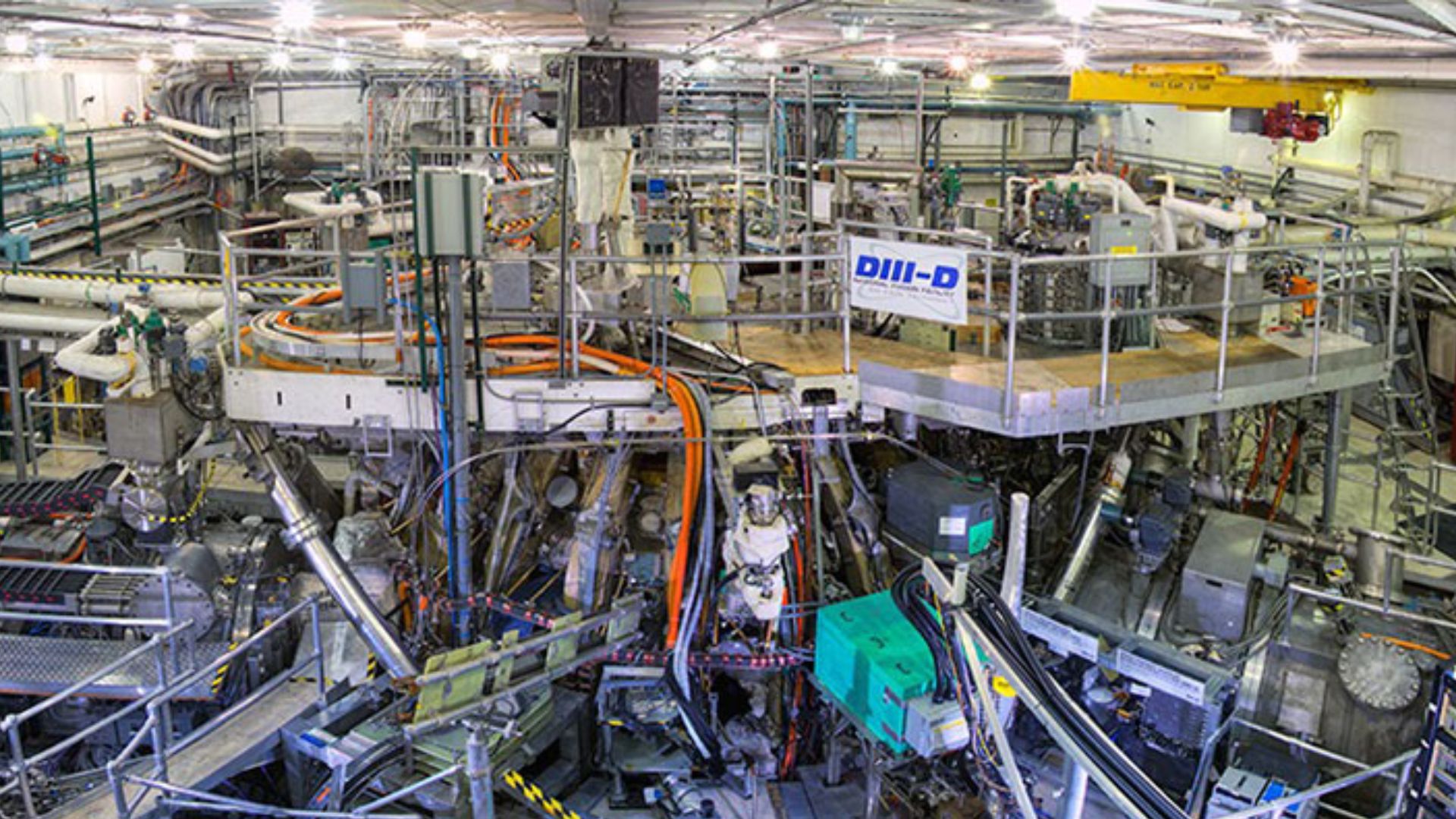
Using the SOLPS-ITER modeling code, the team simulated particle behavior in the DIII-D tokamak in California under four different scenarios. They systematically tested the effects of cross-field drifts and plasma rotation, both individually and in combination. The results were definitive: simulations only matched experimental measurements when both effects were included, specifically when the measured core rotation speed of 88.4 kilometers per second was incorporated into the models. This alignment between theory and practice provides fusion engineers with the confidence needed to design reliable reactor systems.
"There are two components to flow in a plasma," explained Emdee, the study's lead author. "There's cross-field flow, where particles drift sideways across the magnetic field lines, and parallel flow, where they travel along those lines. A lot of people said cross-field flow was what created the asymmetry. What this paper shows is that parallel flow, driven by the rotating core, matters just as much." This insight fundamentally changes how fusion scientists understand particle transport in magnetic confinement systems.
The discovery has immediate practical implications for fusion energy development. With accurate predictions of particle behavior, engineers can design divertor systems that properly handle heat loads and particle impacts, bringing commercial fusion power closer to reality. The research also validates the computational tools that will be essential for designing ITER, the international experimental reactor under construction in France, and future commercial fusion plants. By solving this fundamental mystery of plasma physics, the team has removed a significant obstacle to achieving practical fusion energy that could provide clean, abundant power for the world.