Oxford Physicists Achieve Revolutionary 'Quadsqueezing' Breakthrough in Quantum Physics
Scientists demonstrate first-ever fourth-order quantum effect using trapped ions, opening new frontiers for quantum technology applications.
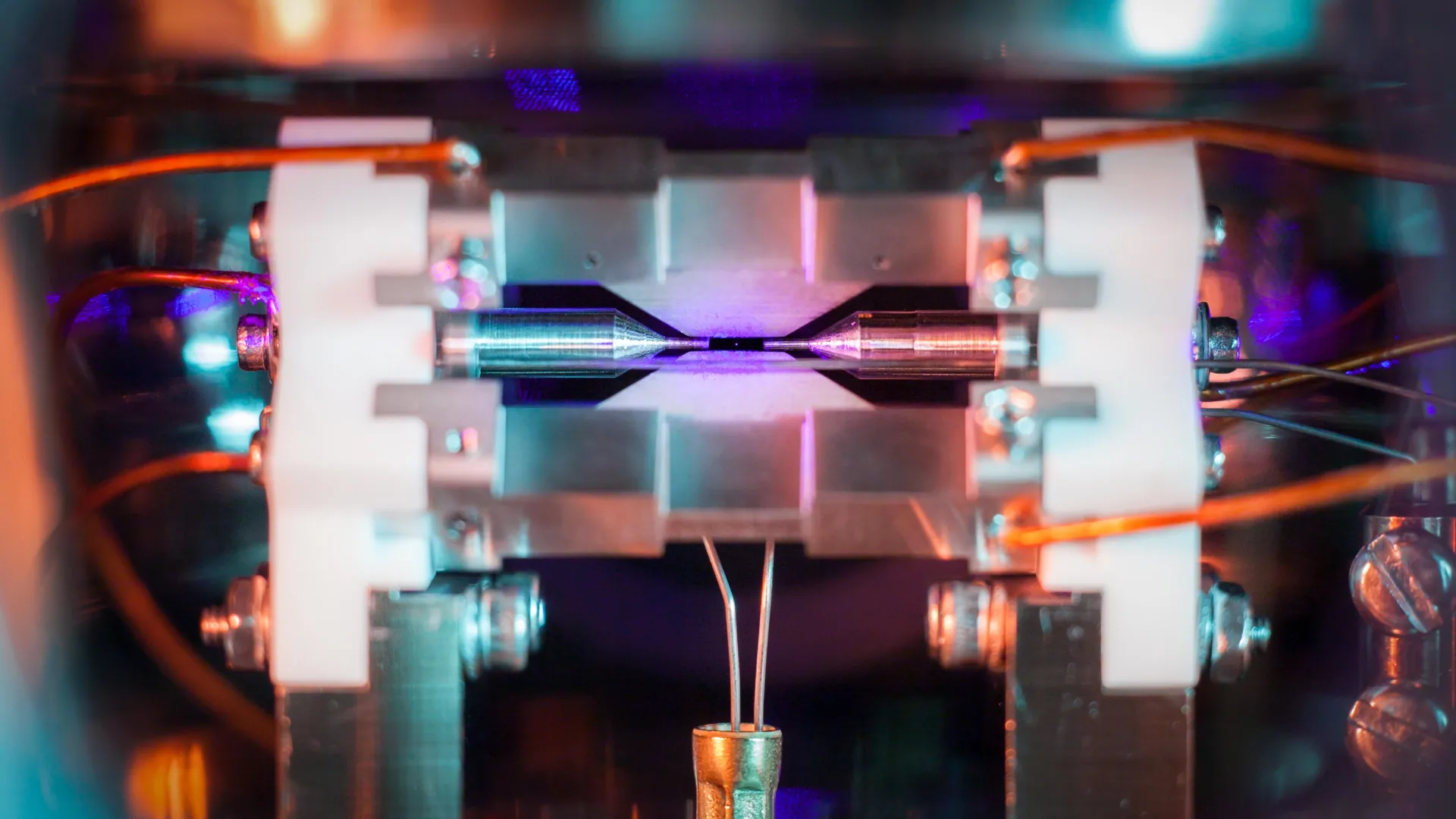
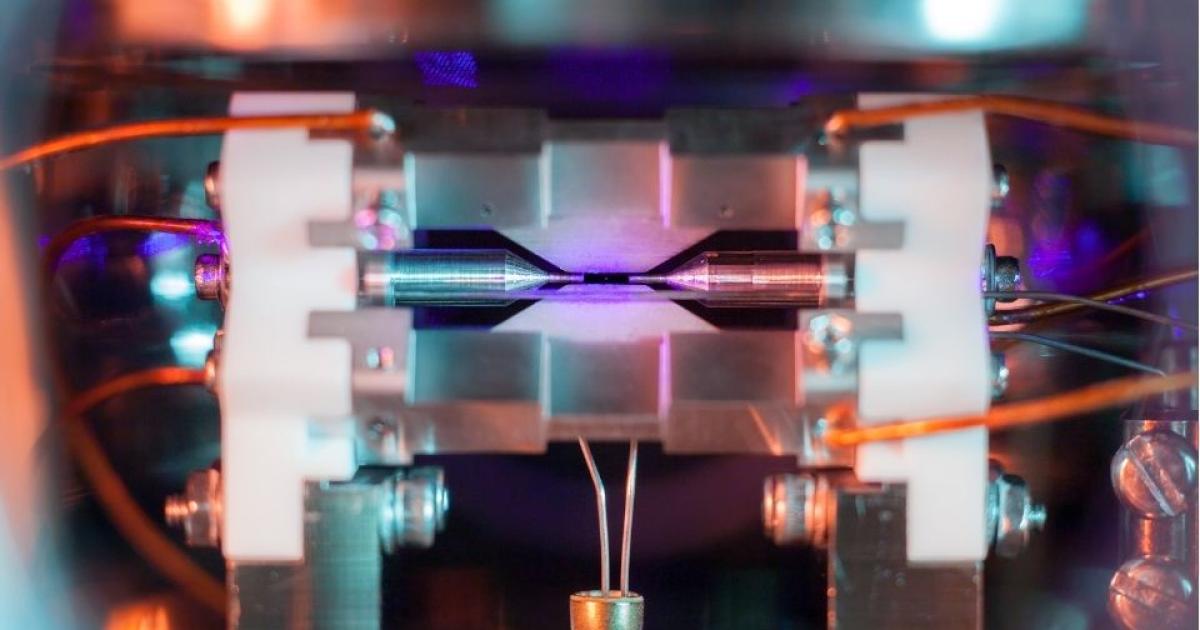
Researchers at the University of Oxford have achieved a groundbreaking demonstration of "quadsqueezing," the first-ever observation of a fourth-order quantum effect that had previously remained beyond the reach of experimental physics. The breakthrough, published in Nature Physics, represents a significant advance in quantum control techniques and opens new possibilities for quantum computing, sensing, and simulation applications.
The Oxford team used a single trapped ion to generate and control increasingly complex forms of quantum "squeezing," a phenomenon that redistributes quantum uncertainty between different properties of a particle. While standard squeezing has been used in applications like gravitational-wave detectors, the higher-order effects demonstrated in this experiment had been considered too weak and noise-prone to observe directly.
The key innovation involved combining two precisely controlled forces acting on the trapped ion in a way that exploits quantum non-commutativity, where the order of operations affects the final outcome. Lead author Dr. Oana Băzăvan explained that rather than viewing non-commuting interactions as unwanted complications, the team used this quantum feature to amplify and generate stronger quantum interactions that would otherwise be impossible to detect.
The experimental setup builds on theoretical work proposed in 2021 and represents a clever engineering solution to one of quantum physics' most persistent challenges. By carefully timing and coordinating multiple forces, the researchers were able to make previously hidden quantum behaviors both visible and potentially useful for practical applications.
The achievement has broad implications for quantum technology development, as higher-order quantum effects like quadsqueezing could enable new types of quantum sensors with unprecedented precision, more powerful quantum computers, and novel approaches to quantum simulation of complex physical systems. The work demonstrates that even fundamental quantum phenomena thought to be purely theoretical can become accessible through creative experimental design and precise control of quantum systems.