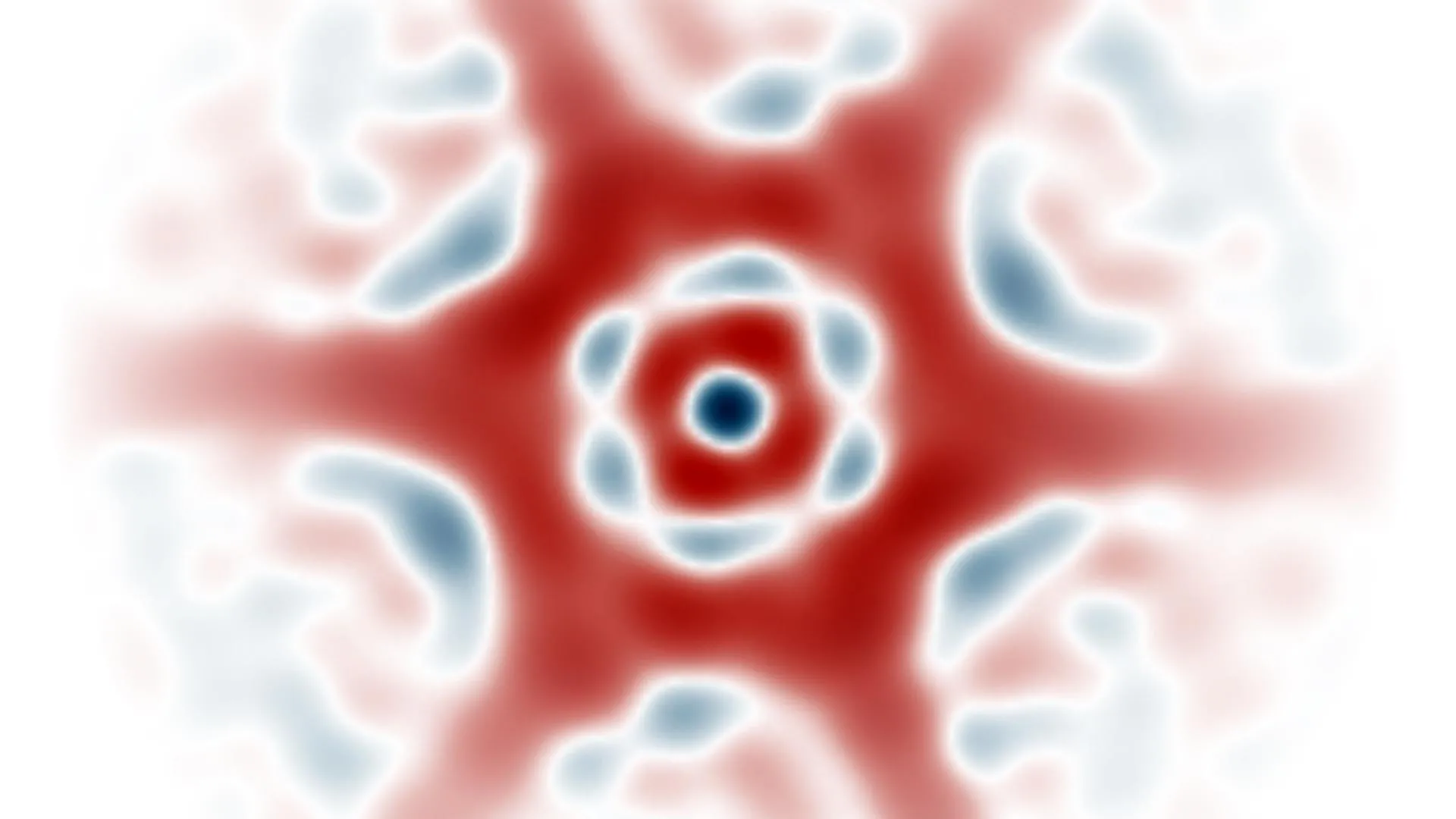
Oxford Scientists Achieve First-Ever 'Quadsqueezing' Quantum Breakthrough
Researchers demonstrate fourth-order quantum effects using trapped ions, opening new frontiers for quantum technology and simulation.

Scientists at the University of Oxford have achieved a groundbreaking quantum physics milestone by demonstrating the first-ever "quadsqueezing" effect using a single trapped ion. This fourth-order quantum phenomenon had remained elusive for decades due to its naturally weak nature and susceptibility to noise. The breakthrough opens new possibilities for quantum simulation, sensing, and computing applications by making previously hidden quantum behaviors accessible and controllable.
The research team successfully created increasingly complex forms of quantum "squeezing" by carefully controlling forces acting on trapped ion oscillators. Standard quantum squeezing redistributes measurement uncertainty between paired properties like position and momentum, making one more precise while increasing uncertainty in the other. Higher-order effects like trisqueezing and quadsqueezing involve more sophisticated quantum interactions that are exponentially more difficult to observe and control.
Dr. Oana Băzăvan from Oxford's Department of Physics explained that the team took an innovative approach to generating these complex interactions. Rather than viewing non-commuting quantum forces as unwanted complications, they leveraged these properties to amplify quantum effects. When two precisely controlled forces act together on the trapped ion, their non-commutative nature allows them to enhance each other, creating stronger and more complex quantum interactions than either could produce alone.
The experimental setup builds on theoretical work proposed in 2021, combining two precisely controlled forces to create effects that are much stronger than what each force could achieve individually. This approach exploits the quantum mechanical principle that the order of operations matters at the subatomic scale, allowing researchers to engineer interactions that would otherwise be too weak to detect above background noise.
The successful demonstration of quadsqueezing represents a significant advancement in quantum control techniques. These higher-order quantum effects could enable new types of quantum sensors with unprecedented precision, support more sophisticated quantum simulation experiments, and contribute to the development of advanced quantum computing architectures. The research, published in Nature Physics, provides a foundation for exploring even more exotic quantum states and interactions.