Electron Waves Trapped in a Metal for the First Time, Columbia Physicists Report in Science
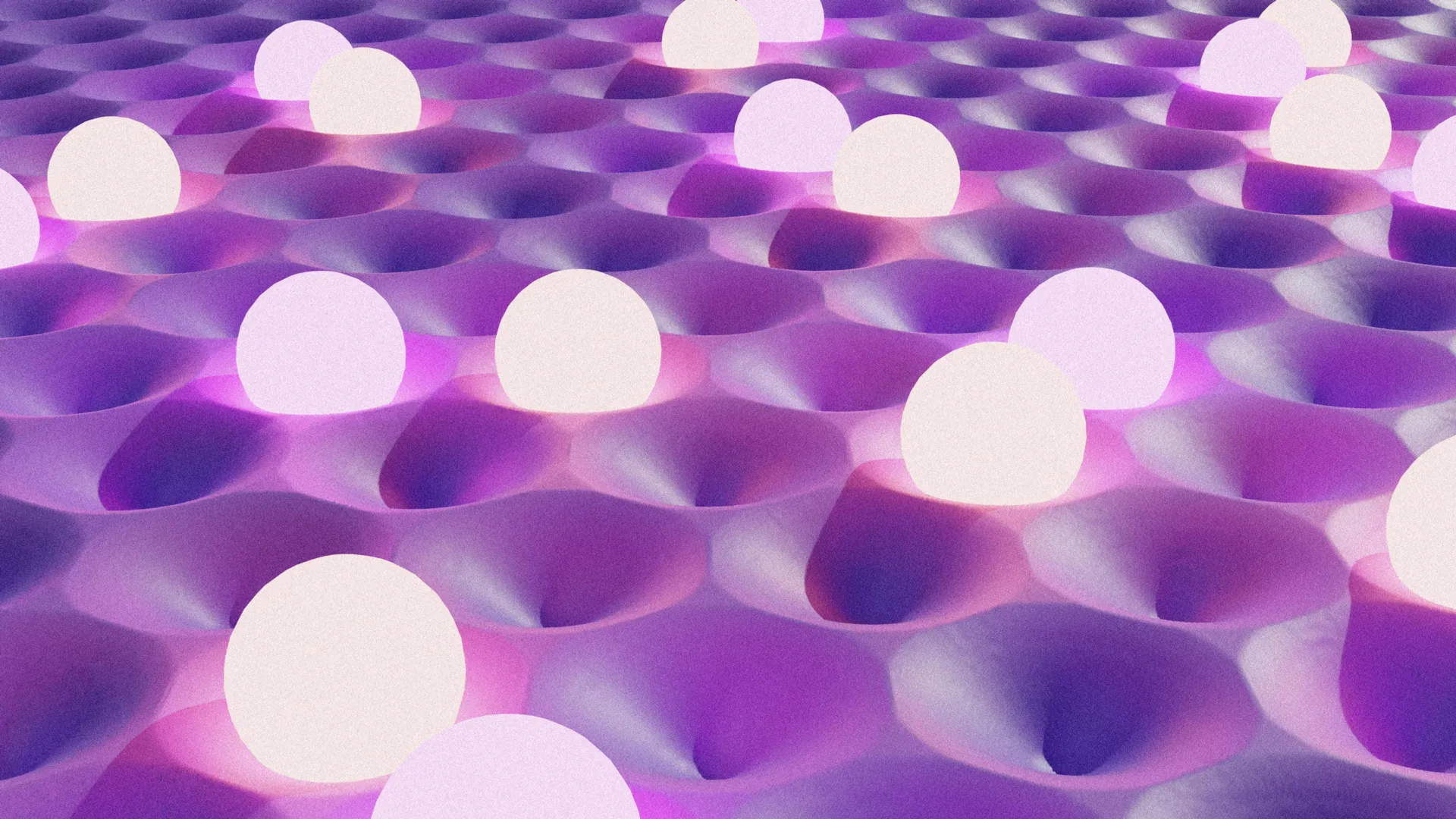
Quantum interference pins electrons in place inside Pd5AlI2 even though they have endless paths to escape, a trick previously seen only with light.
Topic
41 stories from Planck Standard. Latest: October 25, 2026.

Quantum interference pins electrons in place inside Pd5AlI2 even though they have endless paths to escape, a trick previously seen only with light.

Jiaxuan Zhang traced the assumptions behind five attempts to derive the Born rule and found each depends on additivity. The work does not rule out a probability-free derivation.

A Geneva physicist transcribed three handwritten pages sitting unpublished in Vienna for 80 years and found Schrödinger's model matched quantum predictions even through several light filters.

The Károlyházy model held that tiny ripples in spacetime erode quantum superpositions and explain why big objects behave classically. The VIP collaboration at Gran Sasso says the predicted signal isn't there, and the null result narrows where quantum gravity can hide.

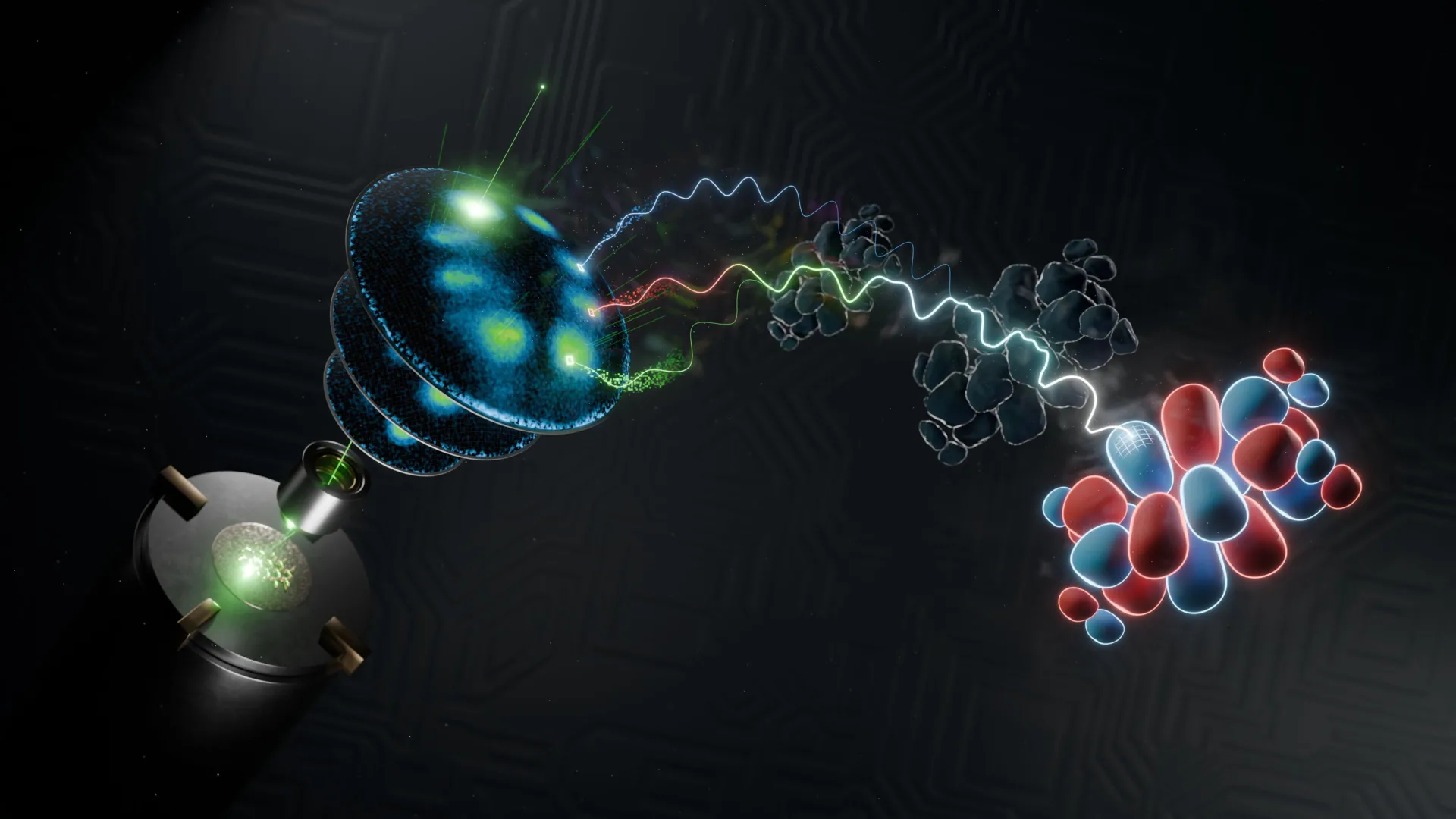
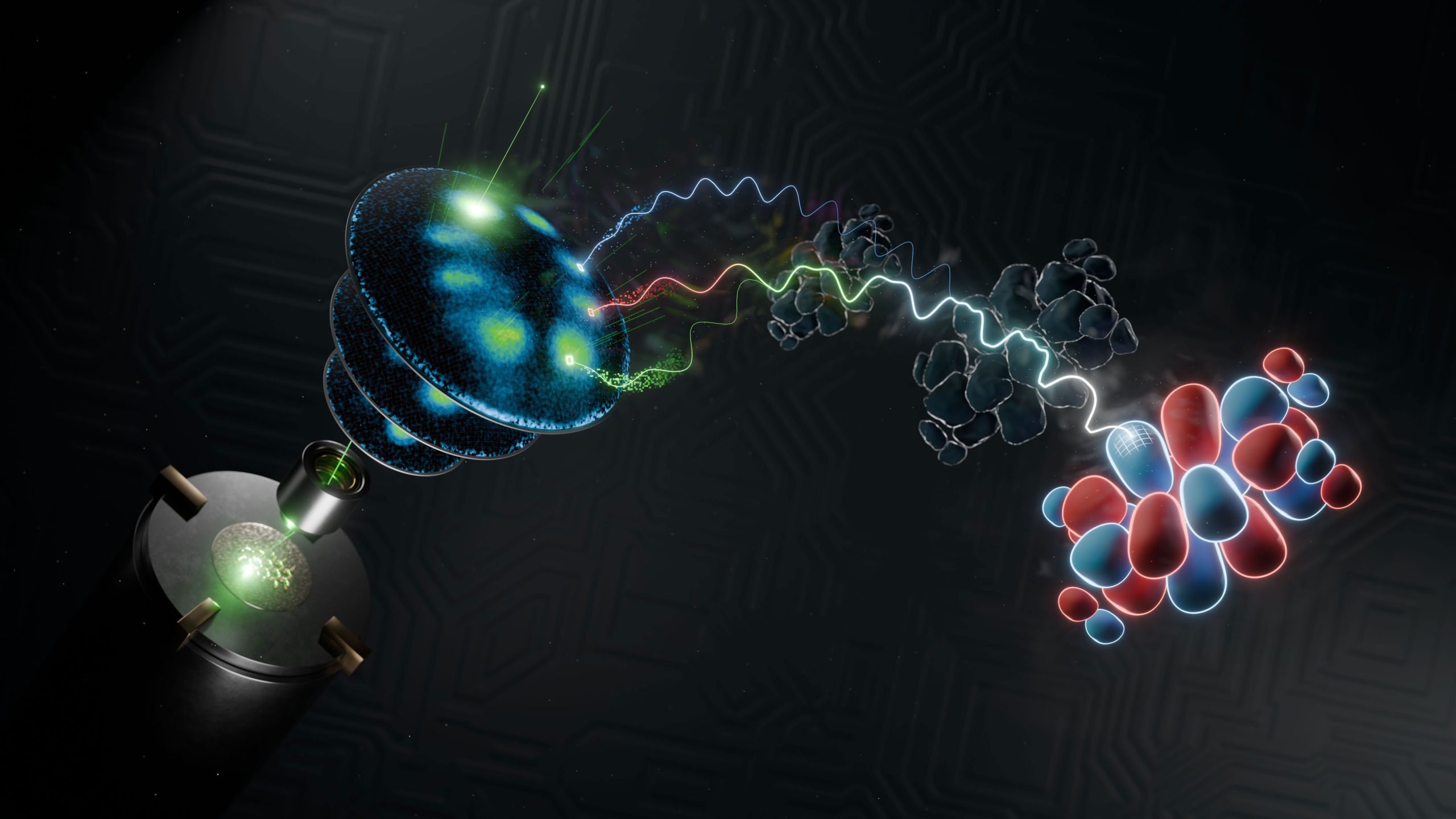
Göttingen physicists imaged a molecular orbital with resolution finer than the gap between its own carbon atoms, using a tabletop X-ray source instead of a synchrotron.

The measurement used to require weeks at a synchrotron. A Göttingen team rebuilt the reconstruction algorithm from scratch and did it in a university lab, resolving detail finer than the gap between two carbon atoms.

Researchers in Germany found that the strange math at the heart of quantum theory can be rebuilt using only real numbers, contradicting a widely cited claim that imaginary numbers are truly indispensable.

University of Tennessee physicists detected Earth's gravitational pull on particles of light in a benchtop interferometer, probing the elusive seam between general relativity and quantum mechanics.

Scientists studying rare 'penguin decays' found results that disagree with 50-year-old physics theory, suggesting unknown particles or forces may exist.

Scientists directly observe angular momentum moving through crystals for the first time, discovering bizarre reversal effect caused by quantum symmetry.

Physicists discover that starting with basic particle collision principles, the mathematics spontaneously produces string theory signatures without assuming strings exist.

Decades of speculation about a mysterious fifth force of nature ended when researchers realized the Standard Model of physics was right all along.

Researchers using bootstrap approach discover string theory signatures without assuming strings existed from the start.

Vienna researchers achieve quantum interference with sodium nanoparticles containing thousands of atoms, pushing quantum mechanics into new territory.

Researchers achieved a record-breaking quantum experiment showing that sodium nanoparticles can exist in superposition states despite containing thousands of atoms.

Researchers demonstrate quantum superposition in sodium nanoparticles containing thousands of atoms, pushing the boundaries of quantum mechanics toward macroscopic scales.

Researchers demonstrate quantum interference in sodium nanoparticles containing thousands of atoms, pushing quantum mechanics into new realm.

Researchers demonstrated quantum superposition in sodium clusters containing thousands of atoms, pushing the boundaries of quantum mechanics toward macroscopic objects.

Researchers demonstrate quantum interference in sodium nanoparticles containing thousands of atoms, pushing the boundaries of quantum mechanics into larger-scale objects.

Scientists identify one-dimensional systems capable of supporting exotic particles that break traditional quantum classifications, opening new frontiers in fundamental physics.

Researchers demonstrated quantum interference in sodium nanoparticles made of thousands of atoms, pushing quantum mechanics into a new realm of surprisingly large objects.

Researchers demonstrated that metallic nanoparticles made of thousands of atoms can exist in quantum superposition, pushing the boundaries of quantum mechanics into surprisingly large-scale objects.

Scientists identify 'anyons' in one-dimensional systems, exotic particles that exist between the familiar categories of bosons and fermions.

New research suggests that spontaneous quantum collapse processes could introduce tiny uncertainties into time's fabric, setting fundamental limits on clock precision.

New research suggests gravity-linked quantum processes could blur time at the most fundamental level, revealing hidden limits to precision.

New research suggests spontaneous quantum collapse processes linked to gravity could create tiny limits on how precisely time can ever be measured.

New research reveals spontaneous collapse processes linked to gravity could subtly blur time, setting fundamental limits on precision.

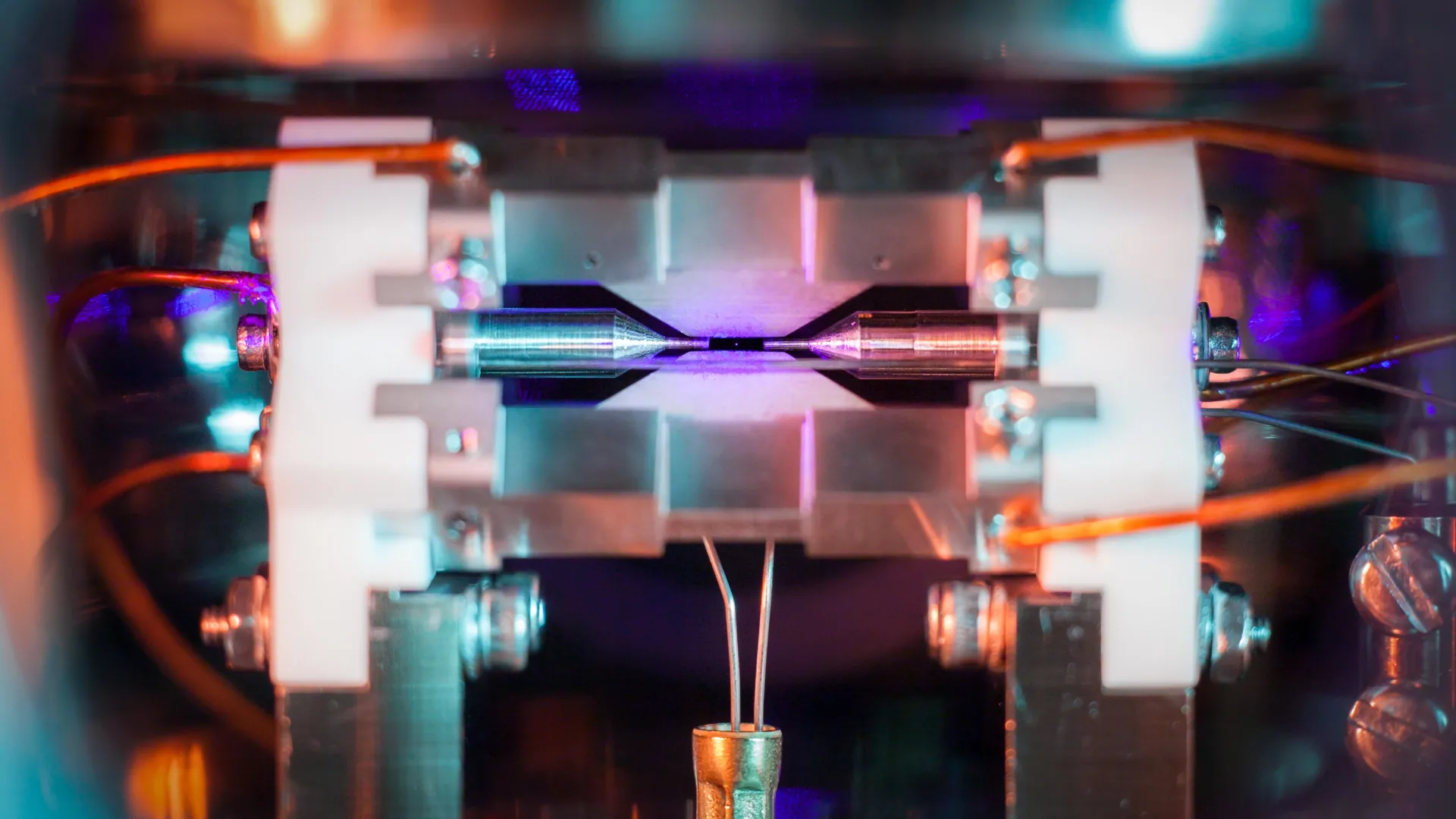
Researchers demonstrate fourth-order quantum effects using trapped ions, opening new frontiers for quantum technology and simulation.

Researchers achieve breakthrough by demonstrating wave-particle duality in positronium, exotic matter made of electron-positron pairs.

Scientists observe wave-particle duality in exotic positronium for the first time, opening new paths for antimatter research and fundamental physics tests.

Scientists observe wave-particle duality in positronium for the first time, opening new frontier for antimatter research and gravity tests.

Researchers capture wave-particle duality in positronium, strengthening quantum mechanics while opening new antimatter research possibilities.

Breakthrough imaging reveals paired electrons move in synchronized patterns never predicted by Nobel Prize-winning BCS theory.

Breakthrough imaging reveals synchronized behavior of particle pairs that was never predicted by 70-year-old Nobel Prize-winning theory.

Metallic sodium nanoparticles 10 times larger than any previously tested produced clear quantum interference patterns in experiments published in Nature, pushing the boundary of where quantum mechanics visibly applies.
Researchers propose detecting spacetime ripples by observing how they subtly shift photon frequencies, potentially enabling ultra-compact detectors using cold-atom systems.

A prototype from CSIRO, RMIT, and the University of Melbourne harnesses quantum superposition to store energy, validating a stunning prediction that defies conventional battery physics.

Breakthrough provides first unified method to search for tiny quantum fluctuations that could reveal how gravity and quantum mechanics connect.
Chinese researchers have observed the Migdal effect for the first time, validating a 1939 theoretical prediction and providing a new experimental tool to search for ultra-light dark matter particles.

Researchers use singlet fission and spin-flip metal complexes to capture more energy carriers than photons absorbed, surpassing traditional limits.

Scientists are exploring whether quantum superposition can extend beyond particles to the very structure of cause and effect, challenging fundamental assumptions about how events unfold in time.