Testing Whether Quantum Mechanics Defies Causality in 'Indefinite Causal Order' Experiments
Scientists are exploring whether quantum superposition can extend beyond particles to the very structure of cause and effect, challenging fundamental assumptions about how events unfold in time.
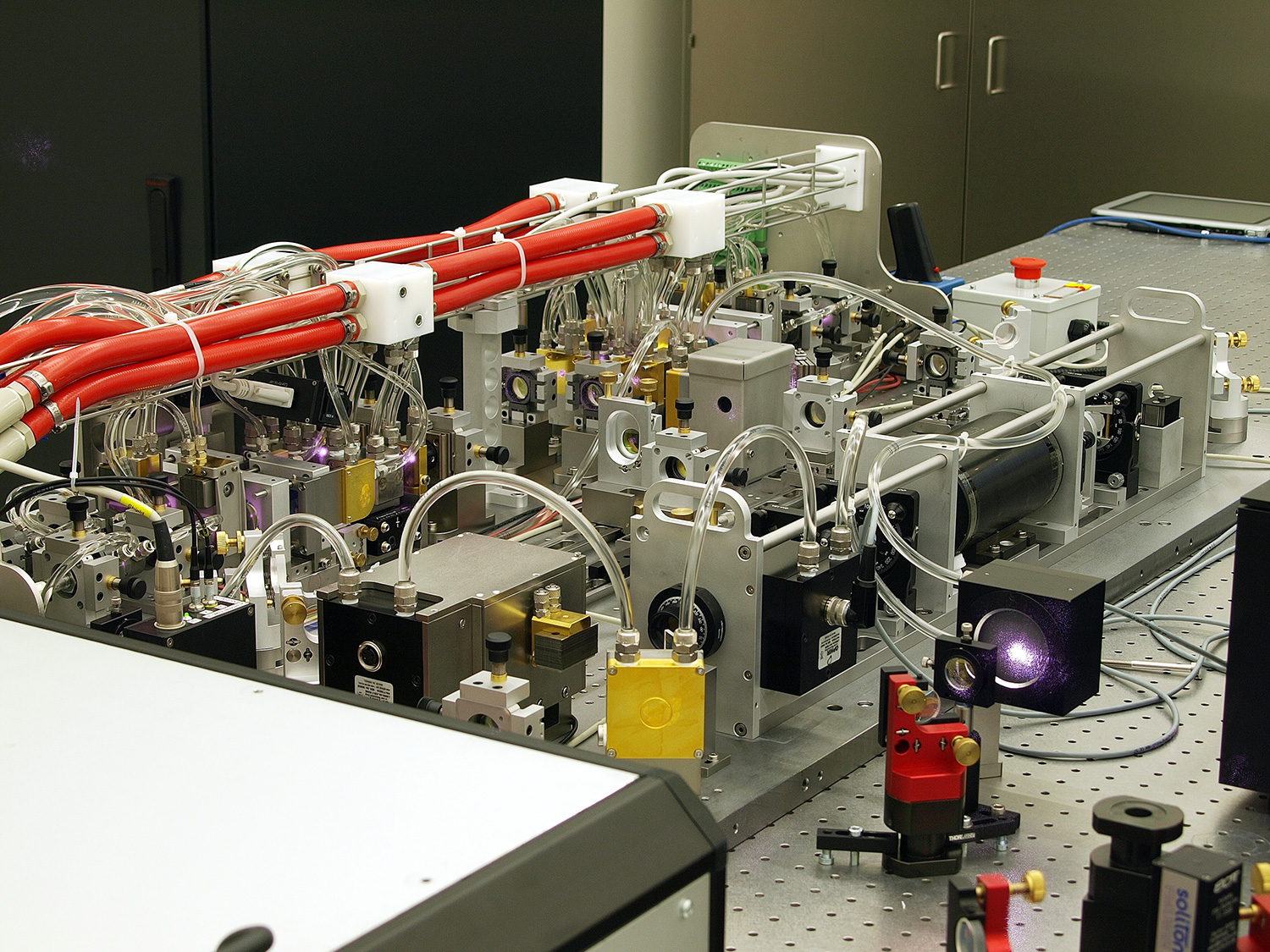
Researchers are conducting groundbreaking experiments to test whether quantum mechanics can create situations where the normal sequence of cause and effect becomes fundamentally uncertain, a phenomenon known as "indefinite causal order." This cutting-edge investigation challenges one of the most basic assumptions about reality: that events must happen in a definite order, with clear causes preceding their effects.
The concept builds on quantum mechanics' well-established principle of superposition, where particles can exist in multiple states simultaneously until measured. Scientists are now investigating whether this strange property might extend beyond individual particles to the very structure of causality itself. In these theoretical scenarios, two events could exist in a superposition where neither definitively occurs before the other, creating a quantum uncertainty about the sequence of cause and effect.
Experimental tests of indefinite causal order require sophisticated quantum optical setups that can manipulate the paths of photons through complex interferometric arrangements. These experiments attempt to create situations where quantum particles experience multiple causal structures simultaneously, potentially allowing researchers to observe effects that would be impossible under classical physics where causality follows strict temporal ordering.
The implications of confirming indefinite causal order would be profound for both fundamental physics and quantum technology development. Such findings could revolutionize understanding of spacetime structure, quantum gravity theories, and the relationship between quantum mechanics and Einstein's relativity. Additionally, indefinite causal order could enable new types of quantum computing protocols that exploit non-classical causal relationships to achieve computational advantages.
While the experiments remain highly technical and results are still being analyzed, the research represents a frontier where quantum mechanics meets philosophy of science. Success in demonstrating indefinite causal order would not only advance quantum physics but also force reconsideration of basic concepts about how the universe operates at its most fundamental level. The work continues as scientists refine their experimental techniques and develop new theoretical frameworks to understand causality in quantum contexts.