LHCb Finds First Evidence of One of Nature's Rarest Decays After a 42-Year Hunt
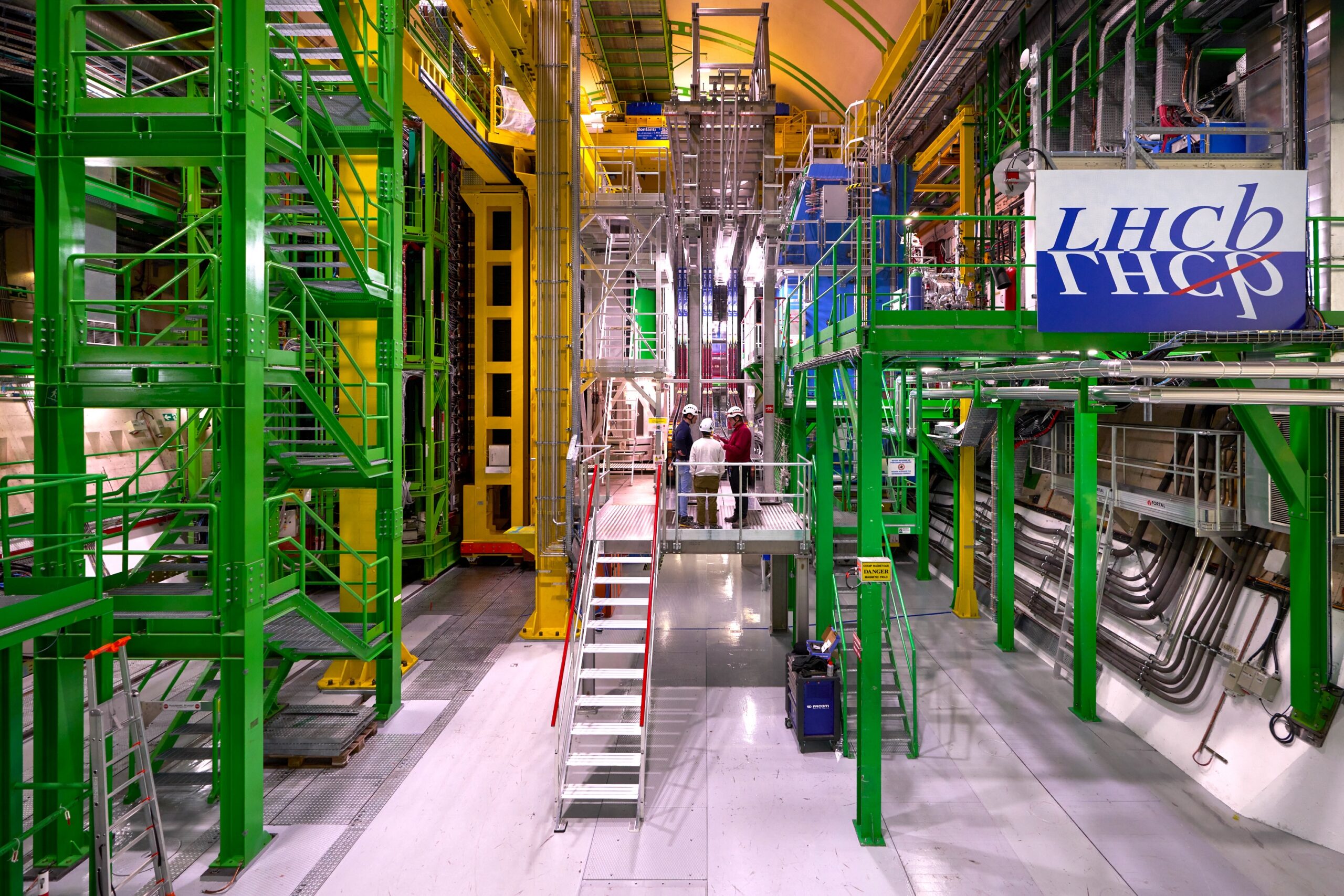
The upgraded experiment at CERN saw a beauty particle decay into two muons at 3.2 sigma, matching the Standard Model but opening a narrow window onto the 'Zeptoverse.'
Topic
29 stories from Planck Standard. Latest: November 11, 2026.

The upgraded experiment at CERN saw a beauty particle decay into two muons at 3.2 sigma, matching the Standard Model but opening a narrow window onto the 'Zeptoverse.'

Three years of data from the detector 480 meters from ATLAS found no sign of heavy, slow-moving pairs that could explain why gravity is so much weaker than the other forces.

A B0 meson turning into two muons happens about once in ten billion decays; the signal sits at 3.2 sigma and agrees with the Standard Model.

The LHCb experiment sees a beauty particle turn into two muons at 3.2 sigma, matching the Standard Model and ending a 40-year hunt's first chapter.

The 'one-positron quantum cyclotron,' cooled to 0.3 kelvin, sets up the most precise test yet of whether electrons and their antimatter twins truly mirror each other.

CMS and LHCb both see small, consistent differences in a decay that happens about once in 10 million beauty-particle decays, though neither result is conclusive.

Physicists used entangled lambda hyperons to measure how often a strange quark turns into an up quark. The numbers still add up to one — and still disagree slightly with the older kaon measurements.

BESIII used quantum entanglement between 3 million particle-antiparticle pairs to reach the 10⁻¹⁹ e·cm level for the first time. A nonzero result would have pointed straight past the Standard Model.

CERN researchers detect rare particle transformations that disagree with 50-year-old theory, potentially pointing to unknown forces or particles.

Scientists studying rare "penguin decays" found behavior that doesn't match theoretical predictions, suggesting unknown particles or forces may be at work.

Scientists studying rare 'penguin decays' found results that disagree with 50-year-old physics theory, suggesting unknown particles or forces may exist.

Scientists studying rare 'penguin decays' find results that don't match theoretical predictions, suggesting unknown particles or forces may exist.

Penguin decays show behavior inconsistent with Standard Model predictions, with only 1-in-16,000 chance results are random fluctuation.

Scientists studying rare 'penguin decays' detect particle behavior that disagrees with 50-year-old theory, suggesting unknown particles or forces may exist.

Researchers studying rare 'penguin decays' at CERN detected particle behavior that doesn't match theoretical predictions, suggesting unknown forces may exist.

University of Edinburgh's William Barter and Imperial College London's Mark Smith analyzed 650 billion B meson events recorded between 2011 and 2018 and found the electroweak penguin decay to four particles occurring more often than the Standard Model predicts.

Supercomputer calculations reveal the apparent violation of physics was likely due to limitations in earlier theoretical work, confirming the Standard Model remains intact.

Decades-long mystery that hinted at new physics forces resolved after supercomputer calculations show Standard Model remains intact.

Decades of speculation about a mysterious fifth force of nature ended when researchers realized the Standard Model of physics was right all along.

Supercomputer calculations reveal that the apparent "rule-breaking" particle behavior was likely a calculation error, keeping the Standard Model intact.

A new analysis of 650 billion B-meson decays at CERN reveals one of the strongest hints in years of physics beyond the Standard Model. A discovery may be within reach.

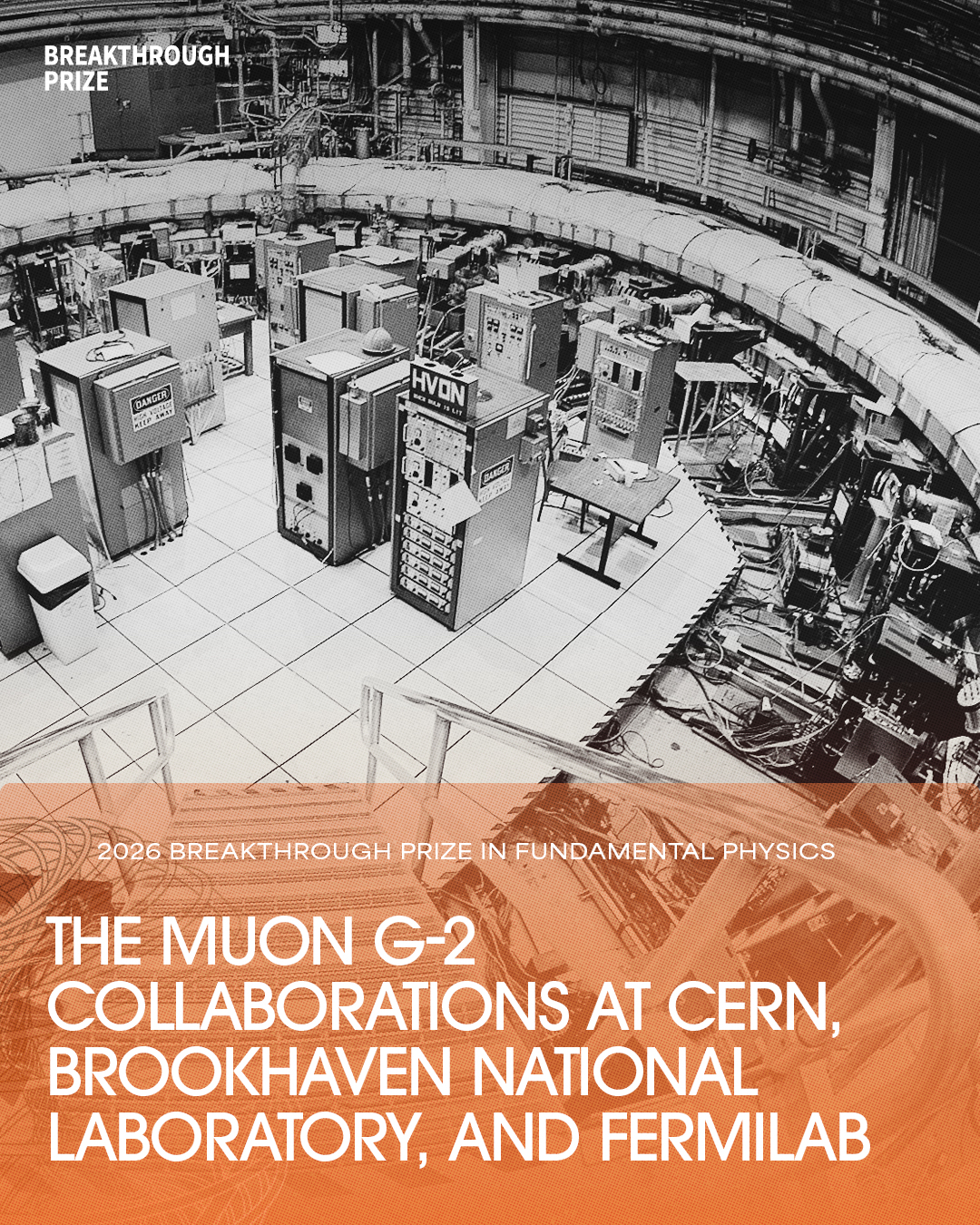
A 60-year multigenerational collaboration measured the muon's magnetic moment at 127 parts per billion — 30,000 times more precise than the 1965 baseline — revealing a persistent deviation.
New Year 2 data from 7.8 million galaxies shows dark energy may be evolving over time, adding to a growing tension with the prevailing Lambda-CDM model.

Three generations of scientists at CERN, Brookhaven, and Fermilab shared the $3 million prize for measuring the muon magnetic anomaly to 127 parts per billion precision, with tantalizing hints that new physics may lurk beyond the Standard Model.

Multiple landmark findings published in early 2026 — including spacetime quasicrystals and a new gravity anomaly — are pushing the Standard Model of particle physics to its limits.

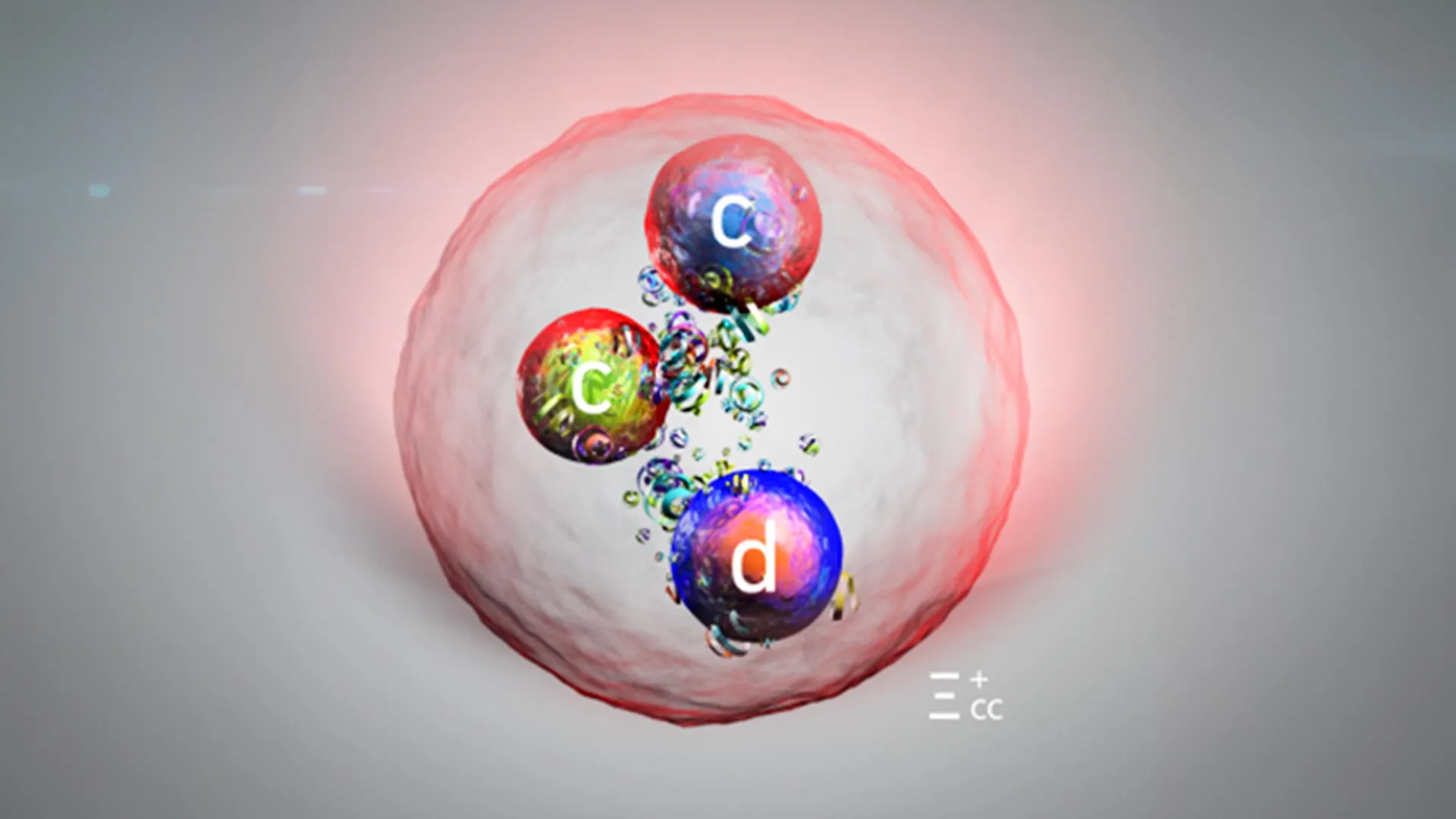
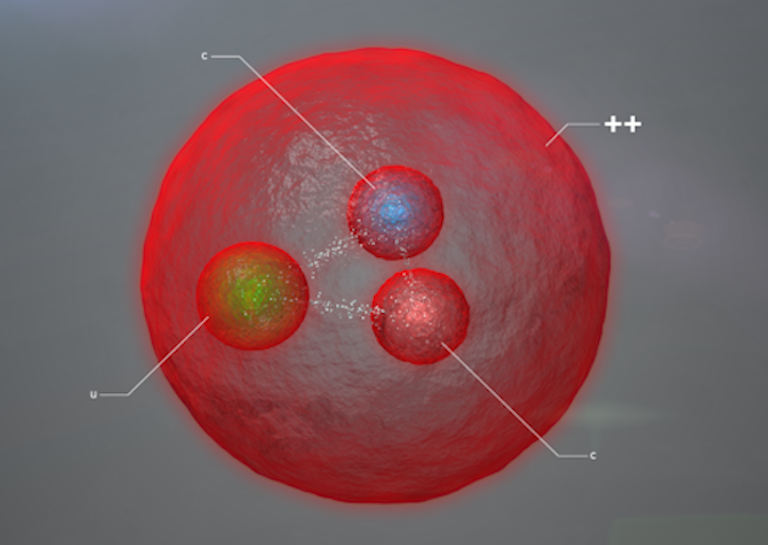
The Xi-cc-plus particle, four times heavier than a proton and containing two charm quarks, was observed with seven-sigma certainty by the upgraded LHCb detector at Geneva.

Max Planck Institute physicists used hydrogen spectroscopy to measure the proton's charge radius to 2.5 times greater precision than before, resolving the proton radius puzzle and setting the most demanding test of quantum electrodynamics ever conducted.

An ytterbium clock exploiting a deep inner-shell electron transition achieves 80 Hz precision, placing new constraints on hypothetical particles beyond the Standard Model.

The LHCb experiment has observed the Ξcc⁺ particle — containing two charm quarks — with 7-sigma confidence, opening a precision window on the strong nuclear force that binds all atomic matter.