Muon g-2 Experiment Wins 2026 Breakthrough Prize in Physics for Decades of Precision Subatomic Measurement
Three generations of scientists at CERN, Brookhaven, and Fermilab shared the $3 million prize for measuring the muon magnetic anomaly to 127 parts per billion precision, with tantalizing hints that new physics may lurk beyond the Standard Model.
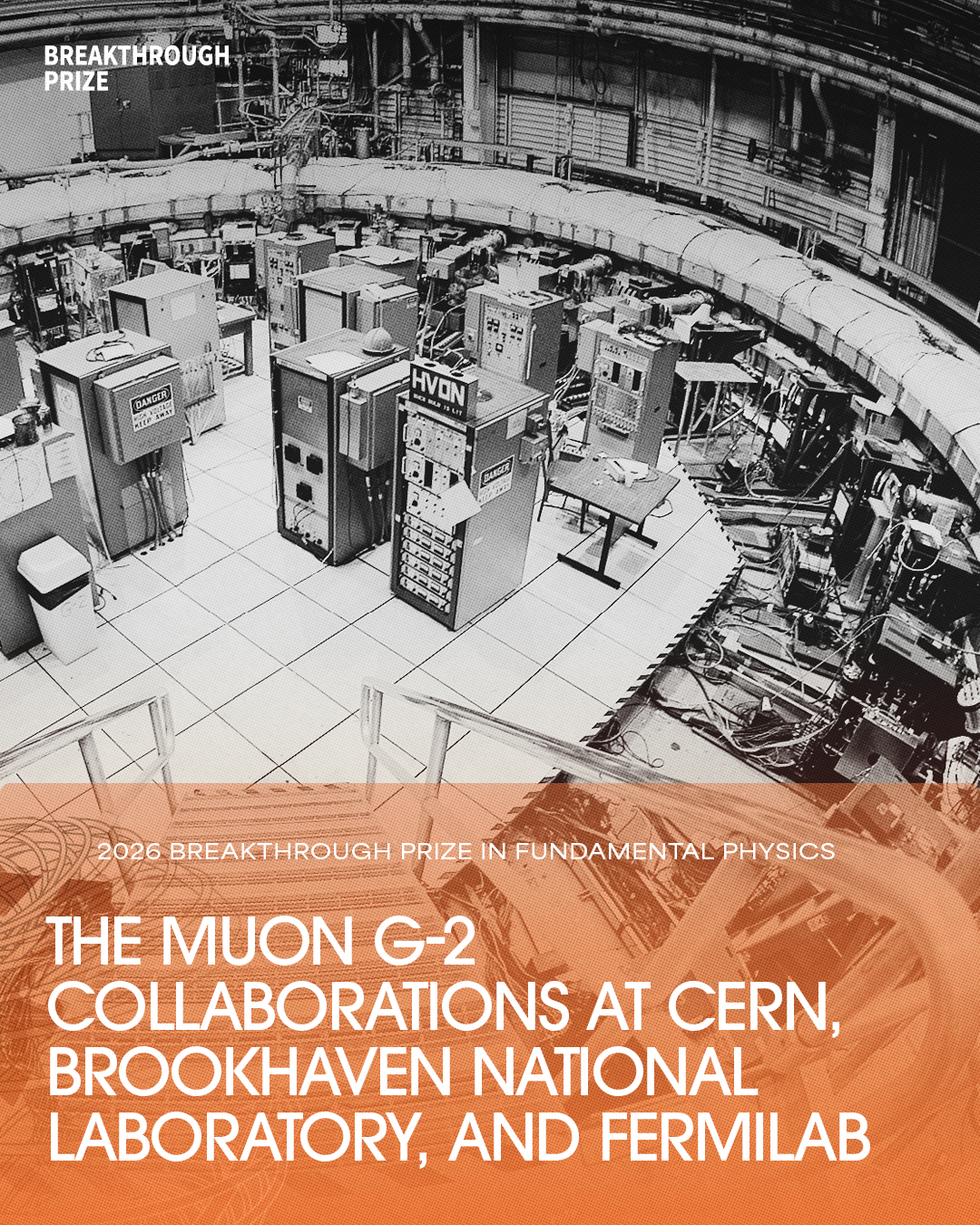
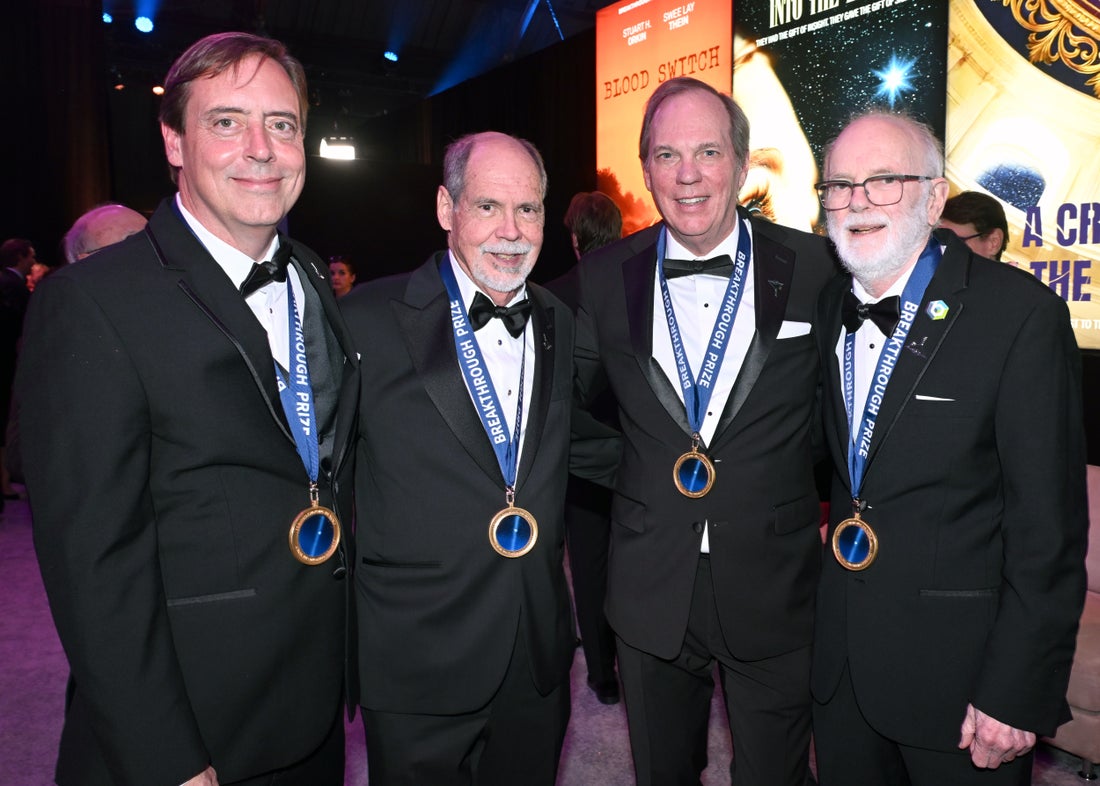
The Muon g-2 experiment, a decades-spanning scientific collaboration that has chased an ever-shrinking discrepancy in the magnetic behavior of a fundamental subatomic particle, won the 2026 Breakthrough Prize in Fundamental Physics at a gala ceremony at the Barker Hangar in Santa Monica, California on Saturday night. The $3 million award was distributed among the hundreds of living scientists who contributed to three generations of the experiment, conducted successively at CERN in Geneva, Brookhaven National Laboratory in New York, and Fermilab outside Chicago — a scientific journey stretching back to the late 1950s that concluded with final published results in 2025.
The muon is an elementary particle closely related to the electron, carrying the same electric charge but roughly 207 times heavier. In quantum mechanics, particles like muons possess an intrinsic angular momentum called spin, and their interaction with magnetic fields can be precisely predicted by the equations of the Standard Model — the best current theory of particle physics. The quantity being measured, known as the anomalous magnetic moment or "g-2," reflects the tiny deviation of the muon's magnetic behavior from what simple theory predicts. In quantum field theory, the vacuum itself is not truly empty; it teems with virtual particles flickering in and out of existence, and their fleeting interactions subtly modify the muon's properties. If undiscovered particles or forces beyond the Standard Model exist, they would show up as an unexpected additional tweak in the g-2 value — a signal written in the quantum noise.
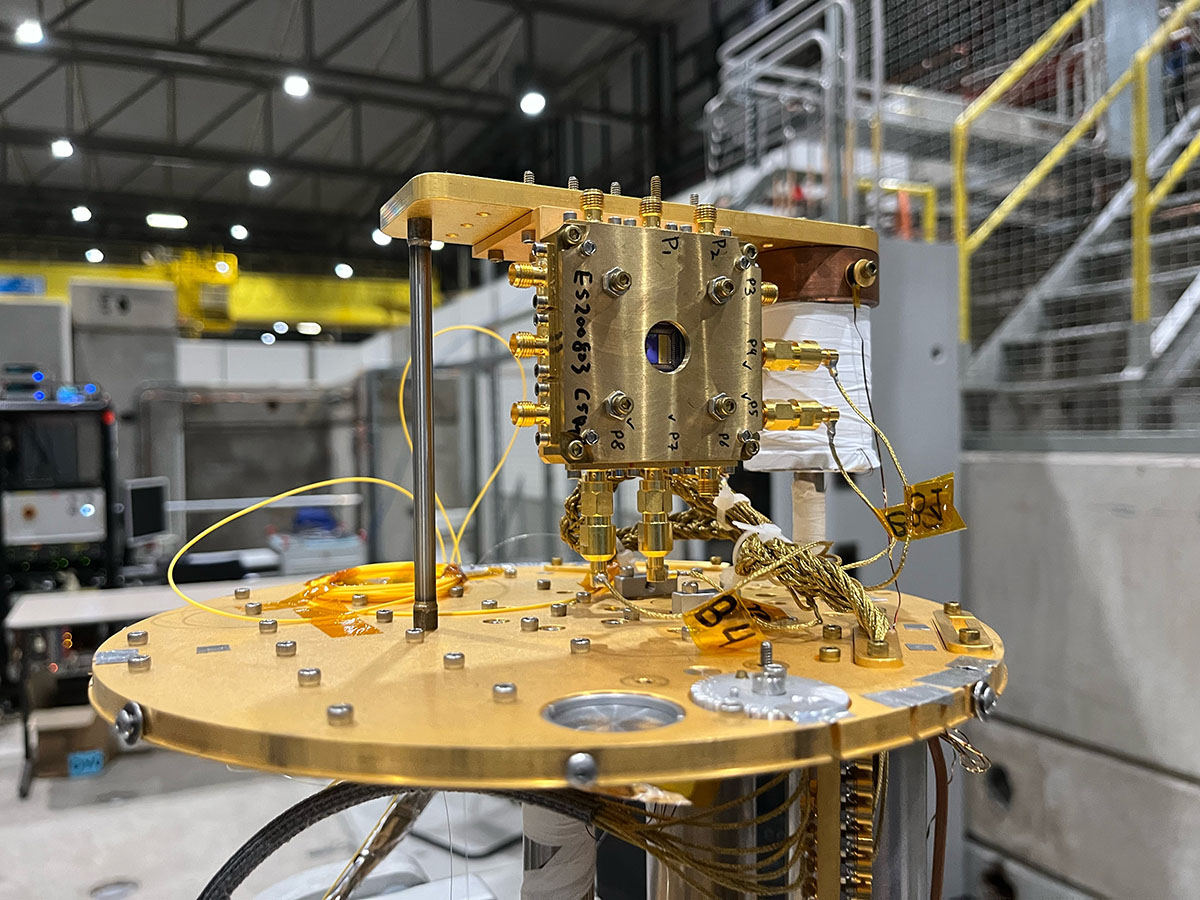
For decades, a persistent discrepancy between experimentally measured g-2 values and theoretical predictions tantalized physicists. The Brookhaven National Laboratory measurement published in 2001 revealed an anomaly roughly 2.5 standard deviations above the Standard Model prediction — suggestive of new physics, but not conclusive enough to claim a discovery. The Fermilab experiment was designed to settle the question definitively. In a remarkable logistical achievement in 2013, collaborators transported Brookhaven's 15-meter-diameter, 50-ton superconducting storage ring more than 3,200 miles by road and sea barge to Illinois without disturbing the precision engineering of the magnet. The resulting measurement, published in 2025, achieved a precision of 127 parts per billion — approximately 30,000 times more precise than the original 1965 CERN measurement and the most accurate result in the experiment's history.
The scientific picture that emerged from the Fermilab results is subtler than a simple discovery of new physics. While the experimental value remains slightly above older Standard Model predictions, a new set of theoretical calculations using lattice quantum chromodynamics — a technique that uses supercomputers to simulate the strong nuclear force directly — brought the theoretical estimate into closer alignment with the experiment. The discrepancy between the two theoretical approaches is now itself an active field of research. Whether the Fermilab result ultimately points toward undiscovered particles or simply reflects imperfections in the older analytical methods remains an open question the physics community will work to resolve in the coming years.
Fermilab scientist Chris Polly, who accepted the prize alongside Bradley Lee Roberts of Boston University, William M. Morse of Brookhaven, and David Hertzog of the University of Washington, described the experiment as a "gift to physics" that would outlast any single interpretation. Fermilab Director Norbert Holtkamp called it "the most accurate measurement of the muon for years to come." The award was part of a broader Breakthrough Prize ceremony honoring six groups across physics, mathematics, and life sciences at the April 18 gala, underscoring what prize organizers called an extraordinary vintage year for fundamental science.