LHCb Detector at CERN Sees Rare B Meson Decay Diverge From Standard Model by 4 Sigma, Reviving Hopes for 'New Physics' Beyond the 50-Year Theory
University of Edinburgh's William Barter and Imperial College London's Mark Smith analyzed 650 billion B meson events recorded between 2011 and 2018 and found the electroweak penguin decay to four particles occurring more often than the Standard Model predicts.
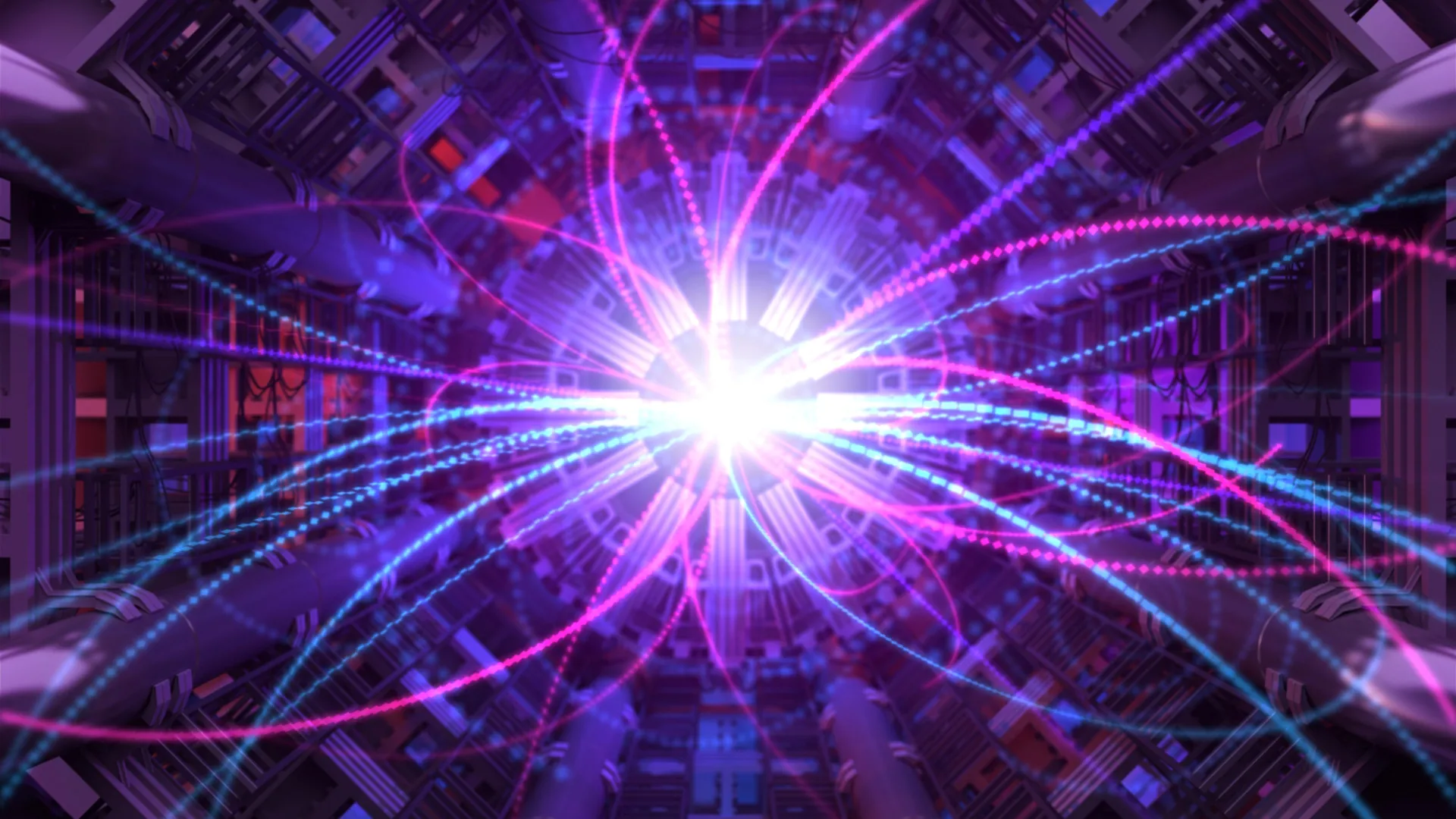
GENEVA — Physicists working on the LHCb detector at CERN's Large Hadron Collider have reported the strongest evidence in years that a rare B meson decay does not match the predictions of the Standard Model, the 50-year-old framework that has successfully described every known elementary particle and force but is widely expected to be incomplete. The deviation, published in a paper coordinated by University of Edinburgh experimentalist William Barter and Imperial College London co-author Mark Smith, reaches four standard deviations from theory — equivalent to a one-in-16,000 chance of being a statistical fluke.
The decay in question is what physicists call an "electroweak penguin" transition, in which a heavy beauty quark inside a B meson briefly emits a top quark and a W boson before transforming into a lighter strange quark. The process is among the rarest in particle physics: for every million B mesons produced, only one decays in this fashion. To accumulate enough events to test the Standard Model's prediction, the LHCb collaboration analyzed approximately 650 billion B meson decays collected between 2011 and 2018, the first complete sweep of LHC data through Run 2.
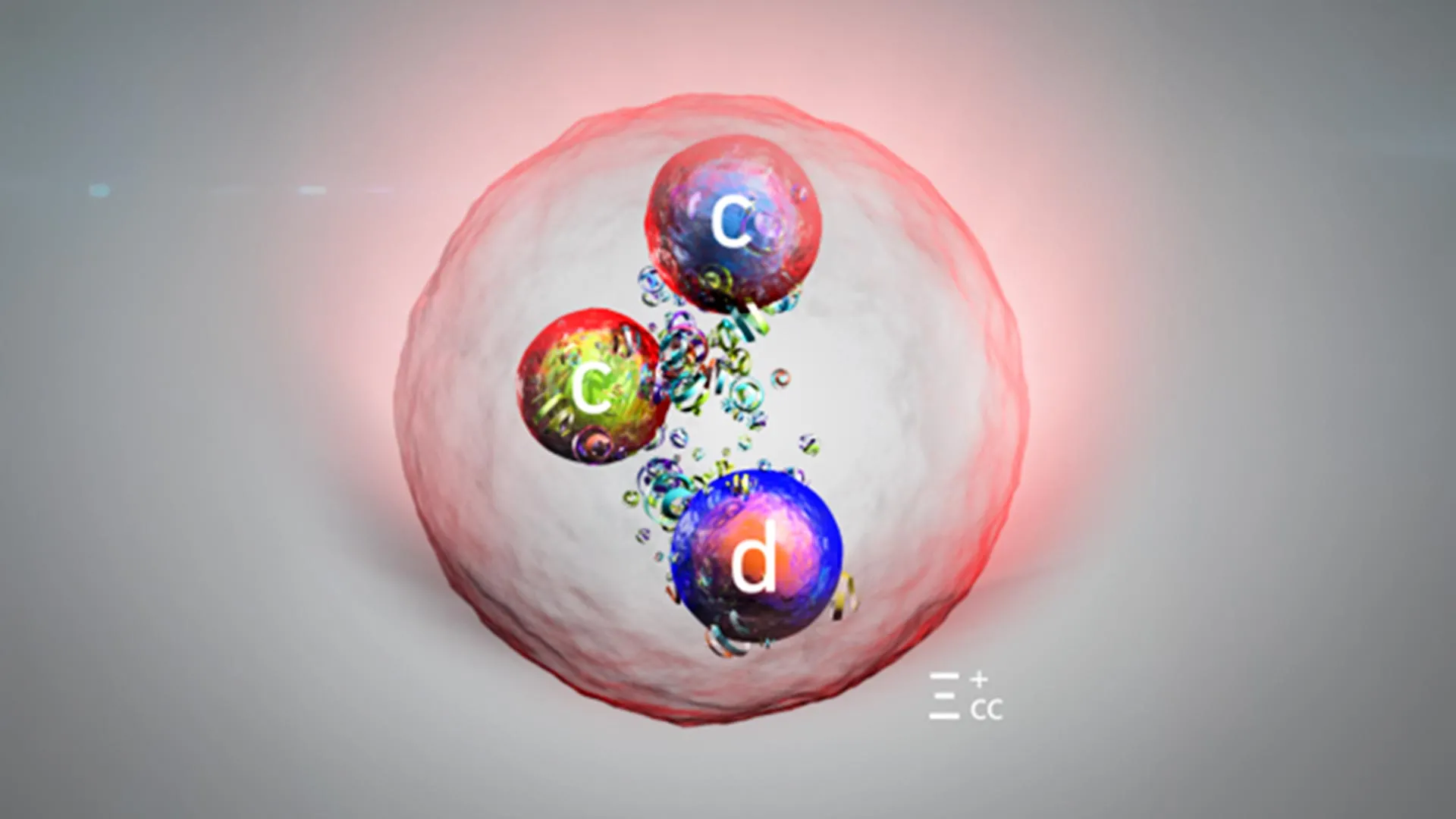
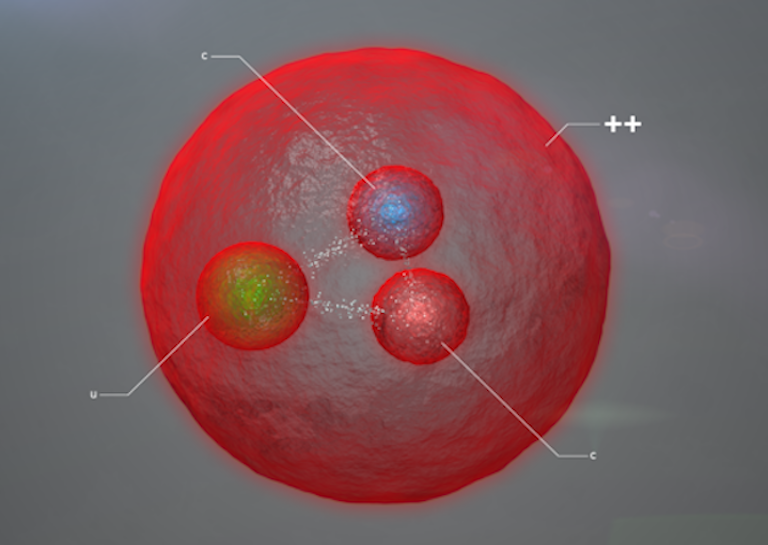
The team focused specifically on B mesons decaying into four final particles — a kaon, a pion and two muons — and measured the angular distribution and decay rate against the Standard Model's prediction. What they found was an excess in how often the decay occurs and a different angular pattern than the theory predicts, with the combined deviation reaching the four-sigma threshold that physicists typically call "evidence" but not yet the five-sigma "discovery" level demanded for a definitive claim. A separate measurement of the same channel by the CMS experiment published in late 2025 found an anomaly in the same direction, strengthening confidence that the discrepancy is real.
If the deviation survives further scrutiny, it could be the first hint of an entirely new particle or force operating at energies just out of reach of the LHC — perhaps a "Z-prime" boson predicted by some grand unified theories, or a leptoquark coupling quarks and leptons in ways forbidden by the Standard Model. Theorists have already produced dozens of candidate models that fit the LHCb angular pattern. Confirmation, however, will require either a dramatic improvement in measurement precision or independent evidence from a different experiment, such as Belle II in Japan, which is expected to release a competing analysis in 2026.
The Large Hadron Collider has begun Run 3 with upgraded detector and beam-intensity capabilities, and the LHCb collaboration has already recorded three times as many B mesons as the original Run 2 sample. By the early 2030s, after the planned High-Luminosity LHC upgrade, the dataset is expected to grow by another factor of 15, which should be enough to push the current four-sigma anomaly across the five-sigma threshold — or to dissolve it as a statistical artifact. "Either way," Barter said in a statement, "we are about to learn something fundamental about the universe."