A Strange Cosmic 'Chirp' Reveals the Birth of a Magnetar for the First Time
Watching a distant supernova flicker four times in a quickening rhythm, astronomers caught the moment an ultra-magnetic neutron star switched on — and saw Einstein's relativity at work in an exploding star.
Astronomers say they have witnessed the birth of a magnetar — one of the most extreme objects in the universe — for the first time, thanks to a peculiar "chirping" signal buried in the light of a distant exploding star.
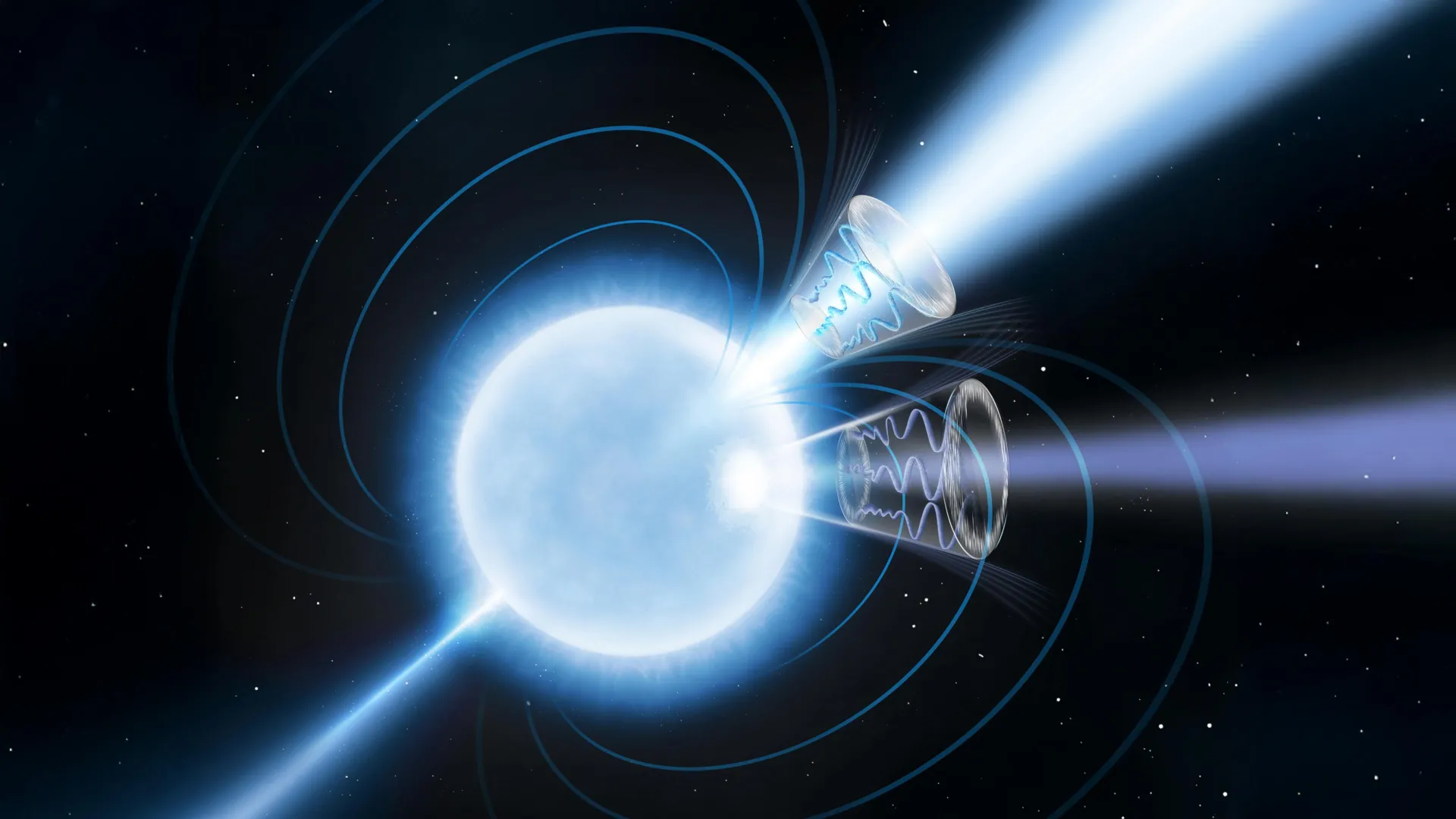
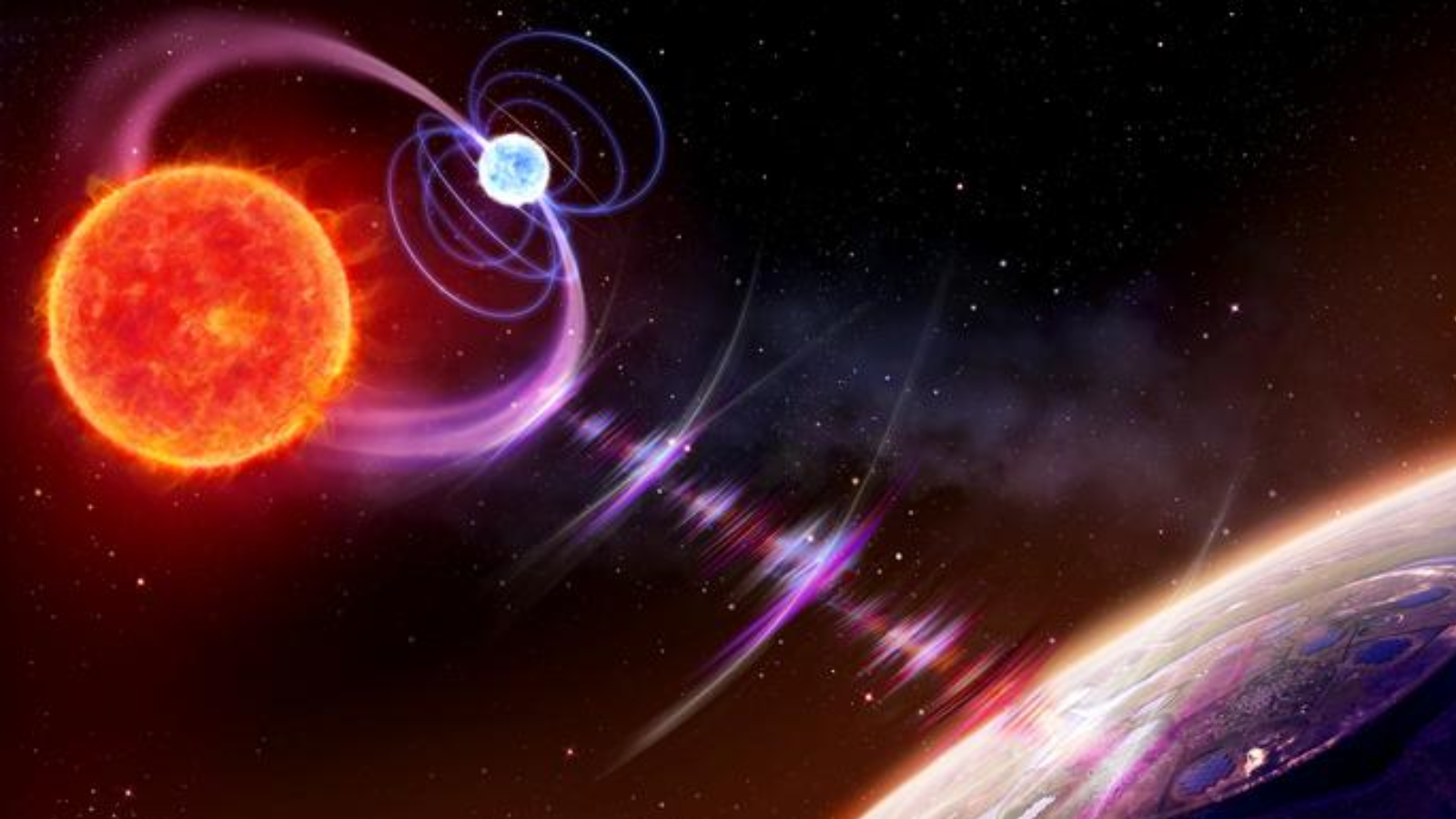
A magnetar is a type of neutron star, the ultradense cinder left behind when a massive star collapses, but with a magnetic field trillions of times stronger than Earth's. These objects are prime suspects for powering the universe's brightest stellar explosions, known as superluminous supernovae, yet catching one at the moment of its formation had long eluded scientists. The new detection, described by researchers led by the University of California, Berkeley, finally provides that missing evidence.
The clue came from supernova SN 2024afav, which the Las Cumbres Observatory — a global network of 27 robotic telescopes — monitored for more than 200 days. Rather than fading smoothly, the supernova's brightness showed four distinct bumps, with the intervals between them growing progressively shorter, like a rising chirp. That rhythm, the team concluded, was the fingerprint of a newborn magnetar's engine buried at the heart of the blast.
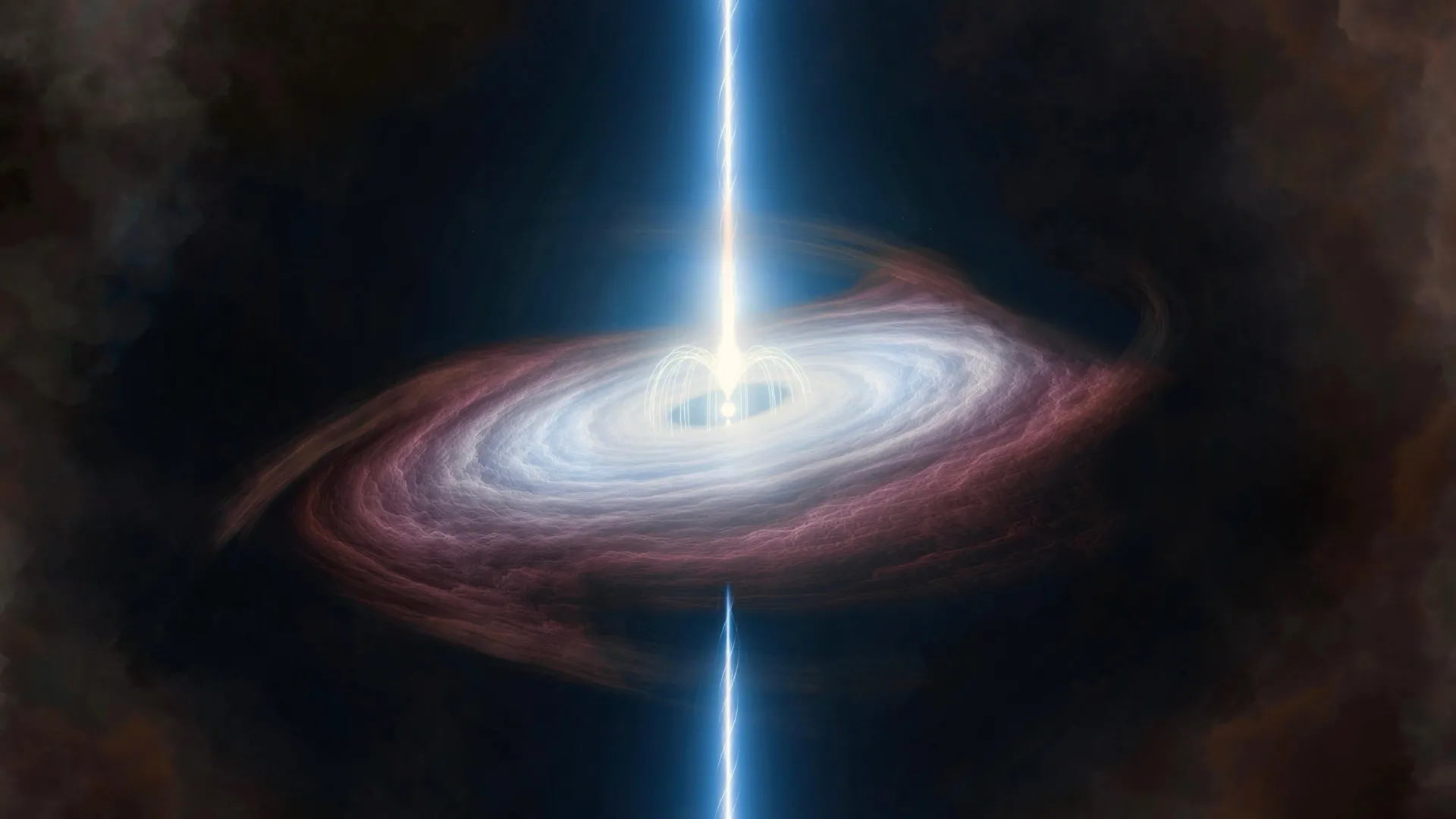
The astronomers traced the flickering to a tilted disk of material swirling around the young magnetar. Because the disk was misaligned with the star's spin, it slowly wobbled — a relativistic effect known as Lense-Thirring precession, predicted by Einstein's general theory of relativity — periodically blocking and reflecting light "like a flashing cosmic lighthouse." As the disk's wobble sped up, so did the chirp.
"The chirp in this supernova signal is like that engine pulling back the curtain and revealing that it's really there," said Dan Kasen, one of the study's authors, referring to the long-hypothesized magnetar engine thought to drive the brightest supernovae. The observation offers direct confirmation that such an engine exists and is switched on within days of the explosion.
For the researchers, the discovery was a rare chance to see one of nature's grandest predictions play out in real time. "To see a clear effect of Einstein's general theory of relativity is always exciting, but seeing it for the first time in a supernova is especially rewarding," said Alex Filippenko, a veteran UC Berkeley astronomer and co-author. Joseph Farah of UC Santa Barbara and the Las Cumbres Observatory helped lead the effort. Together, the findings open a new window onto how the most magnetic objects in the cosmos are born — and how they light up the sky when they do.