Scientists Create a 'Supersolid' at Room Temperature, Cracking a State That Once Needed Near Absolute Zero
Rensselaer researchers coaxed light and a perovskite crystal into a bizarre quantum phase that is both a rigid crystal and a frictionless fluid — no cryogenics required.

Researchers have created a supersolid — one of the strangest states of matter known to physics — at room temperature, shattering the long-standing assumption that such exotic quantum phases can exist only within a whisker of absolute zero.
A supersolid is a paradox made real: matter that is simultaneously a rigid, orderly crystal and a frictionless superfluid capable of flowing without resistance. Until now, the handful of experiments that produced supersolids relied on ultracold atomic gases chilled to nanokelvin temperatures, keeping the phenomenon locked inside elaborate cryogenic apparatus and far from any practical use.
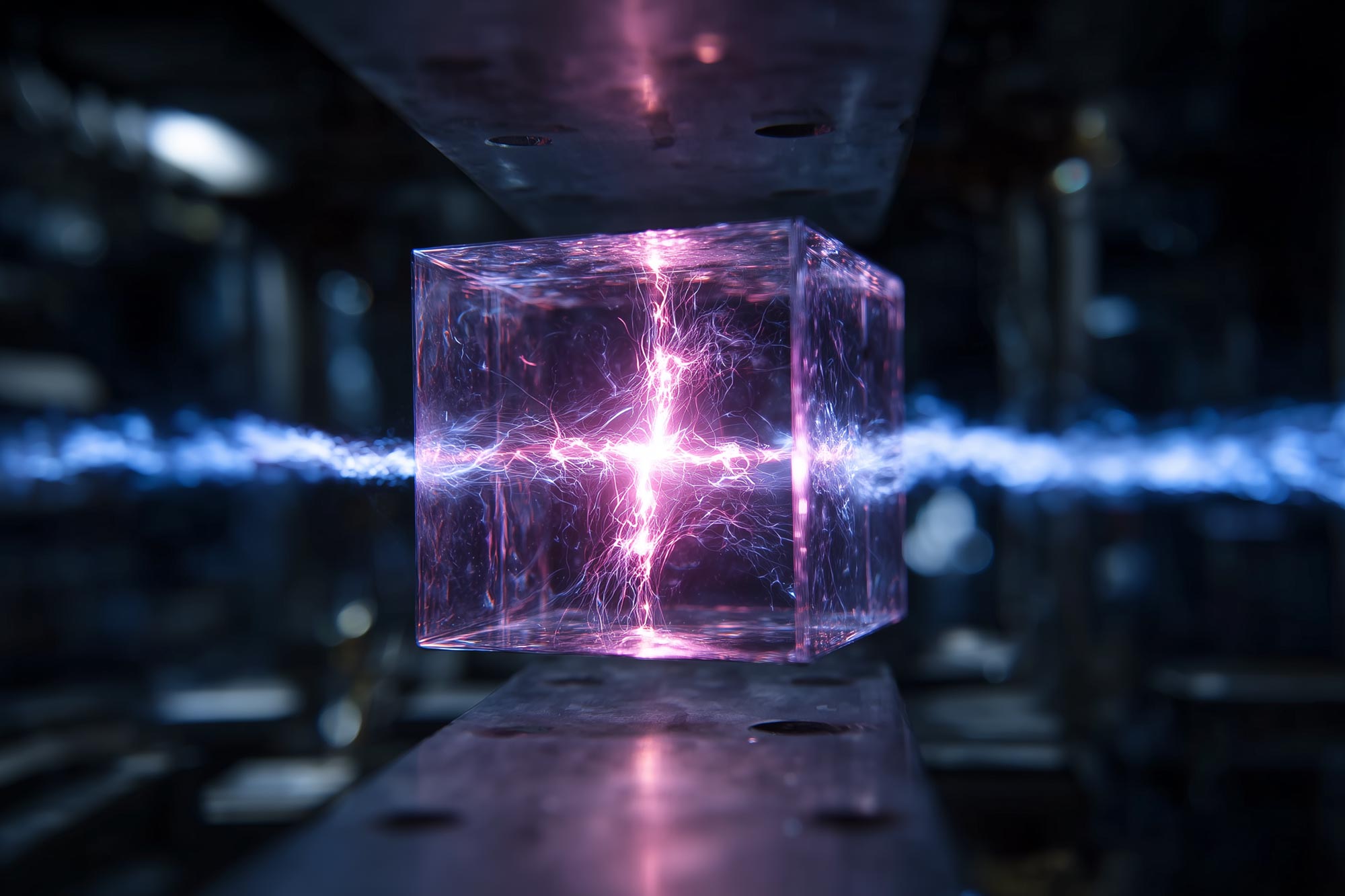
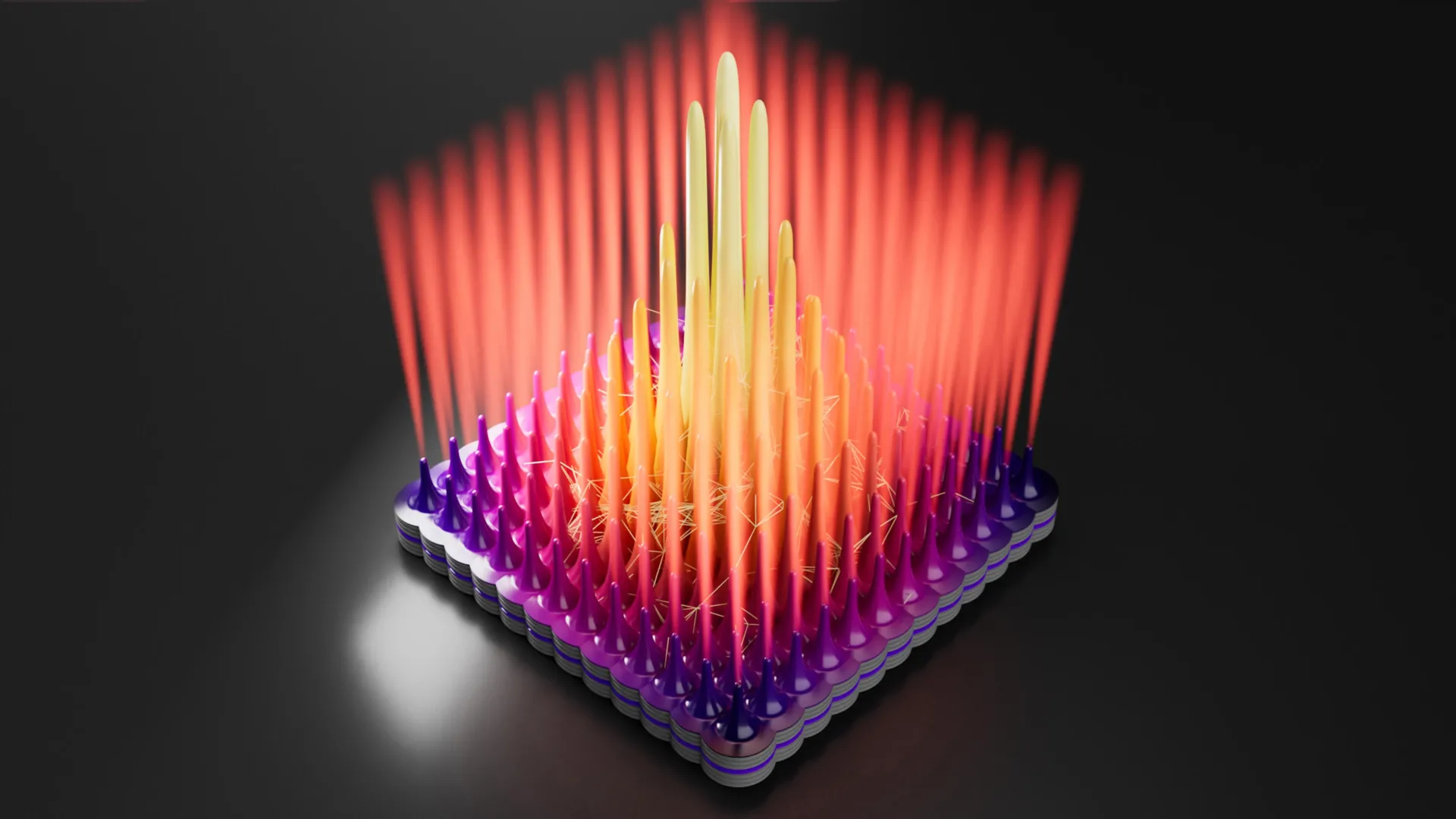
The new work, reported in Nature Nanotechnology by a team at Rensselaer Polytechnic Institute, takes a fundamentally different route using light. The scientists combined a high-quality perovskite crystal with a precisely engineered nanostructure designed to trap and shape light. When the system is illuminated with a laser, it generates polaritons — hybrid particles that are part light and part matter. Those polaritons condense into a single coherent quantum fluid that, at higher energies, spontaneously reorganizes itself into a striped pattern, the tell-tale fingerprint of a supersolid.
"This is the defining feature of a supersolid. The system is both ordered and coherent at the same time," said Wei Bao, an assistant professor of materials science and engineering at Rensselaer who led the study with co-lead authors Wei Li and Yilin Meng. The striped density pattern shows crystalline order, while the underlying coherence of the polariton condensate provides the frictionless, wavelike character of a superfluid.
Achieving the effect without cryogenic cooling is what makes the result stand out. By building the supersolid from light-matter particles inside a solid-state device rather than from a gas of ultracold atoms, the team brought a phenomenon once confined to specialized low-temperature labs into a room-temperature platform that is far easier to probe and manipulate. That accessibility could accelerate research into how supersolids behave and how their unusual properties might eventually be harnessed.
Scientists caution that practical applications remain distant, and much work lies ahead to understand and control the state. But the demonstration is significant on its own terms: it expands the toolkit for studying quantum matter and suggests that other phenomena thought to require extreme cold might be engineered at everyday temperatures using carefully sculpted light. For a field that has spent decades chasing quantum effects in ever-colder conditions, coaxing a supersolid to appear at room temperature is a striking reminder that clever design can sometimes stand in for brute-force refrigeration.