Large Hadron Collider Finds Strongest Hints Yet of Physics Beyond Standard Model
Scientists studying rare 'penguin decays' detect particle behavior that disagrees with 50-year-old theory, suggesting unknown particles or forces may exist.
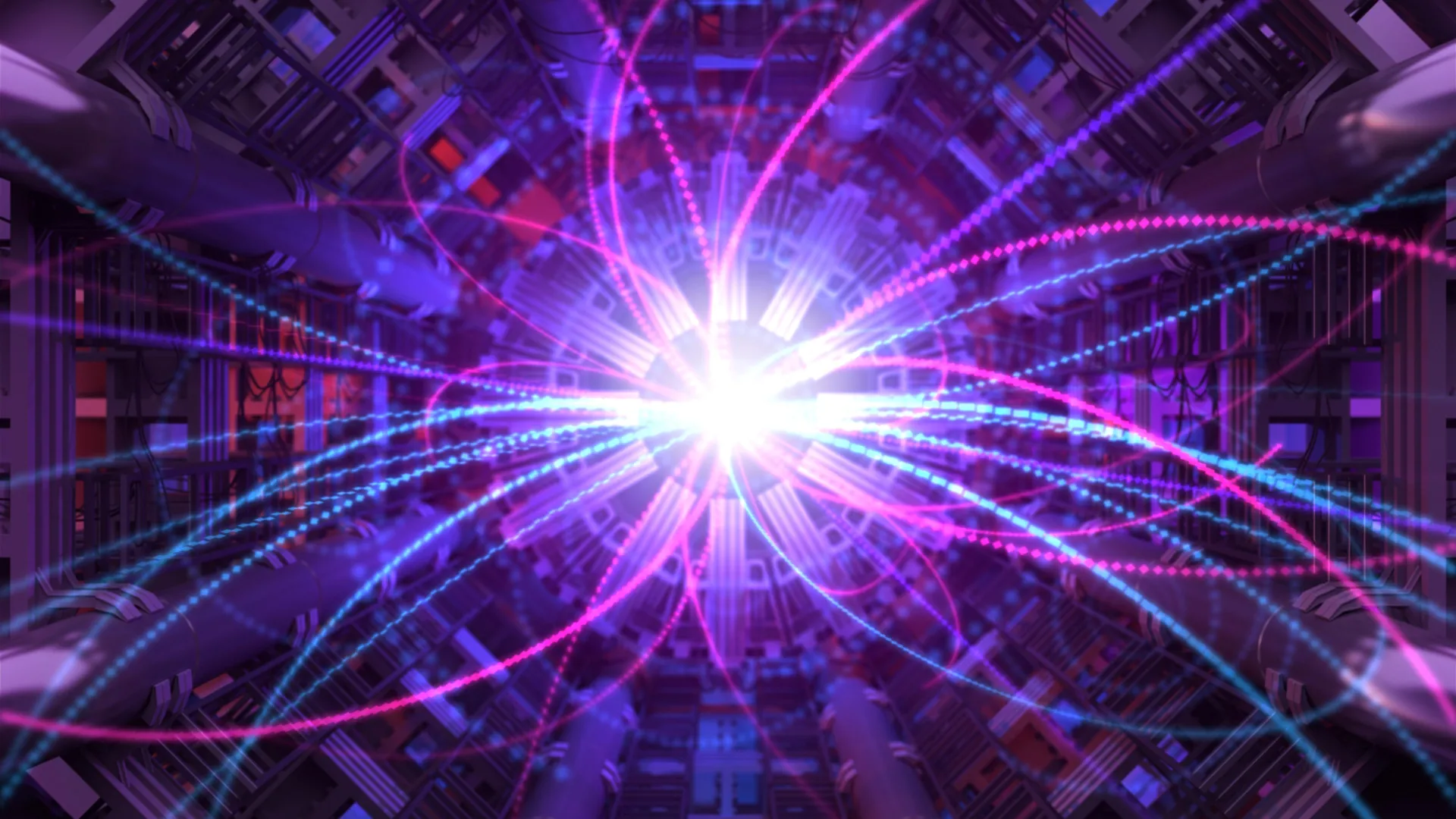
Scientists working at CERN's Large Hadron Collider have detected what may be the strongest evidence yet of physics beyond the Standard Model, the decades-old theory that explains fundamental particles and forces. The breakthrough comes from studying incredibly rare particle transformations called "penguin decays," where researchers found behavior that doesn't match theoretical predictions, raising the possibility that unknown particles or forces are influencing the results.
The findings, accepted for publication in Physical Review Letters, show a tension of four standard deviations from Standard Model expectations. In scientific terms, this means there's only a one in 16,000 chance that such an extreme deviation would occur randomly if the Standard Model is correct. While this falls short of the gold standard five sigma threshold required for a definitive discovery, the evidence is mounting significantly.
The research focuses on B mesons, subatomic particles that decay in specific ways according to Standard Model predictions. By analyzing these decay patterns at the LHCb experiment, scientists discovered that the particular transformation process disagrees with what the theory suggests should happen. This discrepancy could indicate the presence of new physics that the Standard Model cannot account for.
The Standard Model, built on quantum mechanics and Einstein's special relativity, has withstood over 50 years of increasingly rigorous testing without scientists finding definitive cracks in the theory. Despite its remarkable success, physicists know it cannot be complete because it fails to explain gravity or dark matter, the invisible substance that comprises approximately 25% of the universe.
Adding weight to these findings are independent results from the CMS experiment at the Large Hadron Collider, published earlier in 2025. The convergence of evidence from multiple experiments strengthens the case that scientists may finally be observing phenomena that require new physics beyond our current understanding of the fundamental nature of reality.