Large Hadron Collider Detects Particle Behavior That Could Shatter Physics
Penguin decays show behavior inconsistent with Standard Model predictions, with only 1-in-16,000 chance results are random fluctuation.
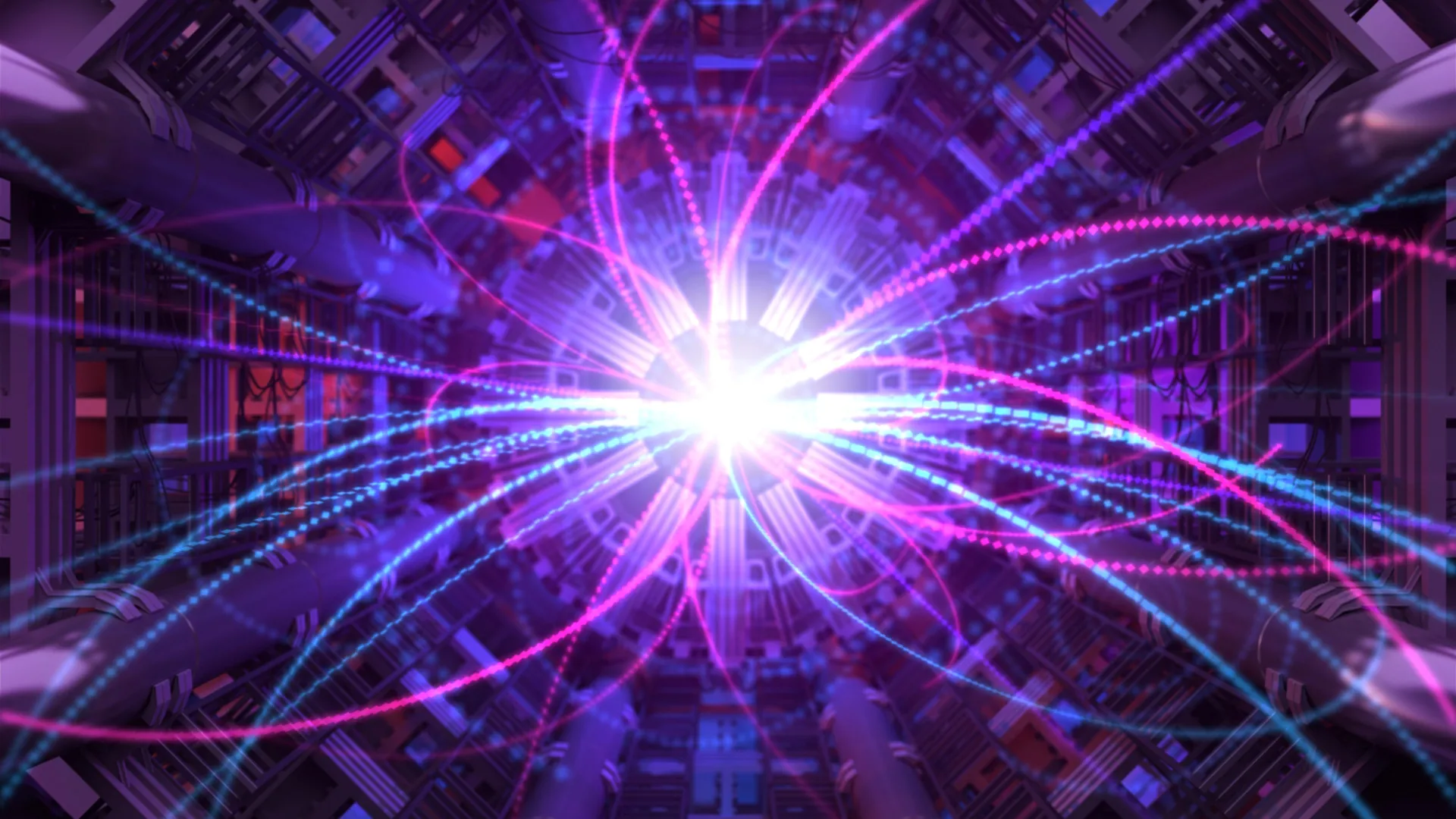
Scientists at CERN's Large Hadron Collider have discovered particle behavior that appears to violate the Standard Model of physics, potentially marking the first crack in the 50-year-old theory that explains fundamental particles and forces. The findings emerge from studying extremely rare particle transformations called "penguin decays," where B mesons decay into other particles in ways that don't match theoretical predictions.
The research team used the LHCb experiment to analyze these decay patterns, finding discrepancies that register four standard deviations from Standard Model expectations. This means there's only a one-in-16,000 chance that random fluctuations in the data could explain the unusual results. While this falls short of the five-sigma standard typically required to claim a discovery in physics, the evidence is mounting as independent experiments begin to show similar anomalies.
The Standard Model, built on quantum mechanics and Einstein's special relativity, has withstood rigorous testing for half a century despite known limitations. Scientists have long recognized that the theory cannot explain gravity or dark matter, which comprises roughly 25% of the universe. However, finding direct experimental evidence that contradicts the model's predictions represents a potentially groundbreaking development that could reshape fundamental physics.
The penguin decay measurements, accepted for publication in Physical Review Letters, suggest that unknown particles or forces may be influencing the results. These interactions could point toward new physics beyond the Standard Model, offering clues about the universe's deeper structure and the forces that govern matter at its most fundamental level.
Additional support for these findings comes from the CMS experiment, another Large Hadron Collider detector that published similar results earlier in 2025. The convergence of evidence from multiple independent experiments strengthens the case that scientists may be witnessing the first signs of physics beyond our current understanding, potentially opening new frontiers in particle physics research.