CERN Physicists Discover Doubly Charmed Baryon, Resolving a 20-Year Particle Physics Mystery
The Xi-cc-plus particle, four times heavier than a proton and containing two charm quarks, was observed with seven-sigma certainty by the upgraded LHCb detector at Geneva.
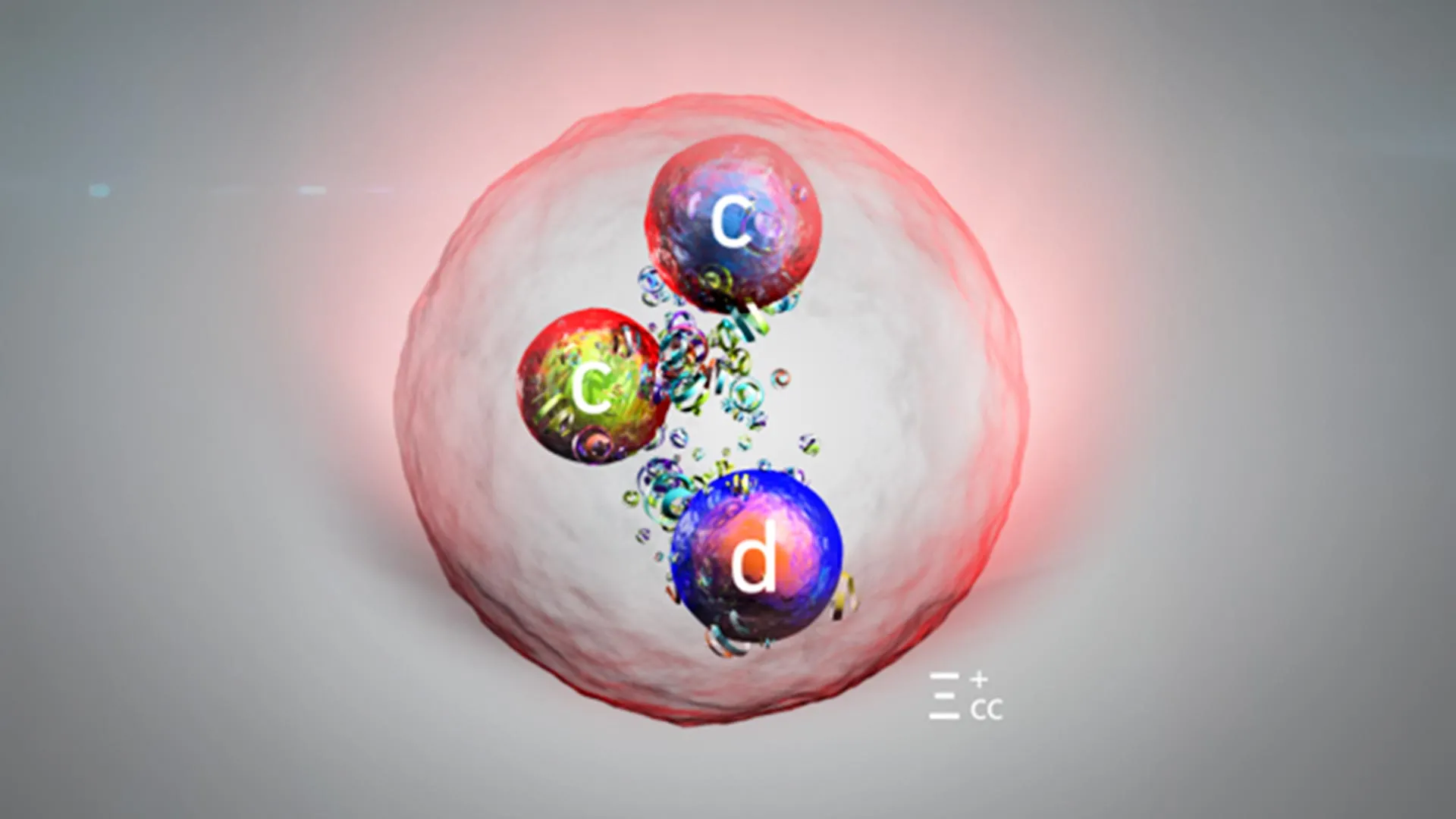
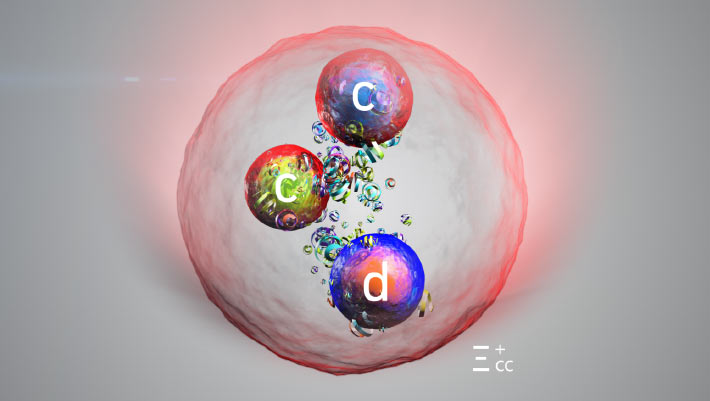
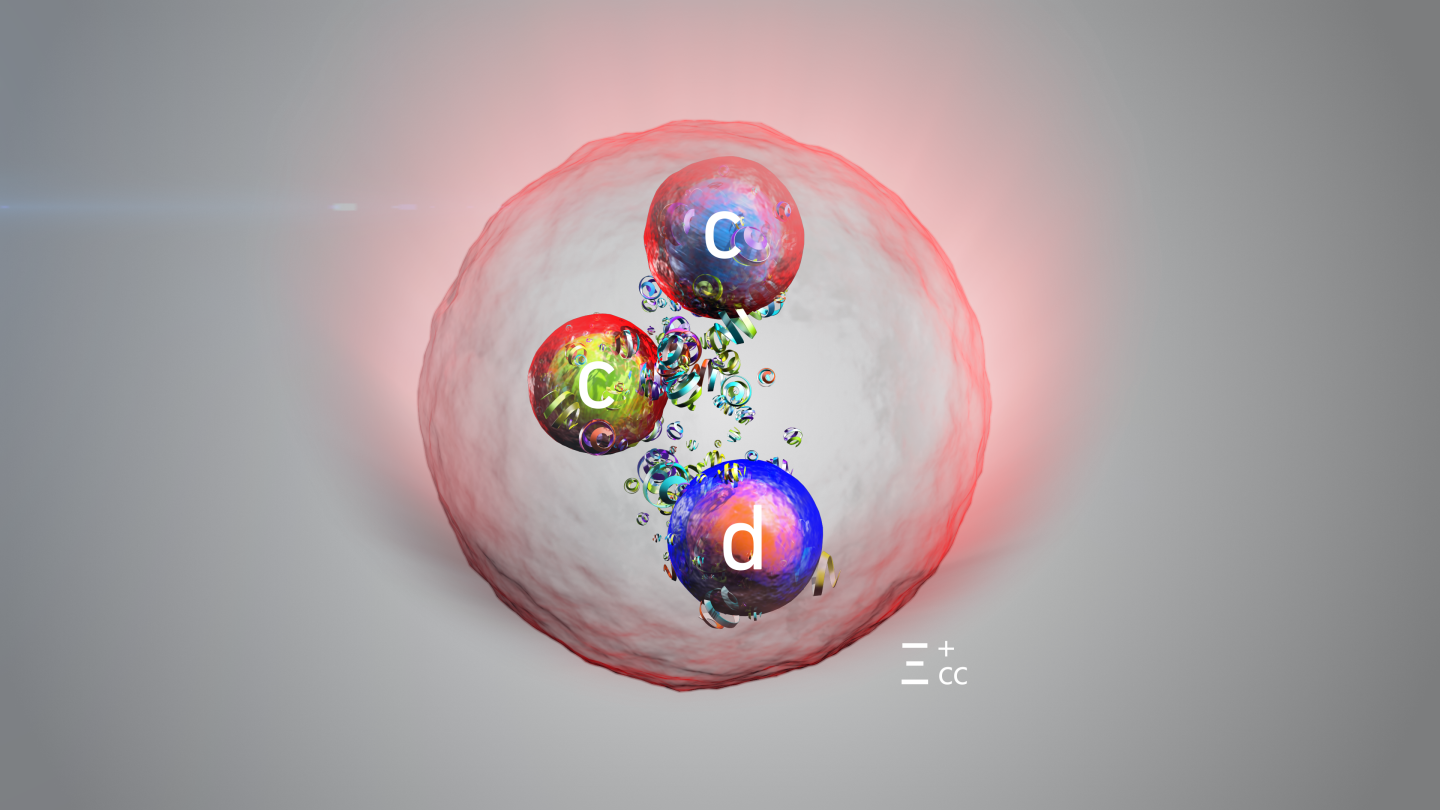
Physicists at CERN's Large Hadron Collider have discovered a new subatomic particle that resolves a 20-year-old mystery in particle physics — and in doing so, have validated the extraordinary precision of the world's most powerful upgraded particle detector. The particle, designated Ξcc⁺ (Xi-cc-plus), is a doubly charmed baryon: a heavy cousin of the proton containing two charm quarks and one down quark, rather than the proton's two up quarks and one down. Its discovery, announced March 17, 2026, at the Rencontres de Moriond Electroweak conference, was achieved with a statistical significance of seven sigma — well above the five-sigma threshold required for a discovery claim in physics.
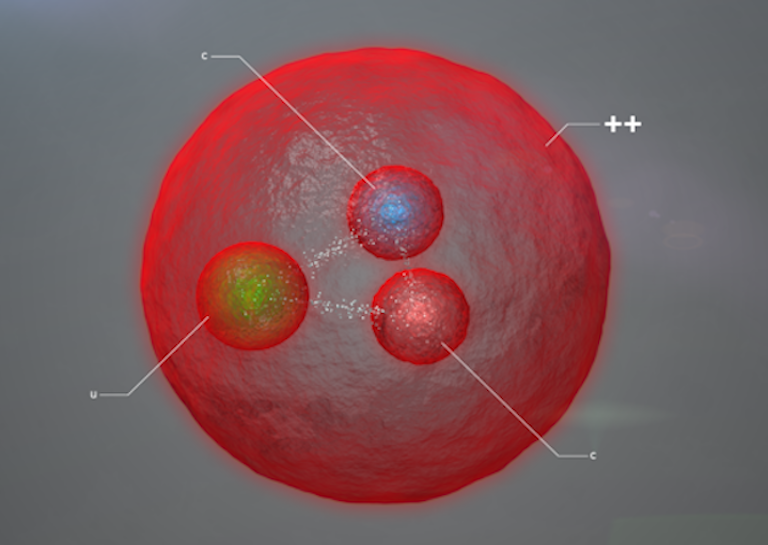
The LHCb (Large Hadron Collider beauty) experiment identified the Ξcc⁺ by observing its decay into three lighter particles — a Λc⁺ baryon, a kaon (K⁻), and a pion (π⁺) — across approximately 915 reconstructed events from proton-proton collision data collected during the LHC's third run. The measured mass of the particle is 3,619.97 MeV/c², a value in close agreement with theoretical predictions derived from the properties of the Ξcc⁺⁺ (Xi-cc-plus-plus), the Xi-cc-plus's double-positively-charged partner, which LHCb discovered in 2017.
The significance of the discovery lies as much in what it closes as in what it opens. In 2002, an American experiment called SELEX at Fermilab claimed to have observed the Ξcc⁺ at a very different mass — 3,518.9 MeV/c². That result was never reproduced by any subsequent detector, leaving a two-decade question mark over the particle's existence. The new LHCb observation, at a mass incompatible with the SELEX claim, effectively supersedes it. 'This major result is a fantastic example of how LHCb's unique capabilities play a vital role in the success of the LHC,' said CERN Director-General Mark Thomson.
The discovery is the first major result from the upgraded LHCb detector, which underwent a comprehensive overhaul completed in 2023. The upgrade, which increased the detector's read-out rate and added a new silicon pixel tracking system, was partly designed and assembled by teams at the University of Manchester under Professor Chris Parkes, who also serves as LHCb spokesperson. Dr. Stefano De Capua led the production of silicon detector modules built in Manchester's Schuster Building. 'This discovery resolves a question that had remained open for more than two decades,' Parkes said. 'It also brings our total count of hadrons discovered at the LHC to 80.'
Doubly heavy baryons are theoretically important because their two heavy quarks form a compact inner core, while the lighter quark orbits at a much greater radius — creating an internal structure that physicists liken to a miniature hydrogen-like atom inside a baryon. This arrangement offers a unique laboratory for testing quantum chromodynamics (QCD), the theory that describes how quarks are bound together by the strong nuclear force. Specifically, the heavy-quark expansion methods used to predict the Ξcc⁺ mass can now be precisely calibrated against experiment, potentially improving predictions for other exotic hadrons including pentaquarks and tetraquarks.
The LHCb collaboration involves more than 1,000 scientists from 20 countries, with the United Kingdom providing the largest single national contribution. The UK has a particular historical resonance with the discovery: the proton — the ordinary baryon from which the Ξcc⁺ is built — was discovered by Ernest Rutherford at the University of Manchester between 1917 and 1919. More than a century later, Manchester scientists played a central role in discovering a particle that contains two quarks of the type that make protons heavy, closing one chapter in the long story of how matter holds itself together.