LHCb Finds First Evidence of One of Nature's Rarest Decays After a 42-Year Hunt
The upgraded experiment at CERN saw a beauty particle decay into two muons at 3.2 sigma, matching the Standard Model but opening a narrow window onto the 'Zeptoverse.'
Topic
16 stories from Planck Standard. Latest: November 11, 2026.

The upgraded experiment at CERN saw a beauty particle decay into two muons at 3.2 sigma, matching the Standard Model but opening a narrow window onto the 'Zeptoverse.'

A B0 meson turning into two muons happens about once in ten billion decays; the signal sits at 3.2 sigma and agrees with the Standard Model.

The LHCb experiment sees a beauty particle turn into two muons at 3.2 sigma, matching the Standard Model and ending a 40-year hunt's first chapter.

CMS and LHCb both see small, consistent differences in a decay that happens about once in 10 million beauty-particle decays, though neither result is conclusive.

University of Edinburgh's William Barter and Imperial College London's Mark Smith analyzed 650 billion B meson events recorded between 2011 and 2018 and found the electroweak penguin decay to four particles occurring more often than the Standard Model predicts.

A new analysis of 650 billion B-meson decays at CERN reveals one of the strongest hints in years of physics beyond the Standard Model. A discovery may be within reach.

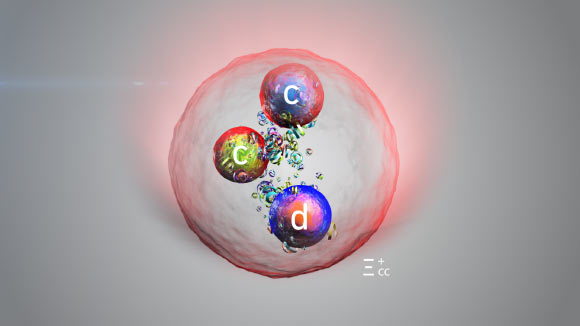
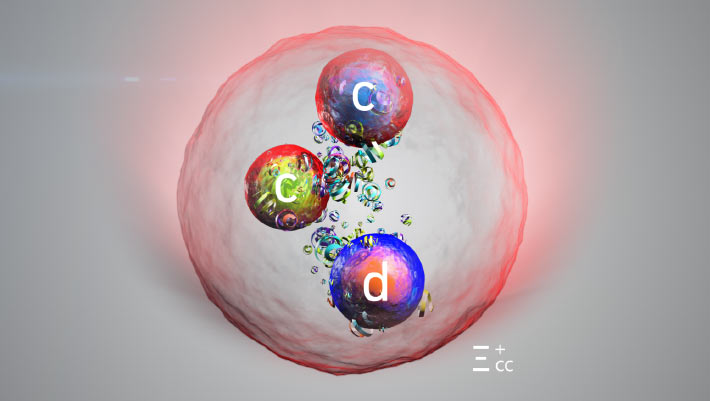
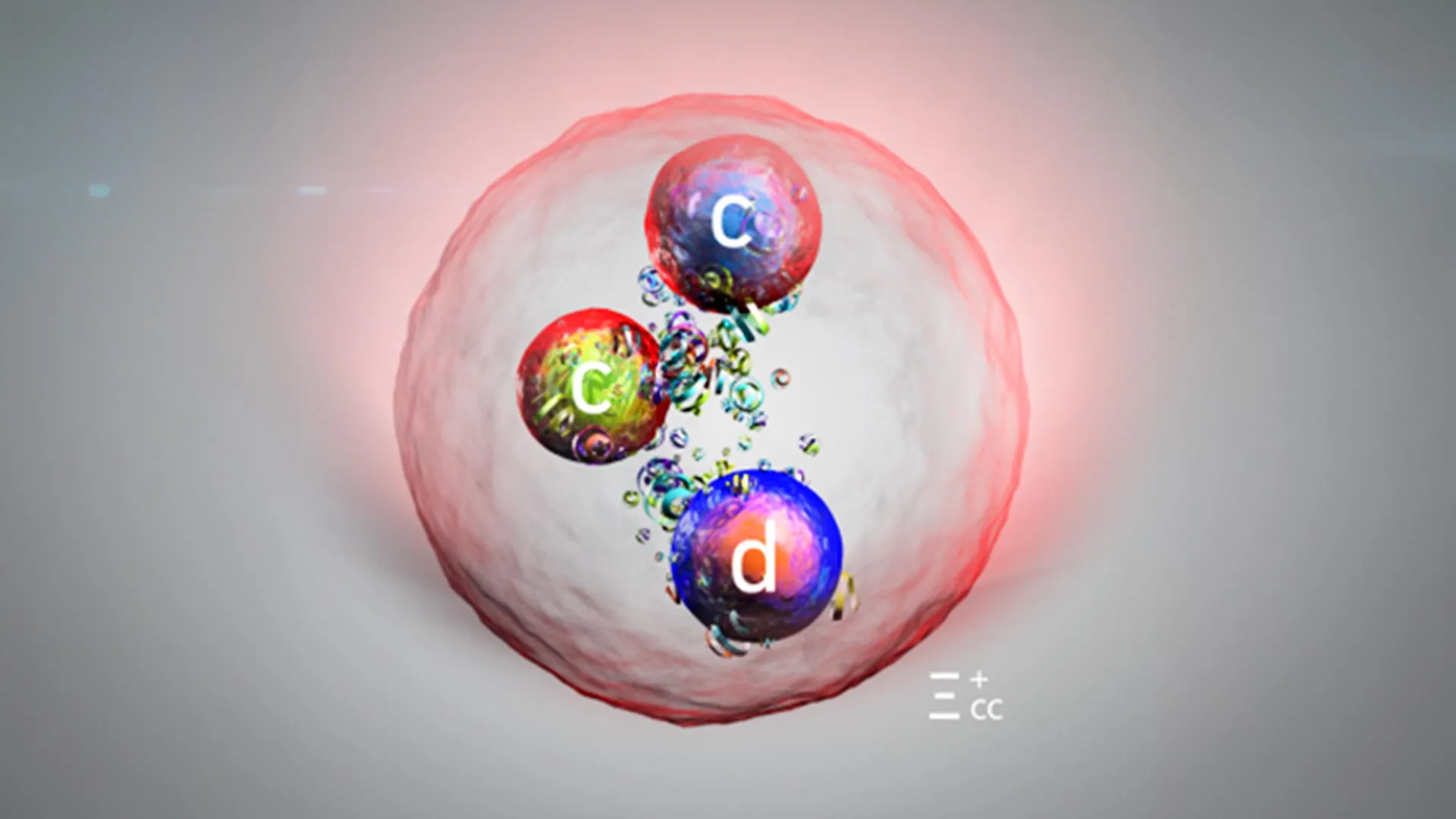
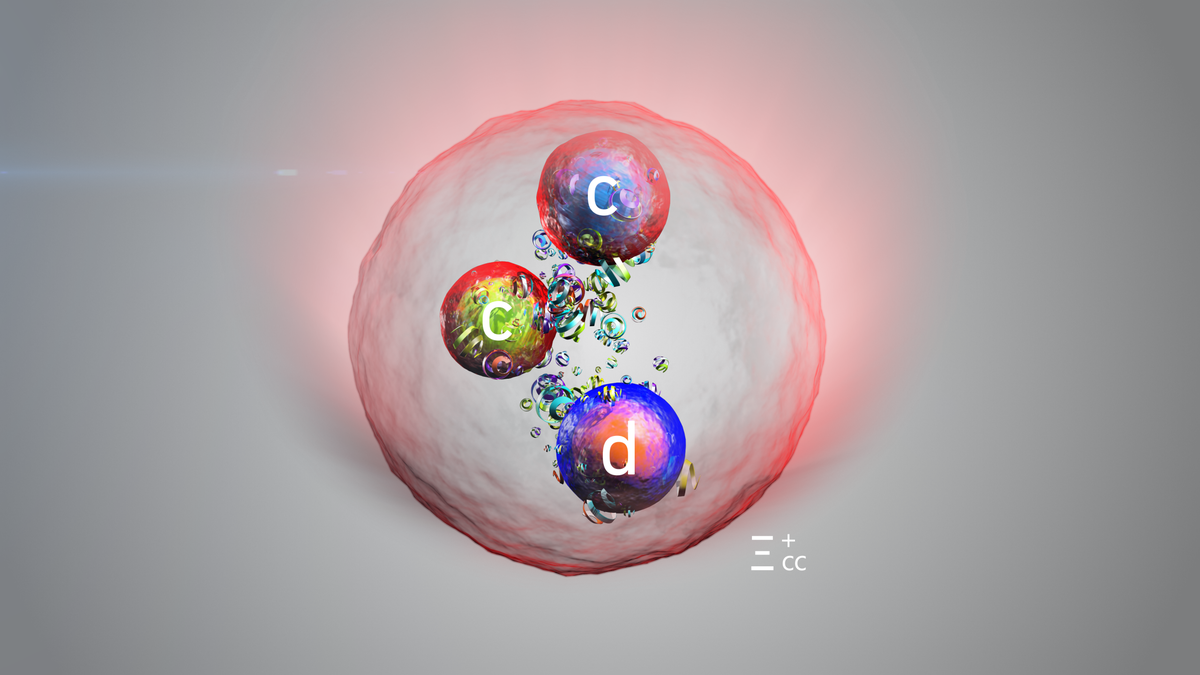
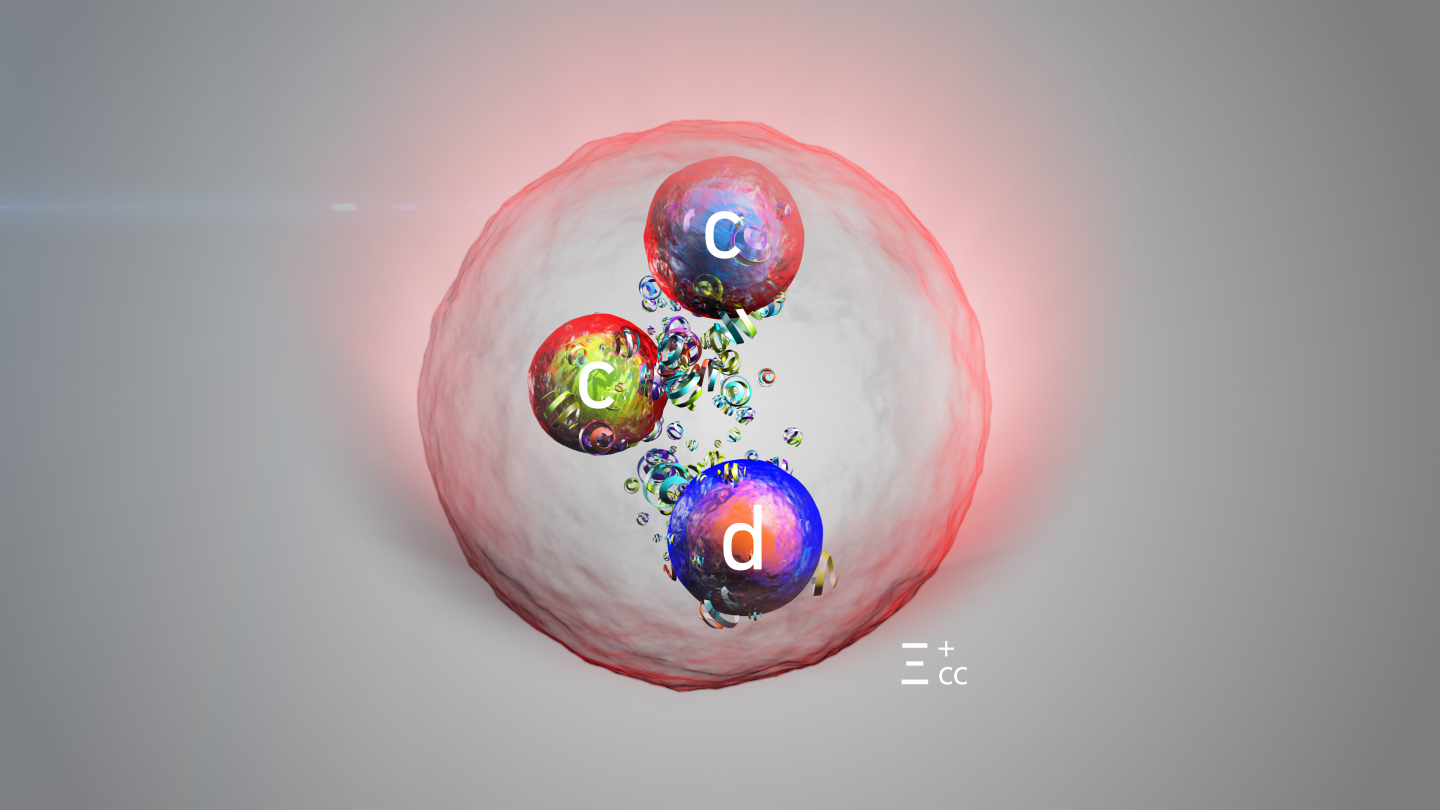
The Ξcc⁺ particle—containing two charm quarks and one down quark—was detected with a 7-sigma confidence level, the first discovery from CERN's upgraded detector.

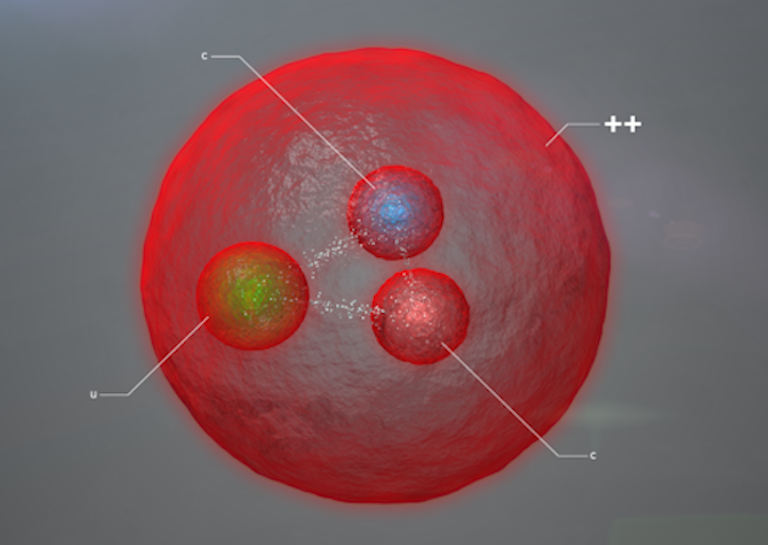
The LHCb experiment announced a 7-sigma discovery of the Xi-cc-plus, completing the doubly charmed isospin doublet and providing physicists with a precision test of quantum chromodynamics.
The LHCb collaboration found the doubly charmed baryon Ξcc⁺ with 7-sigma significance, opening a new window to test quantum chromodynamics with unprecedented precision.

The Xi-cc-plus particle, four times heavier than a proton and containing two charm quarks, was observed with seven-sigma certainty by the upgraded LHCb detector at Geneva.

The LHCb collaboration at CERN's Large Hadron Collider has confirmed the existence of the Ξcc⁺ baryon — a particle made of two charm quarks and one down quark — in the 80th hadron discovery in LHC history.

The LHCb experiment confirmed the Xi-cc-plus particle — made of two charm quarks and one down quark — at 7-sigma confidence, closing a mystery that began with ambiguous Fermilab hints in 2002.
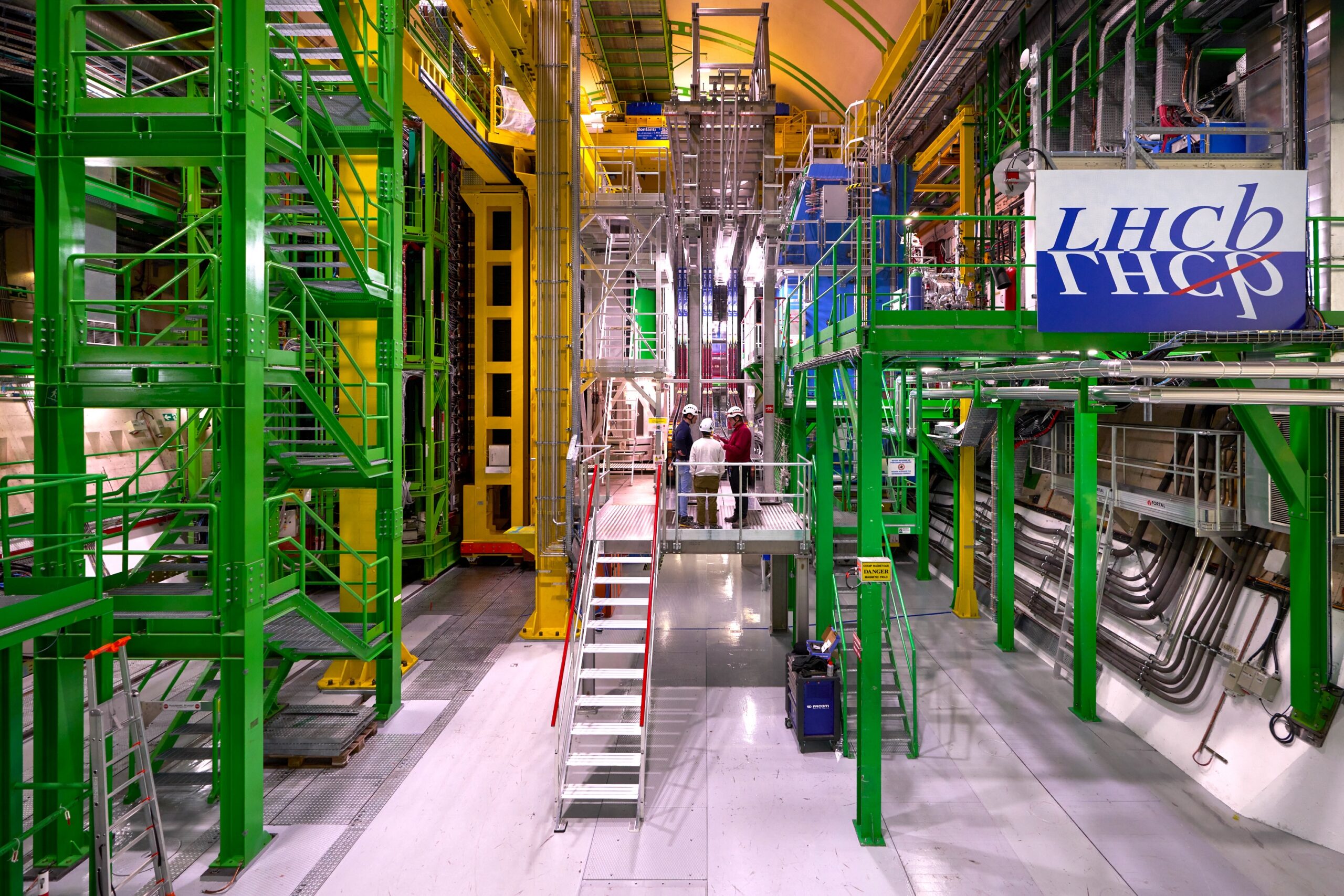
The Xi-cc-plus particle — four times heavier than a proton and built from two charm quarks — was detected at 7 sigma significance using Run 3 collision data and the upgraded LHCb detector.
The LHCb collaboration announced the observation of the Xi-cc-plus baryon — containing two charm quarks and one down quark, roughly four times heavier than a proton — at the Moriond conference on March 17, bringing the total LHC particle zoo to 80 discovered species.
The upgraded LHCb detector at the Large Hadron Collider has observed the Ξcc⁺ (Xi-cc-plus), a doubly charmed baryon predicted by theory but disputed for two decades, with 7-sigma confidence — resolving a long-standing mystery and giving physicists a new probe of the strong nuclear force.

The LHCb experiment has observed the Ξcc⁺ particle — containing two charm quarks — with 7-sigma confidence, opening a precision window on the strong nuclear force that binds all atomic matter.