CERN Scientists Discover Rare Particle Made of Two Charm Quarks, Resolving 20-Year Experimental Hunt
The LHCb collaboration found the doubly charmed baryon Ξcc⁺ with 7-sigma significance, opening a new window to test quantum chromodynamics with unprecedented precision.

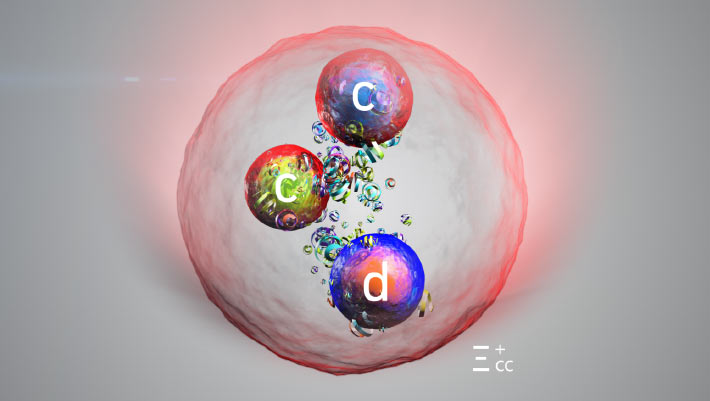
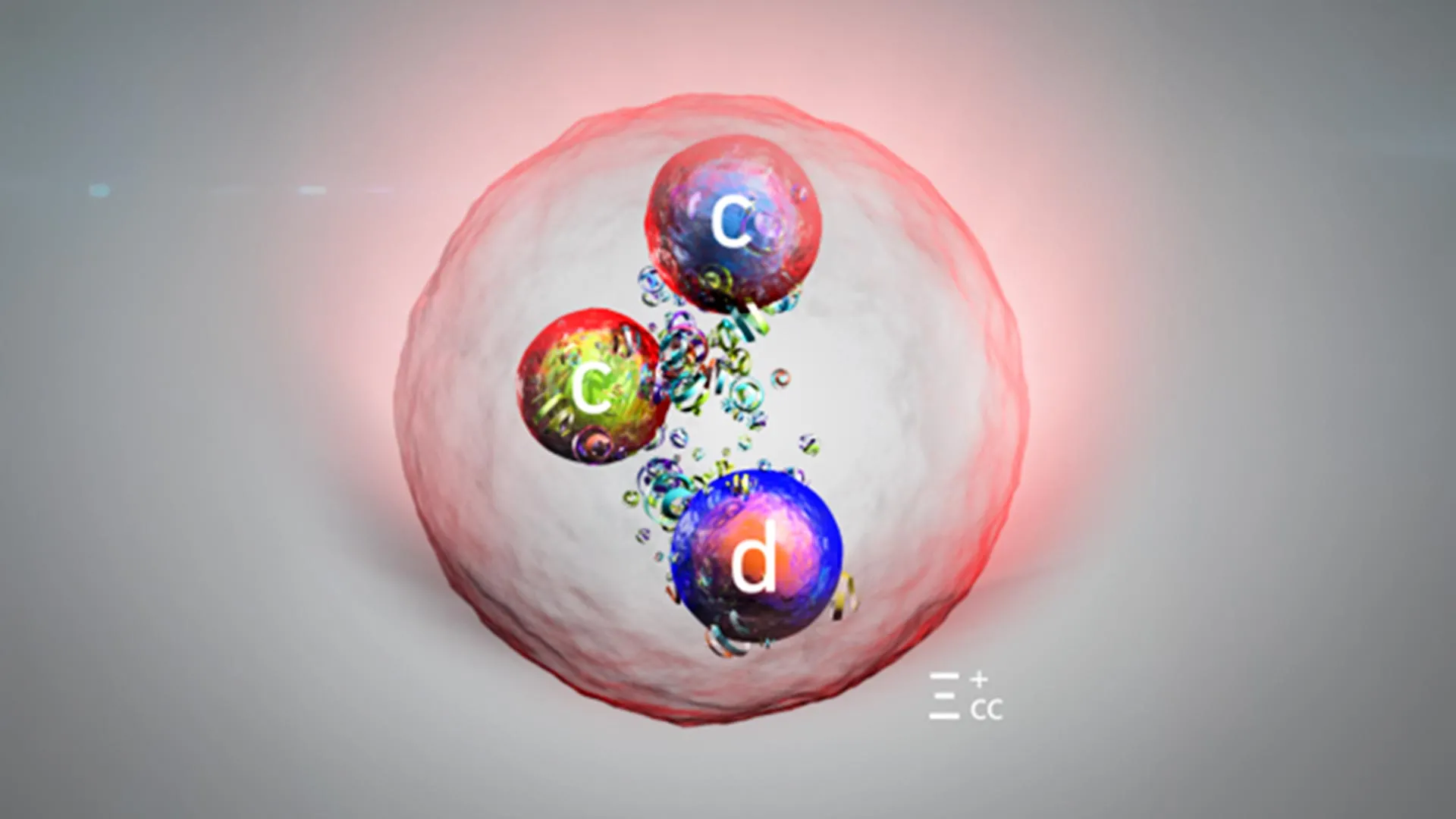
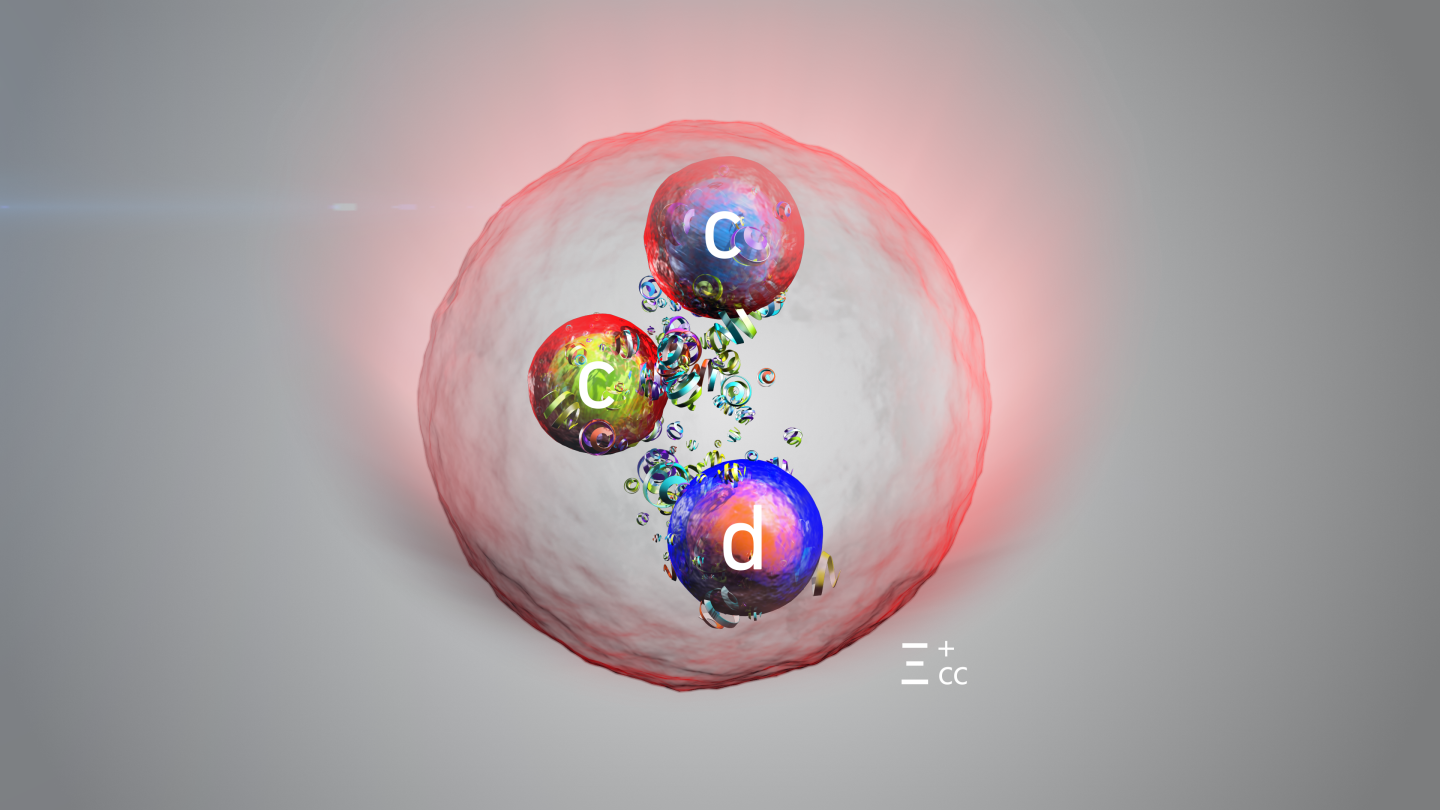
Physicists working on CERN's LHCb experiment announced in March the discovery of the doubly charmed baryon Ξcc⁺ — pronounced "Xi-cc-plus" — a rare particle made of two charm quarks and one down quark, cementing one of the most eagerly anticipated confirmations in particle physics since the Higgs boson. The discovery, based on proton-proton collision data collected during Run 3 of the Large Hadron Collider and published with statistical significance exceeding 7 sigma, closes a 20-year experimental chapter and opens a new window into the behavior of the strong nuclear force.
The particle was identified through a clear signal peak centered around 3,620 megaelectronvolts — the precise mass physicists had predicted for the doubly charmed baryon based on quantum chromodynamics, the theory that describes how quarks bind together via gluon exchange. Researchers observed approximately 915 events consistent with the particle's signature decay path, in which the Ξcc⁺ transforms almost instantaneously into three lighter particles: a Λc⁺ baryon, a kaon, and a pion. To extract that signal, the LHCb collaboration had to sift through data on more than 20 billion collision events, deploying machine-learning algorithms to separate the faint signature from an enormous background.
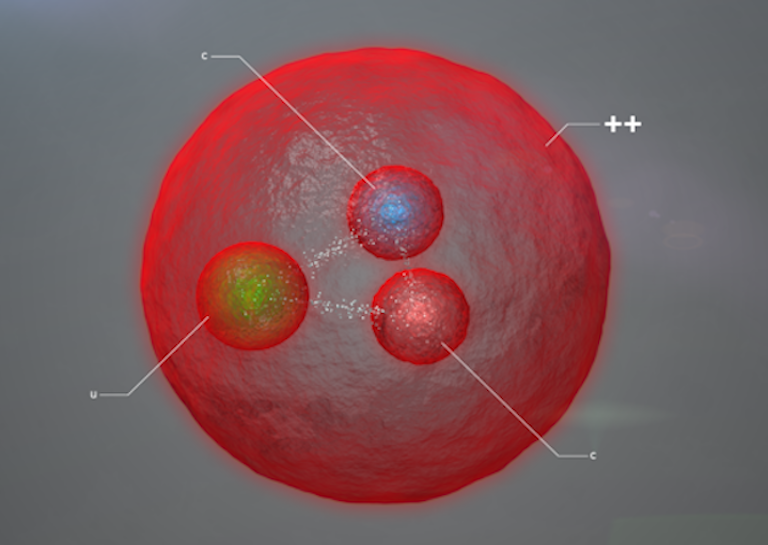
Ordinary matter — protons, neutrons, and the particles built from them — is made of up and down quarks, the two lightest quark flavors. The charm quark is roughly 1,500 times heavier than the up quark, making doubly charmed baryons both rare and unstable: the Ξcc⁺ exists for only about 50 femtoseconds (50 quadrillionths of a second) before decaying. The only other doubly charmed baryon ever seen was the Ξcc⁺⁺, discovered by the same LHCb team in 2017 and carrying two charm quarks with an up quark instead of a down. Comparing the properties of Ξcc⁺ and Ξcc⁺⁺ allows physicists to test QCD predictions with unprecedented precision, since the two particles differ only by the identity of their light quark.
The discovery matters for fundamental physics because doubly heavy baryons exist in a regime where the two heavy quarks are tightly bound to each other — almost like a miniature hydrogen molecule — while the light quark orbits the pair at a greater distance. This two-scale structure is qualitatively different from anything in ordinary matter and provides a uniquely clean laboratory for testing QCD's predictions. "These particles are the hydrogen atom of the strong force," said one LHCb physicist involved in the analysis. Precise measurements of the mass splitting between the two doubly charmed baryons will directly test lattice QCD calculations, the computationally intensive method used to make predictions from first principles.
The finding also validates the significant investment CERN made in upgrading the LHCb detector between 2020 and 2023. The upgraded detector can record particle interactions at five times the rate of its predecessor, with improved track reconstruction that allows it to reconstruct the very short flight paths of doubly charmed baryons inside the detector volume. With Run 3 data collection ongoing and an even larger dataset expected by 2028, LHCb physicists expect to measure the Ξcc⁺ lifetime, magnetic moment, and excited states — parameters that will provide the most stringent tests of QCD theory yet achieved in the baryon sector.