CERN's LHCb Discovers Doubly Charmed Baryon Particle, Expanding Subatomic Zoo to 80 Hadrons
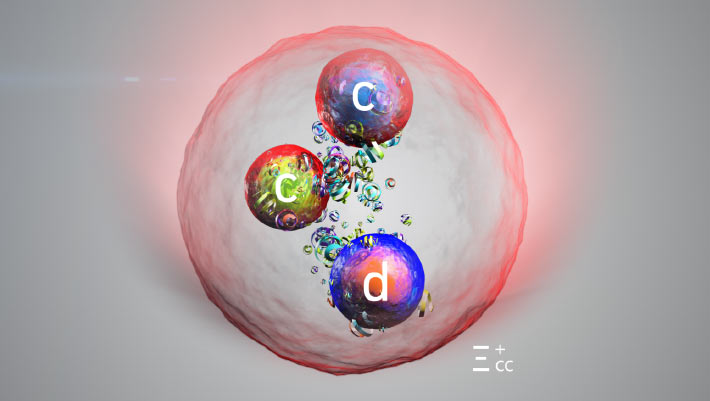
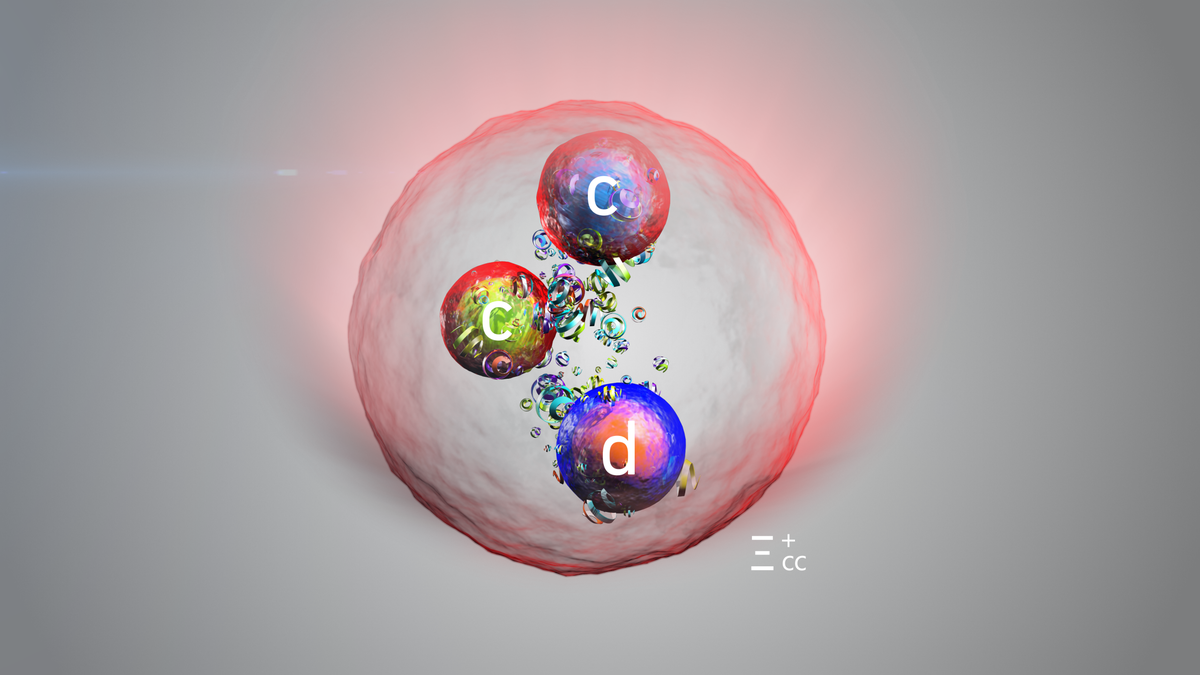
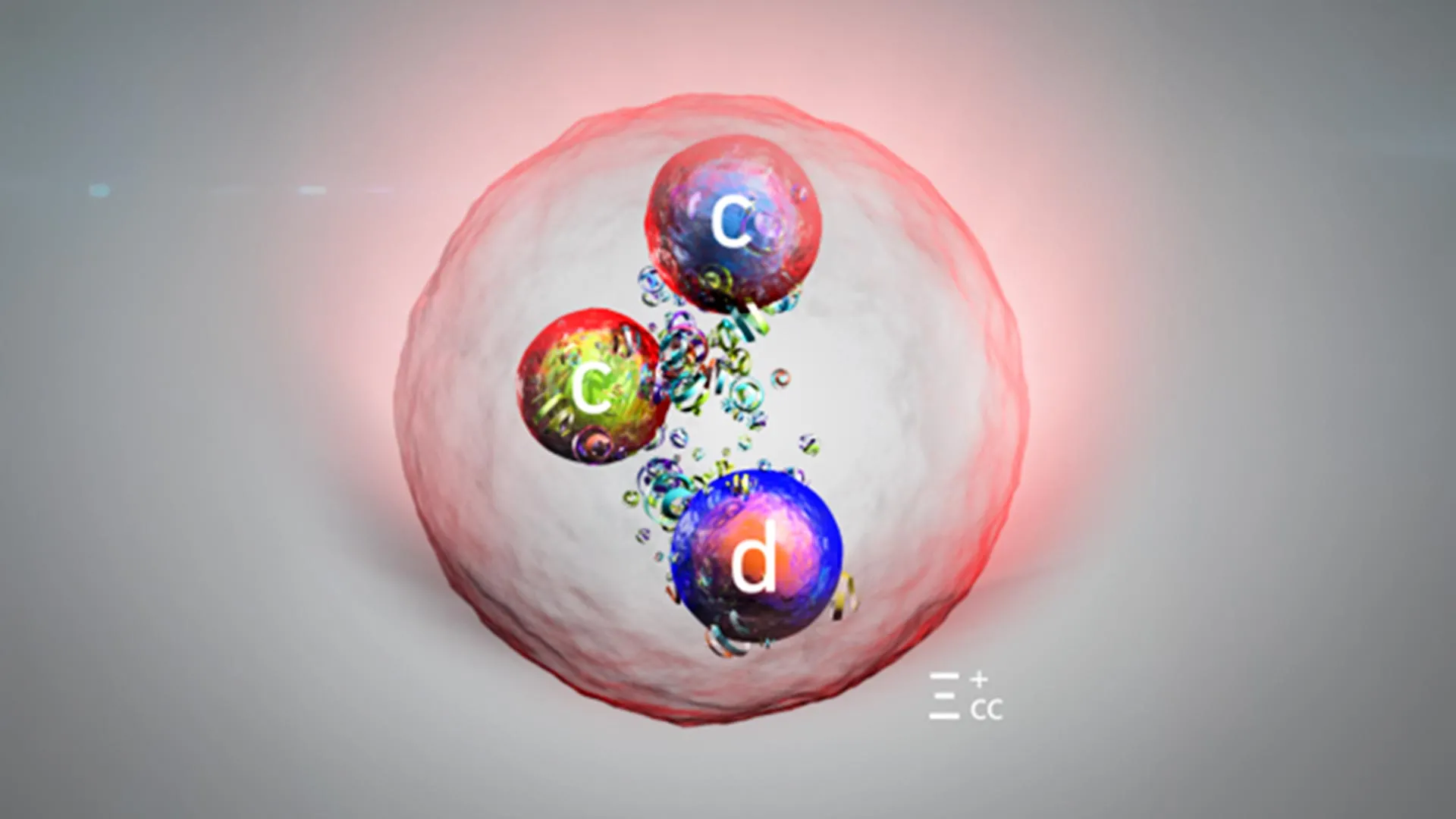
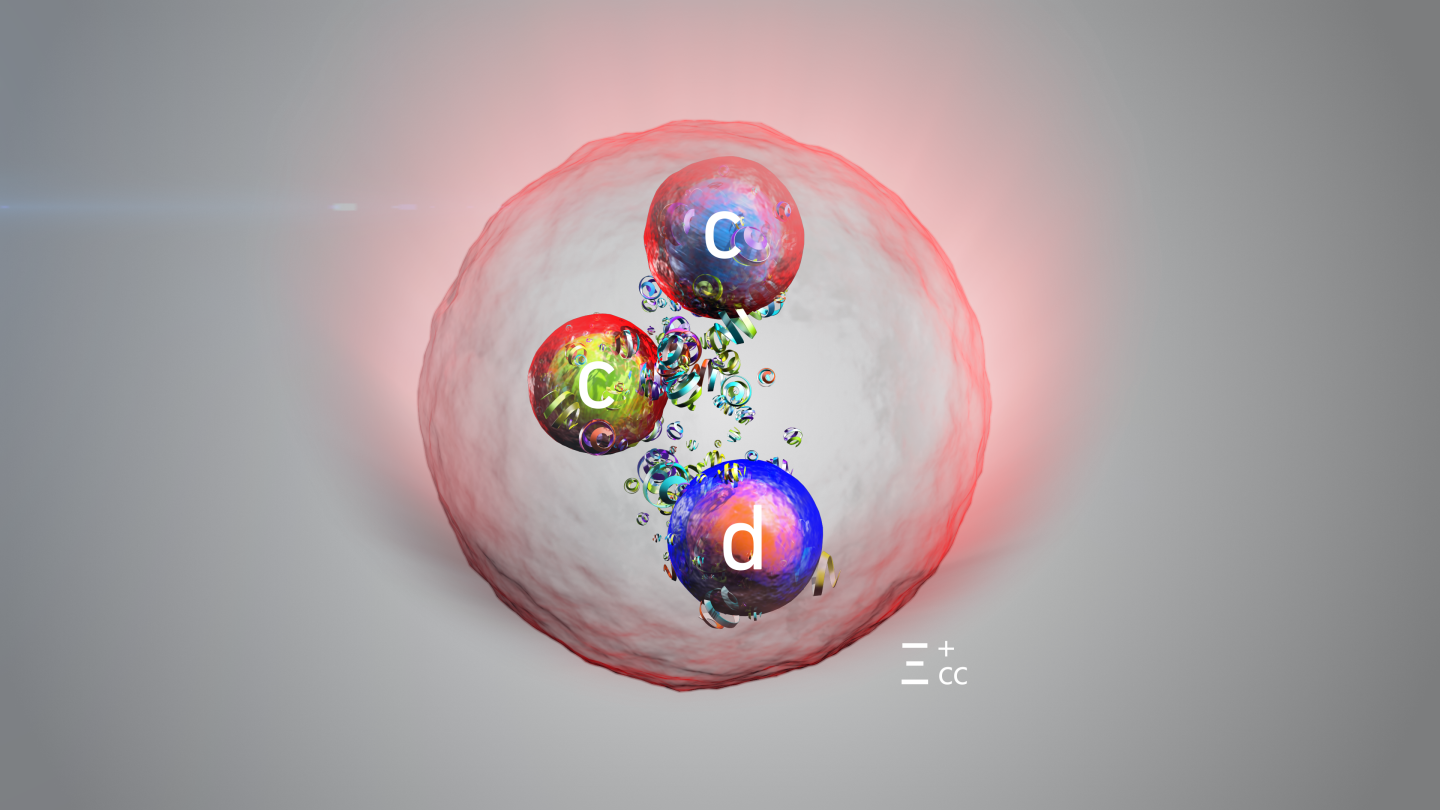
The Ξcc⁺ particle—containing two charm quarks and one down quark—was detected with a 7-sigma confidence level, the first discovery from CERN's upgraded detector.
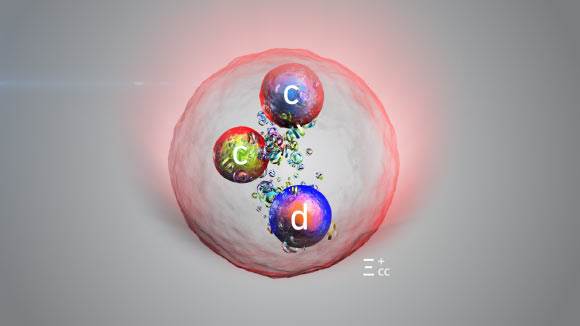
Physicists at CERN's LHCb experiment announced the discovery of a new subatomic particle—a doubly charmed baryon designated Ξcc⁺—marking the first discovery from the upgraded LHCb detector and bringing the total number of hadrons identified by Large Hadron Collider experiments to 80. The announcement was made at the Rencontres de Moriond Electroweak conference on March 17, 2026, and represents only the second time in history that scientists have observed a baryon containing two heavy charm quarks.
Baryons are composite particles made of three quarks bound together by the strong nuclear force—the same force that holds protons and neutrons inside atomic nuclei. A proton consists of two up quarks and one down quark. The newly discovered Ξcc⁺ replaces the two up quarks with two charm quarks, which are significantly heavier, giving the particle approximately four times the proton's mass. Because charm quarks decay rapidly, the Ξcc⁺ has an extremely short predicted lifetime—up to six times shorter than the Ξcc⁺⁺ first observed by LHCb nearly a decade ago—making detection extraordinarily challenging even with the most advanced detectors on Earth.
Researchers identified the particle by analyzing proton-proton collision data from the third run of the Large Hadron Collider, which has been operating since LHCb completed a major detector upgrade in 2023. The statistical significance of the detection reached 7 sigma—well above the 5-sigma threshold required to formally claim a discovery in high-energy physics. LHCb Spokesperson Vincenzo Vagnoni stated: "The result will help theorists test models of quantum chromodynamics, the theory of the strong force that binds quarks into conventional and exotic hadrons like tetraquarks and pentaquarks."
The discovery resolves a long-standing gap in the experimental particle record. The original Ξcc⁺⁺ finding in 2017 established that doubly charmed baryons could exist and be detected, but the absence of its predicted partner—the Ξcc⁺ containing a down quark rather than an up quark—had frustrated physicists for years. Previous experiments at the Tevatron and earlier LHCb runs produced inconclusive or conflicting signals. The upgraded detector's increased sensitivity, particularly to particles with very short lifetimes, finally made the definitive observation possible.
Beyond completing the doubly charmed baryon doublet, the finding opens a new laboratory for studying the strong nuclear force in an exotic regime where two heavy quarks interact in close proximity. Such configurations test quantum chromodynamics—the mathematical framework describing how quarks are bound by gluons—in conditions distinct from those found in ordinary protons and neutrons. Scientists expect that LHCb's third run, which is producing collision data at unprecedented rates, will yield additional exotic hadron discoveries and further sharpen the theoretical understanding of the forces that hold matter together at the most fundamental level.