Antimatter 'Atoms' Observed Acting Like Waves in First-Ever Quantum Physics Discovery
Researchers achieve breakthrough by demonstrating wave-particle duality in positronium, exotic matter made of electron-positron pairs.
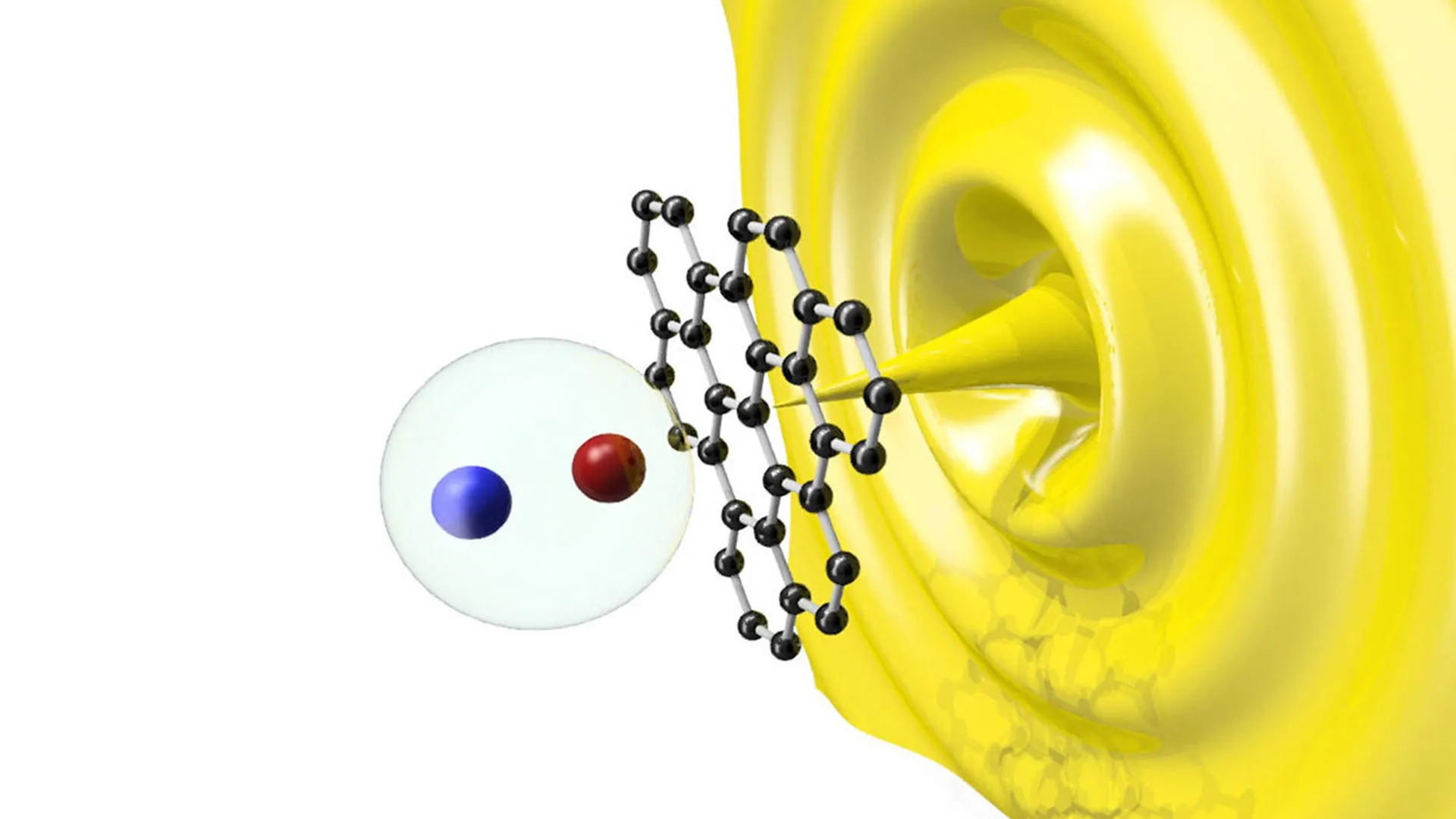
Scientists have achieved a remarkable breakthrough in quantum physics by observing wave-like interference patterns in positronium, an exotic form of matter composed of an electron and its antimatter counterpart, a positron. This represents the first time researchers have directly demonstrated wave-particle duality in this unique two-body system, strengthening our understanding of quantum mechanics while opening new avenues for antimatter research. The discovery, led by Professor Yasuyuki Nagashima's team at Tokyo University of Science, could pave the way for revolutionary experiments involving antimatter, including potential tests of how gravity affects these mysterious particles.
Positronium presents a fascinating subject for quantum research because it consists of two particles with equal mass orbiting around their shared center of mass before ultimately self-annihilating. Unlike previous matter-wave experiments that used single particles or atoms with unequal mass distributions, positronium offers a perfectly balanced system that behaves as a neutral atom until it destroys itself. The successful demonstration of wave interference in such a system validates fundamental predictions of quantum mechanics while extending the boundaries of what scientists thought possible with antimatter.
The experimental breakthrough required the development of sophisticated techniques to create and control positronium beams with the precise characteristics needed for wave interference. The research team first generated negatively charged positronium ions, then used carefully timed laser pulses to strip away an extra electron, resulting in a fast-moving, neutral, and coherent stream of positronium atoms. This beam was then directed through a graphene sheet, where the atomic spacing closely matched the de Broglie wavelength of the positronium particles at the energies used in the experiment.
The resulting diffraction patterns provided clear evidence that positronium atoms exhibit wave-like behavior, just as quantum theory predicts for all matter. Professor Nagashima noted that this achievement represents a significant milestone in fundamental physics research, as it confirms theoretical predictions about antimatter behavior under controlled laboratory conditions. The successful experiment also demonstrates the potential for using positronium in more complex quantum studies, including investigations into the fundamental nature of space, time, and gravity.
Beyond its theoretical significance, this research opens exciting possibilities for practical applications in antimatter physics and quantum technology. Scientists are particularly interested in using positronium to test whether antimatter responds to gravity in the same way as regular matter, a question that has never been directly measured. The ability to create controlled beams of positronium with wave-like properties could enable precision experiments that probe some of the deepest mysteries in modern physics, potentially revealing new insights into the fundamental structure of the universe.