Scientists Capture Antimatter 'Atoms' Acting Like Waves in Groundbreaking Quantum Experiment
Researchers observed wave-like interference in positronium for the first time, strengthening quantum mechanics while opening new paths for antimatter gravity experiments.
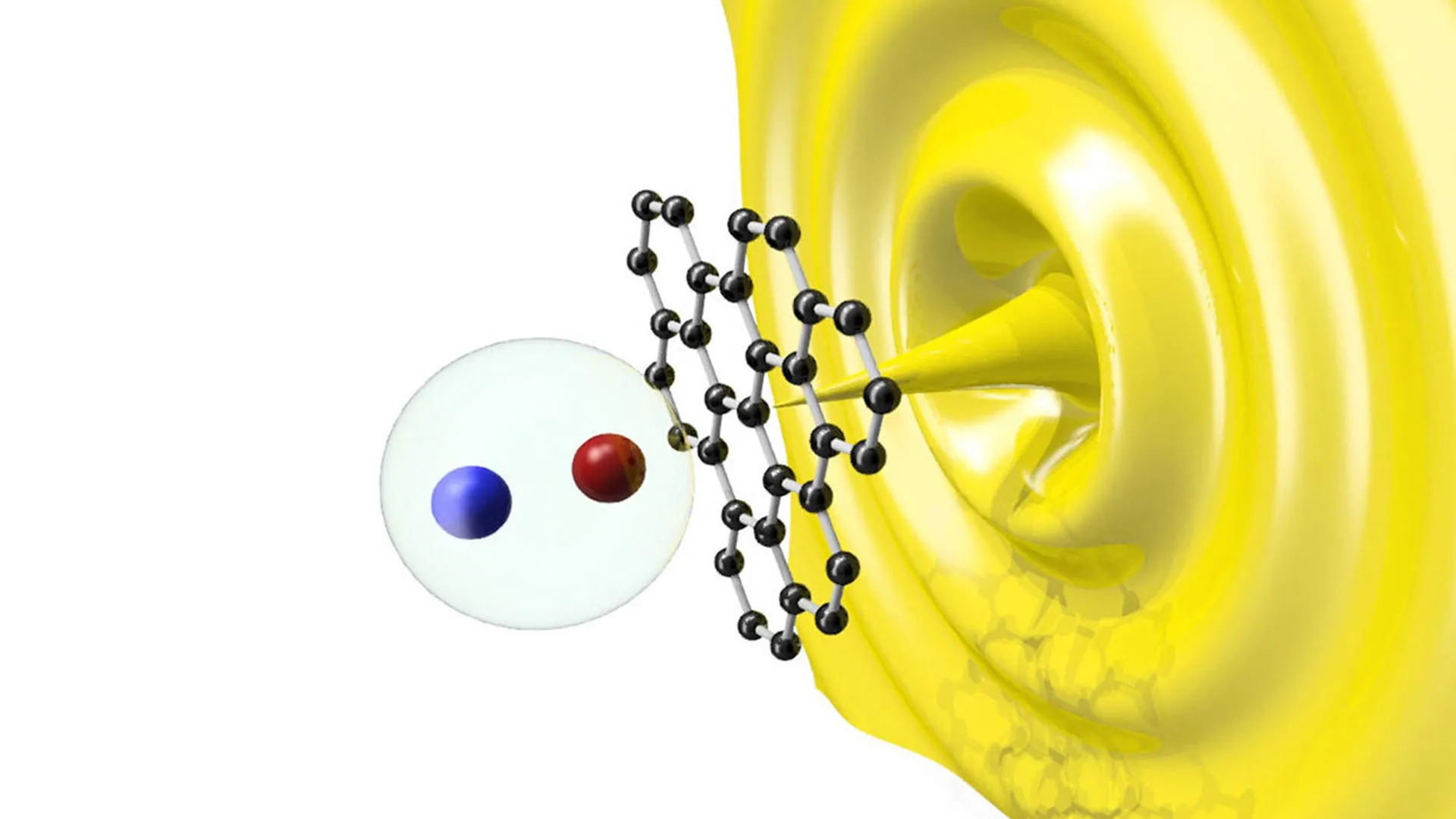
In a remarkable breakthrough that pushes the boundaries of quantum physics, scientists have successfully observed wave-like behavior in positronium, an exotic 'atom' composed of an electron bound to its antimatter counterpart, a positron. The achievement, published in Nature Communications, represents the first direct observation of matter-wave interference in this unique antimatter system and provides compelling new evidence for the fundamental principles of quantum mechanics. The research team from Tokyo University of Science, led by Professor Yasuyuki Nagashima alongside Associate Professor Yugo Nagata and Dr. Riki Mikami, spent years developing the sophisticated experimental techniques necessary to capture this elusive quantum phenomenon.
The experiment builds upon decades of quantum physics research that established wave-particle duality as a cornerstone of modern physics. While scientists have previously demonstrated that particles like electrons, neutrons, and even complex molecules can exhibit wave-like properties, positronium presented unique challenges due to its extremely short lifespan and the technical difficulties associated with creating coherent beams of antimatter particles. The team overcame these obstacles by developing innovative methods to generate high-quality positronium beams with the necessary energy characteristics and coherence to produce clear interference patterns.
The breakthrough required creating negatively charged positronium ions and using precisely timed laser pulses to strip away extra electrons, resulting in a fast-moving, neutral, and coherent stream of positronium atoms. When this beam was directed toward specially prepared graphene sheets, with atomic spacing that closely matched the particles' de Broglie wavelength, the researchers observed distinct diffraction patterns that confirmed wave-like behavior. The graphene's two-to-three-layer structure provided the ideal conditions for observing interference effects as positronium atoms passed through the material.
Professor Nagashima emphasized the significance of the findings, explaining that positronium represents 'the simplest atom composed of equal-mass constituents' and that observing its quantum interference 'can pave the way for new research in fundamental physics using positronium.' The research opens unprecedented opportunities for antimatter studies, including potential experiments to test how gravity affects antimatter particles—a measurement that has never been directly achieved. Such experiments could provide crucial tests of fundamental physical theories and potentially reveal new insights about the nature of antimatter in the universe.
The implications of this research extend far beyond demonstrating quantum principles in antimatter systems. The ability to create and manipulate coherent positronium beams could enable entirely new categories of experiments in fundamental physics, potentially leading to discoveries about the fundamental asymmetries between matter and antimatter that shaped the early universe. As scientists continue to refine these techniques, the exotic quantum behavior of positronium may provide a unique window into some of physics' most profound mysteries, including the ultimate fate of antimatter in our predominantly matter-dominated cosmos.