Antimatter 'Atom' Observed Acting Like Wave for First Time in Quantum Breakthrough
Scientists demonstrate wave-particle duality in positronium, opening new frontiers for antimatter research and potential gravity tests never before possible.
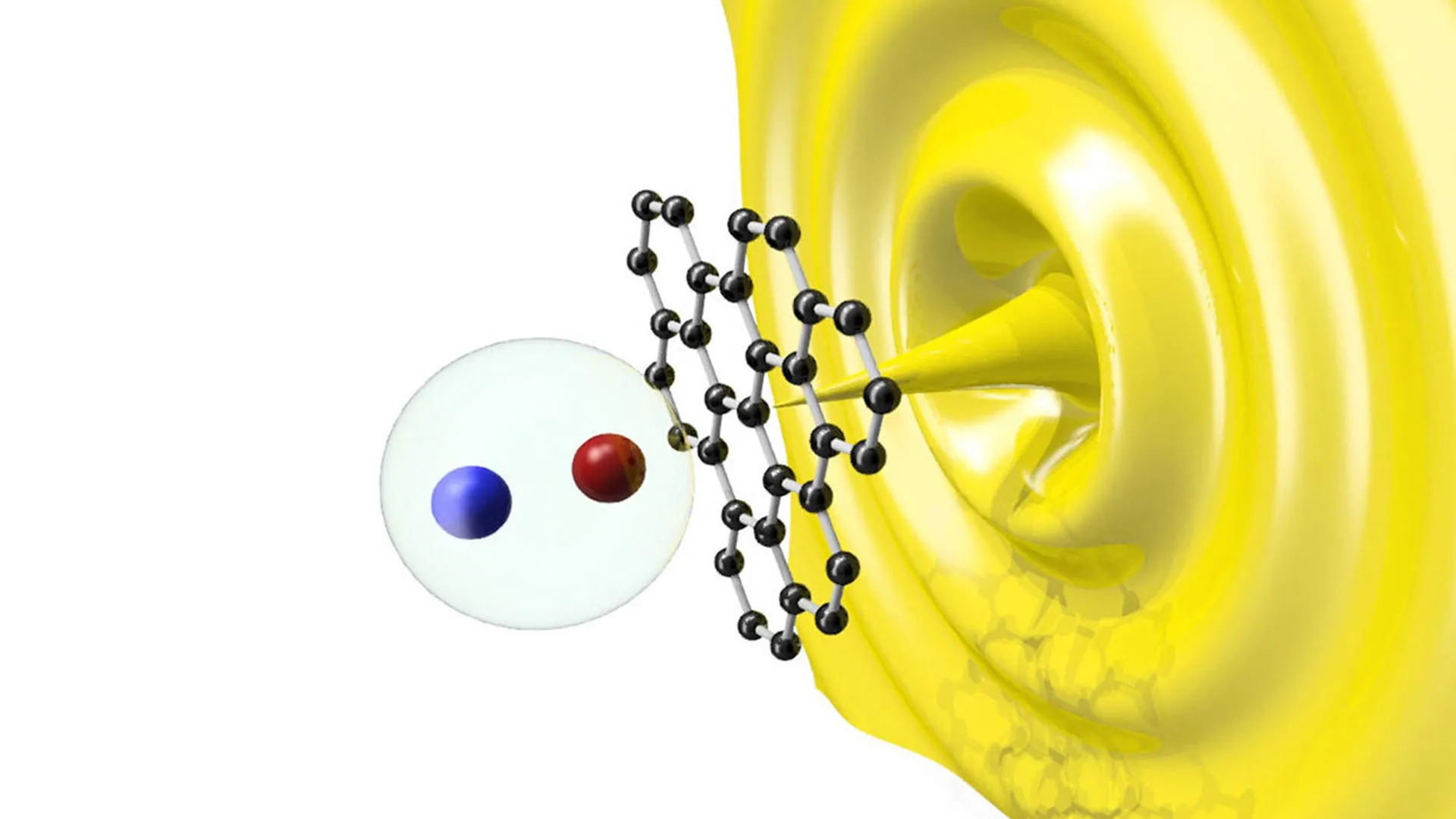
In a groundbreaking demonstration of quantum mechanics involving antimatter, researchers at Tokyo University of Science have successfully observed wave-like interference in positronium, an exotic "atom" composed of an electron and its antimatter partner, a positron. This achievement marks the first time scientists have directly witnessed wave-particle duality in this unique system, strengthening our understanding of quantum mechanics while opening new possibilities for antimatter research.
Positronium represents one of the simplest two-body systems in physics, consisting of an electron and positron bound together and orbiting their shared center of mass. Because both components have equal mass, scientists have long sought to understand how such a system would behave when formed into a beam and subjected to diffraction experiments. The research team, led by Professor Yasuyuki Nagashima and including Associate Professor Yugo Nagata and Dr. Riki Mikami, has now achieved this long-standing goal.
The breakthrough required creating a highly controlled positronium beam with the necessary energy range and coherence to produce clear interference effects. Researchers first generated negatively charged positronium ions, then used precisely timed laser pulses to remove extra electrons, resulting in a fast-moving, neutral, and coherent stream of positronium atoms. This technical achievement represents a significant advancement in antimatter manipulation and control.
The experimental setup directed the positronium beam toward a sheet of graphene, where the spacing between atoms closely matched the de Broglie wavelength of the positronium at the energies used in the experiment. As the positronium atoms passed through the two-to-three-layer graphene sheet, some successfully transmitted through and were detected on the other side. The resulting measurements revealed a distinct diffraction pattern, providing definitive proof of wave-like behavior in this antimatter system.
"Positronium is the simplest atom composed of equal-mass constituents, and until it self-annihilates, it behaves as a neutral atom in a vacuum. Now, for the first time, we have observed quantum interference of a positronium beam, which can pave the way for new research in fundamental physics using positronium," Professor Nagashima explained. The discovery not only confirms quantum mechanical principles in antimatter systems but also opens possibilities for future experiments, including potential tests of how gravity affects antimatter—something that has never been directly measured before.