Antimatter 'Atoms' Caught Acting Like Waves in Unprecedented Quantum Physics Discovery
Scientists observe wave-like interference in positronium for the first time, opening new frontiers in antimatter research and gravity studies.
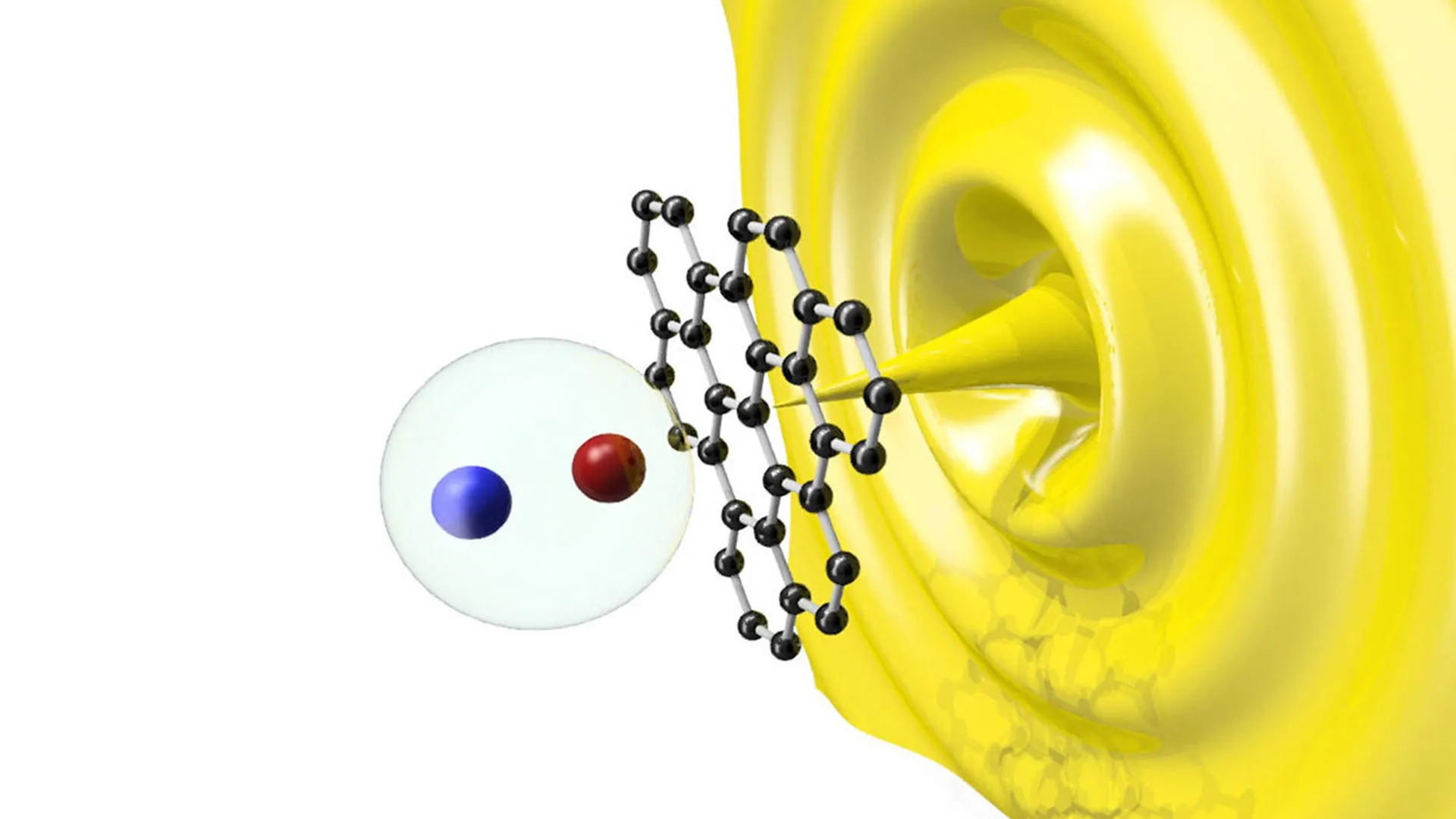
Scientists have achieved a remarkable first by observing wave-like interference patterns in positronium, an exotic 'atom' composed of an electron bound to its antimatter counterpart, a positron. This groundbreaking discovery, published in Nature Communications by researchers from Tokyo University of Science, demonstrates that even antimatter systems follow the fundamental quantum mechanical principle of wave-particle duality. The achievement not only reinforces the strange reality of quantum physics but also opens unprecedented opportunities for studying antimatter's behavior and potentially testing how gravity affects it.
Positronium represents one of the simplest possible atomic systems, consisting of two particles of equal mass orbiting their shared center of mass before eventually annihilating each other. Professor Yasuyuki Nagashima, who led the research team, explained that this represents the first observation of quantum interference in a positronium beam. The discovery is significant because it confirms that antimatter systems behave quantum mechanically in the same way as ordinary matter, following the same fundamental laws that govern electron interference patterns.
The experimental breakthrough required developing sophisticated techniques to create and control positronium beams with the necessary coherence and energy characteristics. The team first generated negatively charged positronium ions, then used precisely timed laser pulses to strip away extra electrons, producing a fast-moving, neutral, and coherent stream of positronium atoms. This beam was directed at a graphene sheet whose atomic spacing closely matched the de Broglie wavelength of the positronium particles at the experimental energies.
When the positronium atoms passed through the ultra-thin graphene layers, they produced clear diffraction patterns that could only result from wave-like behavior. This marks the first time scientists have directly observed matter-wave diffraction in a system composed entirely of a particle and its antimatter partner. The achievement extends the known range of systems that exhibit quantum interference, from individual electrons and neutrons to complex molecules and now antimatter atoms.
The implications of this discovery extend far beyond fundamental physics. Positronium beams with wave-like properties could enable new types of experiments to test whether antimatter responds to gravity in the same way as ordinary matter, a question that has never been directly measured. Such experiments could probe some of the deepest mysteries in physics, including why the universe contains so much more matter than antimatter and whether the fundamental symmetries of nature hold for gravitational interactions with antimatter.