Seabirds Get Jet Lag Too: Manx Shearwaters Drift Off Course When Their Body Clocks Slip
A Science study using 20 years of GPS tracking finds the birds' internal clocks fall out of sync with the sun during fast Atlantic flights.
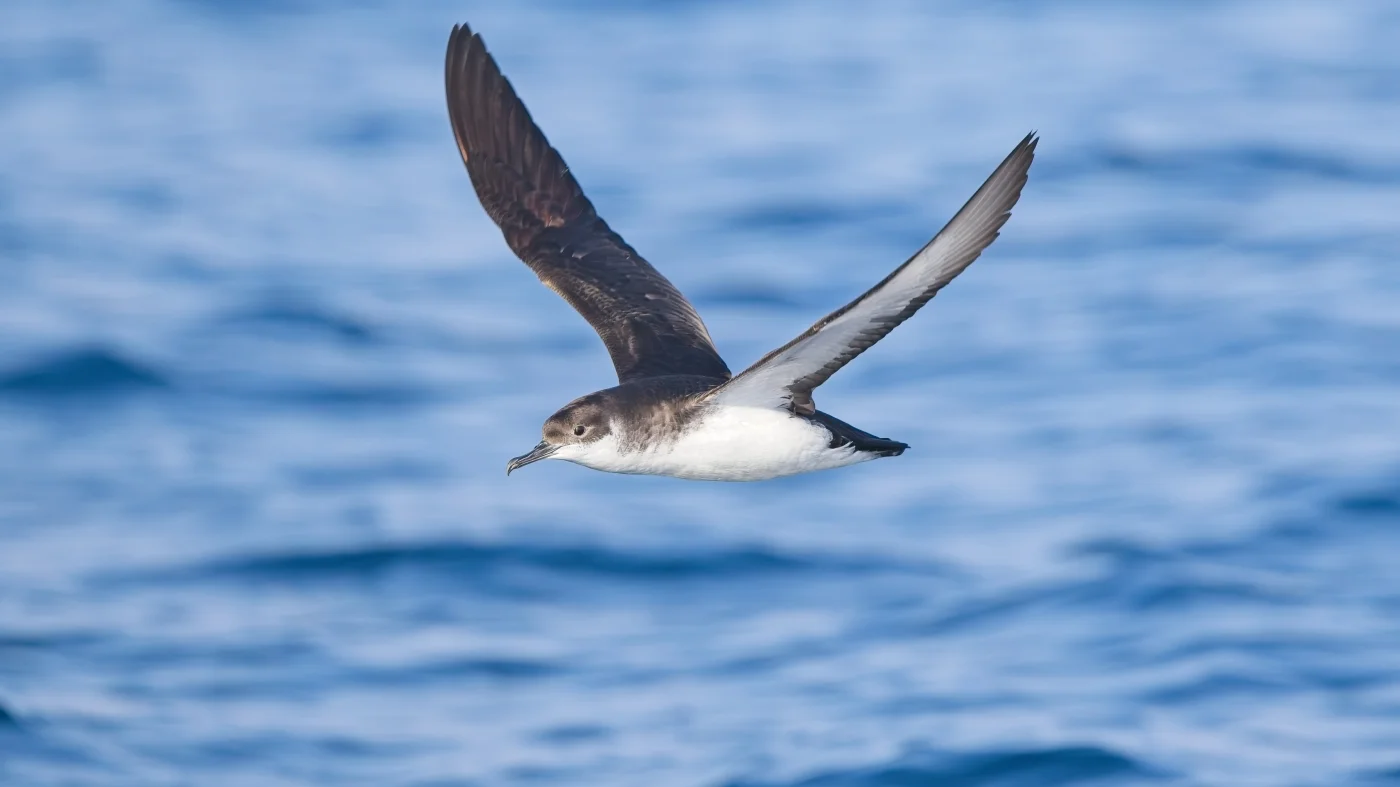
Humans are not the only species that gets jet lag. A study published in the journal Science finds that a seabird called the Manx shearwater appears to become slightly disoriented during long flights across the Atlantic Ocean, because its internal clock falls out of sync with the sun's position in the sky.
Manx shearwaters are common in the British Isles and look a little like seagulls, but "they're actually very closely related to an albatross," said Patrick Lewin, a behavioral ecologist at the University of Oxford. The birds mate for life, and a couple lays just one egg. They then take turns incubating it: "One partner will sit on the egg nonstop while the other one goes out to sea," Lewin said.
The foraging partner spends up to two weeks scouring the North Atlantic for fish and squid, often hundreds of miles from the nest. Once its belly is full, the bird "absolutely bombs it back to their colony," Lewin said, often completing the trip home in a day or so. That speed raised a question: do the birds feel the effects of crossing time zones the way people do?
To find out, Lewin used a tool decades in the making. For 20 years, colleagues had been tagging shearwaters with GPS trackers and collecting data on their trips out over the Atlantic and back. Lewin reasoned that jet lag would show up in their flight paths, because the birds are believed to use the sun as a compass.
That requires knowing the time of day. "To use the sun as a compass you have to know what time of day it is," Lewin said. In the morning the sun is in the east, at midday it is slightly to the south in the Northern Hemisphere, and in the evening it is in the west. A bird with the wrong time in its head would fly the wrong way.
That is what the researchers saw. As the birds rushed back to their partners and eggs, they veered slightly off course. The error was small: a seven-degree deviation, the largest observed, took a bird only about three miles out of its way on a 600-mile journey. "It's a really small addition," Lewin said.
Alice Boyle, a biologist at the Centre for Animals on the Move at Western University in Ontario who was not involved in the study, called the paper "really cool." Nearly every creature on the planet, from corals to chipmunks, has to navigate its surroundings, she said, yet it is rare to see a study that captures navigation decisions in action. Using wild birds that travel to remote places, she said, lets scientists learn a great deal about how they find their way.