Astronauts Unroll a 60-Foot Solar Array on the ISS, One Spacewalk From Finishing Upgrade
Anil Menon and Joshua Kutryk installed the seventh roll-out array in a 7-hour, 11-minute spacewalk; the eighth and last goes up next Thursday.
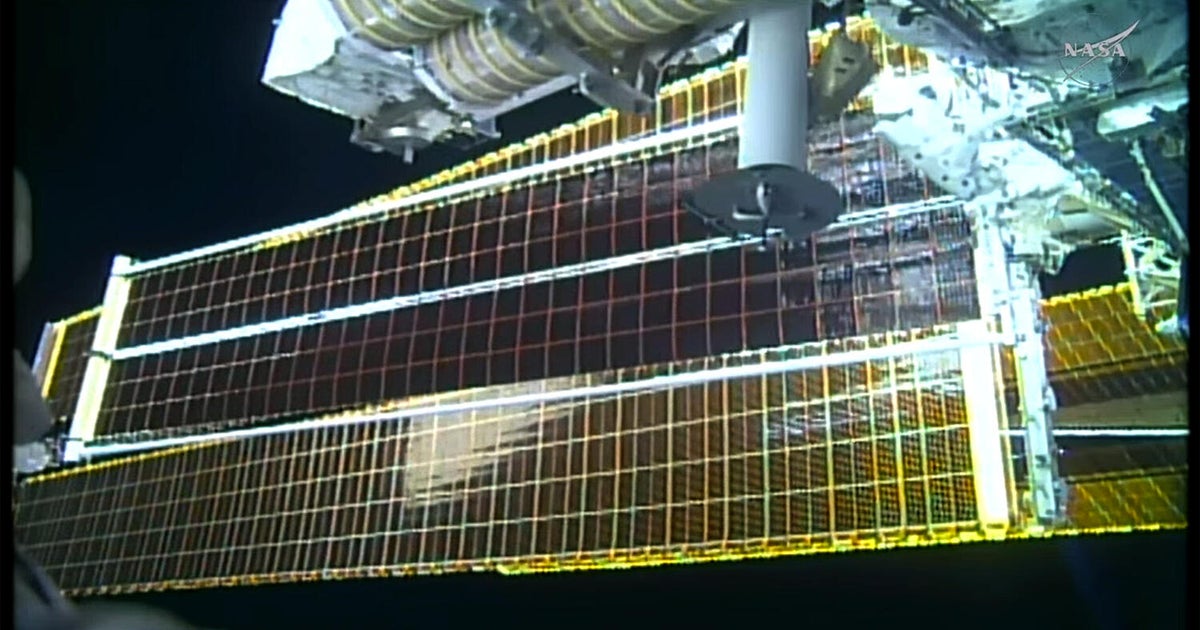
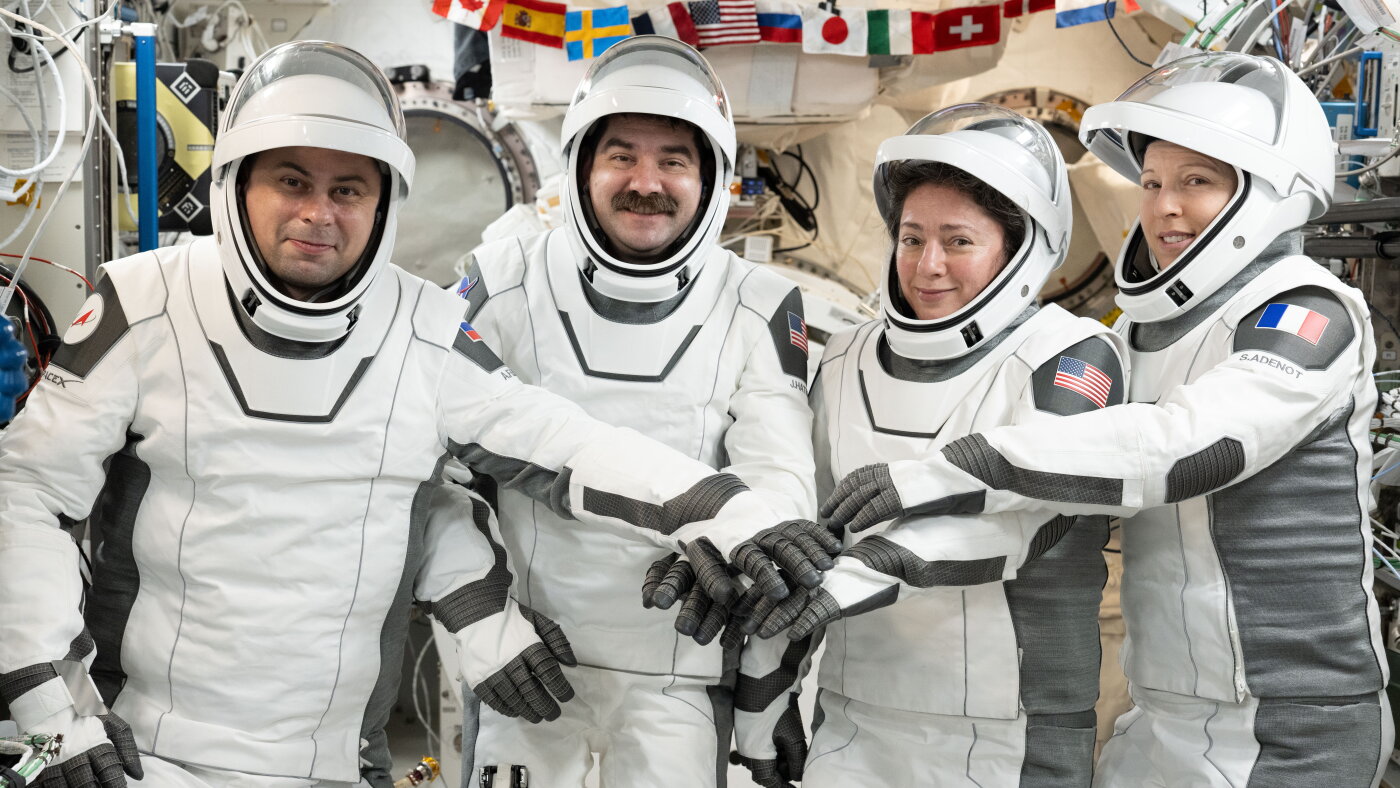
Two astronauts stepped outside the International Space Station on Thursday and installed the seventh of eight new roll-out solar arrays, bringing a years-long overhaul of the lab's aging power system within one spacewalk of completion. NASA's Anil Menon and Joshua Kutryk of the Canadian Space Agency worked well ahead of schedule.
The pair switched their suits to battery power at 7:57 a.m. EDT in the Quest airlock, officially starting the 285th spacewalk since station assembly began in 1998. It began in orbital darkness, which led Kutryk to remark, "the night is dark and full of wonders." The ISS roll-out solar arrays, known as IROSAs, are about 10 feet long and weigh around 750 pounds when folded, "so it's a lot to handle," said spacewalk flight director Garrett Hehn.
They unbolted the first of two stored arrays from its carrier. Menon, anchored to the end of the station's 58-foot robot arm, carried it to its mounting point on the left side of the power truss. Flight controllers had planned "a pretty elegant series of maneuvers" that rotated Menon and the array around the array's center of mass rather than the astronaut's, Hehn said, a lesson from earlier spacewalks that made the job less tiring.
The folded IROSA went onto a support fixture at the base of an inboard solar wing, and the two halves were unfolded and bolted together. As a safety precaution, the crew waited until the station was in orbital darkness, with no sunlight generating power, before connecting the cables that tie the array into the lab's circuits.
Four hours and 23 minutes into the outing, as the station passed back into daylight, Menon used a power tool to unbolt a final restraint. The array slowly unrolled to its full 60-foot length in about 10 minutes. "Engineers and electrical officers here in mission control are happy with what they're seeing from the new array, which will add eight kilowatts to the overall power capability of the complex," said NASA commentator Rob Navias.
Menon and Kutryk then did a few "get-ahead" tasks to prepare the final array and returned to the airlock, ending the spacewalk after seven hours and 11 minutes, at 3:08 p.m. EDT. It was Menon's fourth spacewalk and Kutryk's first. "We knew you're going to absolutely crush it," Menon told his partner. "Everyone had those high expectations for you, and you absolutely delivered." Menon added: "It is always sunny in space, except for a few orbits."
The arrays are needed because the station's original solar wings have lost output with age. Before the first IROSA was installed in 2021, those wings were producing about 152 kilowatts. The six IROSAs installed so far lifted that to roughly 200 kilowatts, and the final two will bring the total to about 215 kilowatts. That power will have to last until the station's planned retirement and de-orbit in 2030, supporting life support, research and visiting vehicles.
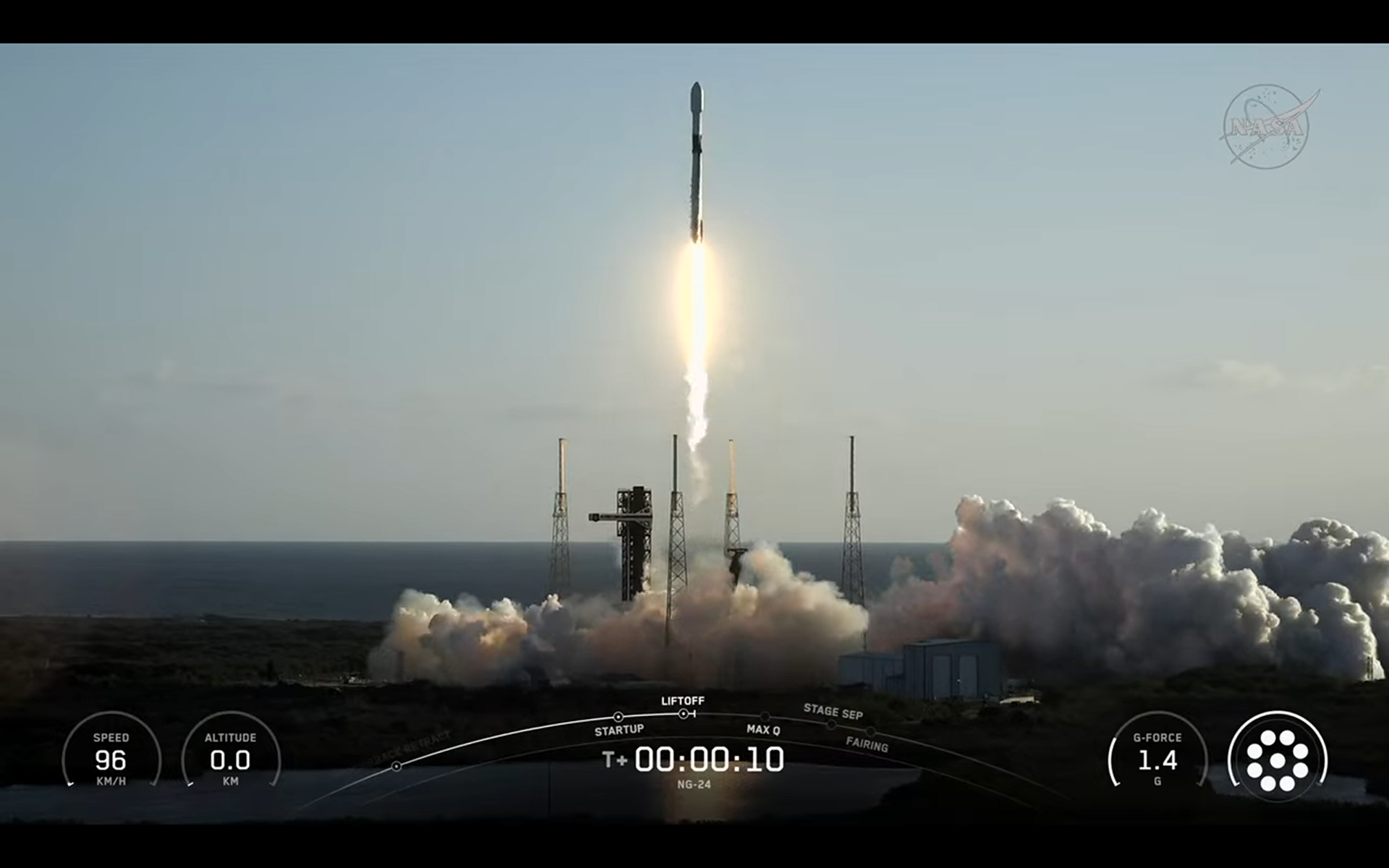
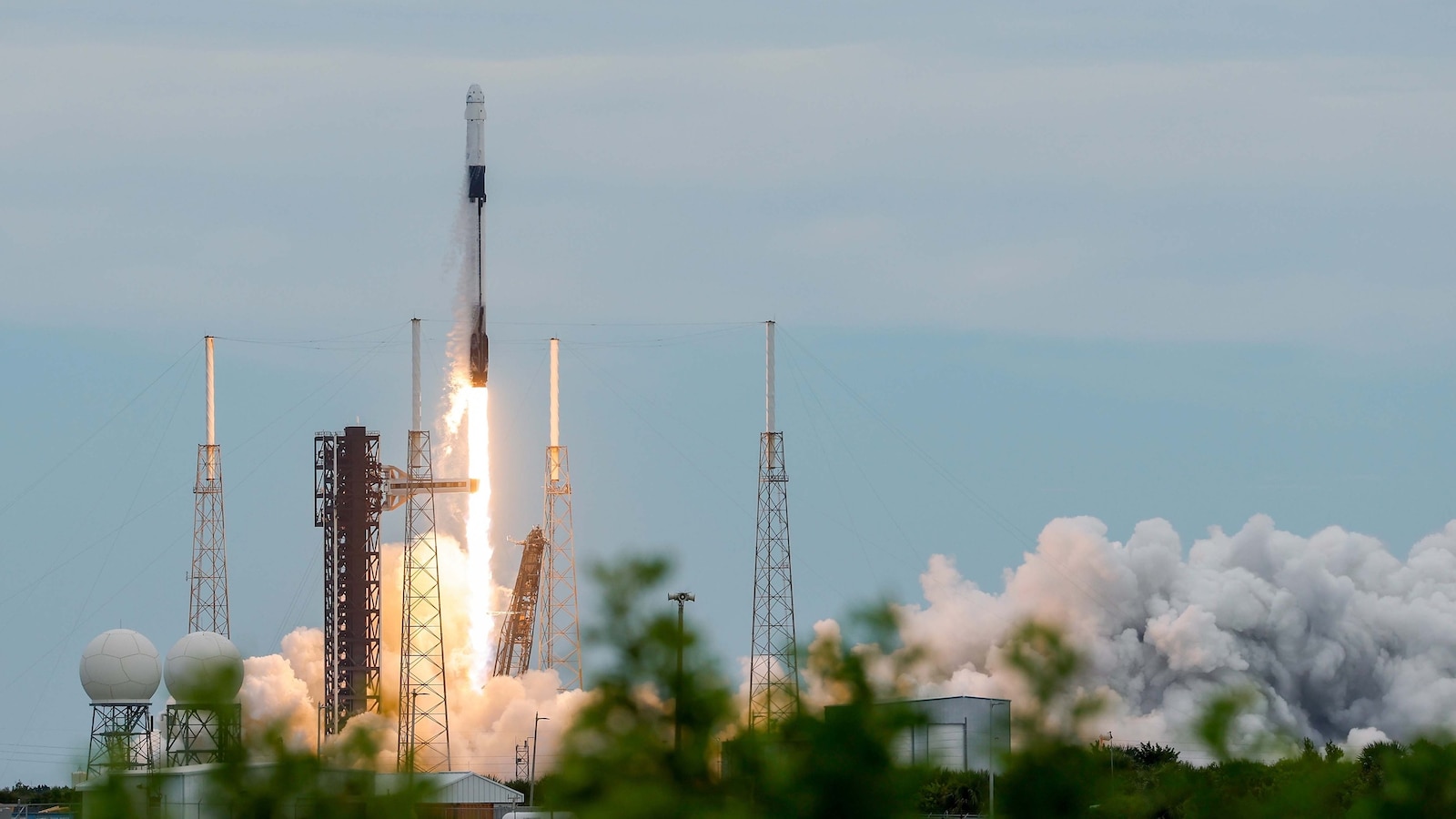
The last two arrays arrived earlier this month in the unpressurized trunk of a SpaceX Cargo Dragon capsule, each folded in half. The station's robot arm, operated from Johnson Space Center in Houston, pulled them out and parked them on the truss. The final installation is planned for a second spacewalk next Thursday.