
Physics
Trapped Ions Simulate Aharonov-Bohm Interference in a 2D Gauge Theory
Oxford researchers used strontium ions in a hybrid qubit-oscillator system to watch a particle's tunneling switch off completely when magnetic-like flux is present.
Topic
19 stories from Planck Standard. Latest: November 8, 2026.
Oxford researchers used strontium ions in a hybrid qubit-oscillator system to watch a particle's tunneling switch off completely when magnetic-like flux is present.

A Science study using 20 years of GPS tracking finds the birds' internal clocks fall out of sync with the sun during fast Atlantic flights.

Jiaxuan Zhang traced the assumptions behind five attempts to derive the Born rule and found each depends on additivity. The work does not rule out a probability-free derivation.

A strontium ion carries the link and a calcium ion stores it, stretching entanglement across a fiber-connected network from milliseconds to more than ten seconds.

Qubits stood in for a magnetic field and ion vibrations for matter, in a Nature Physics experiment that simulates lattice gauge theory, the framework used in particle physics.

Galaxies with no central bulge, which have never had a major collision, host supermassive black holes as heavy as their stellar mass predicts, pointing to slow, steady feeding.

Alain Goriely traced the story to Vitruvius, writing four centuries after the temple was finished, and found 'insufficient historical evidence and no scientific evidence' that any of a dozen claimed refinements corrects anything a human can see.

An Oxford-led analysis of ATLAS data reconstructed the Z bosons' spins from the electrons and muons they left behind. It is one of the highest-energy confirmations of entanglement ever recorded, a trillion times beyond tabletop photon experiments.

The Pitt Rivers Museum approved the repatriation after a request from the Forum for Naga Reconciliation. One set of remains was left out because its provenance as Naga could not be established.

Oxford and Max Planck scientists say tightly bound black-hole binaries act as cosmic lenses, magnifying background stars into repeating flashes that betray their presence.

Researchers at Oxford and the Max Planck Institute propose hunting elusive supermassive black hole binaries by watching for repeating flashes of background starlight bent and magnified as the pair orbits.
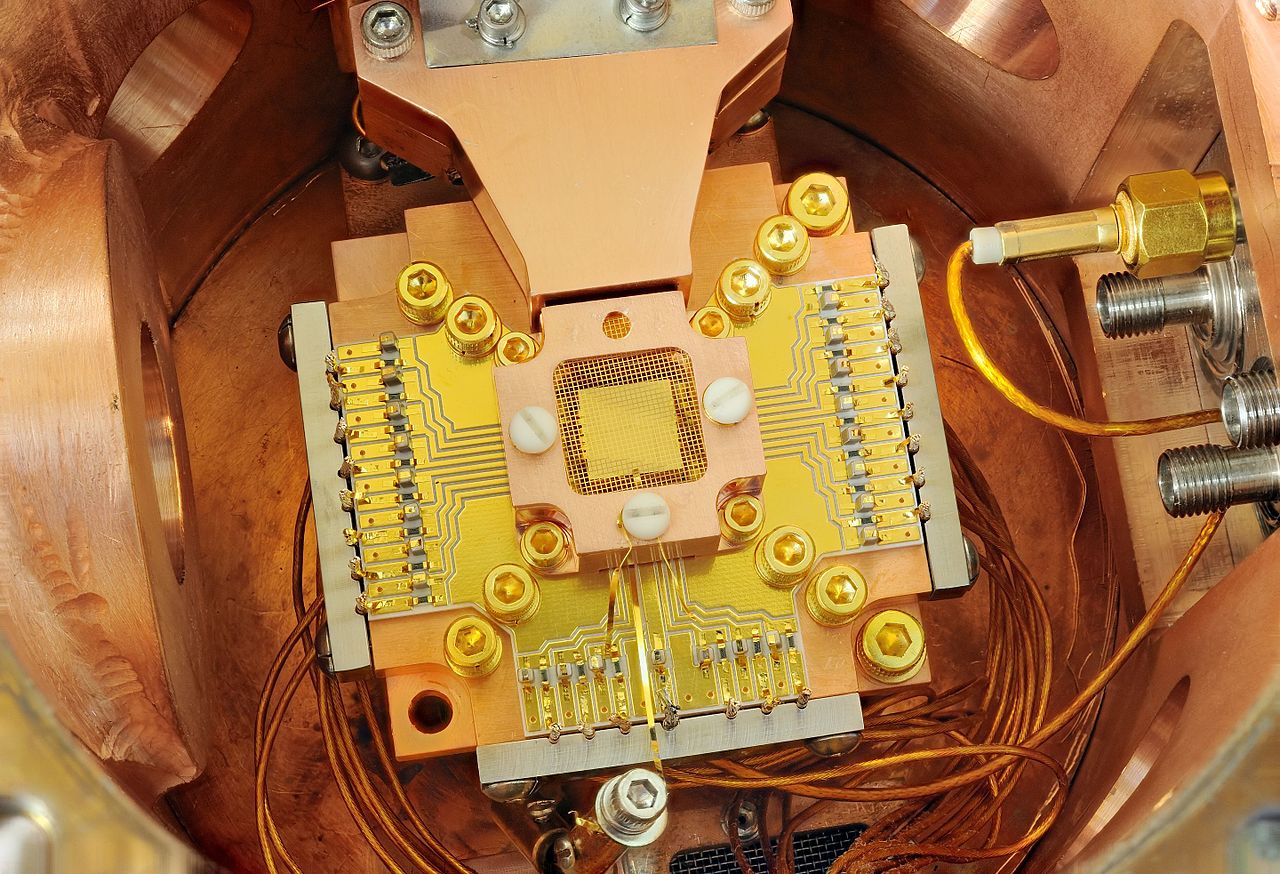
By combining two precisely controlled forces on a single trapped ion, researchers demonstrated an elusive way to manipulate quantum uncertainty that could expand quantum sensing and computing.

A comparative analysis of 2,025 individuals from 41 primate species, published in PLOS Biology, shows that bipedal proportions and relative brain size together fully account for humans' unique species-wide hand preference.
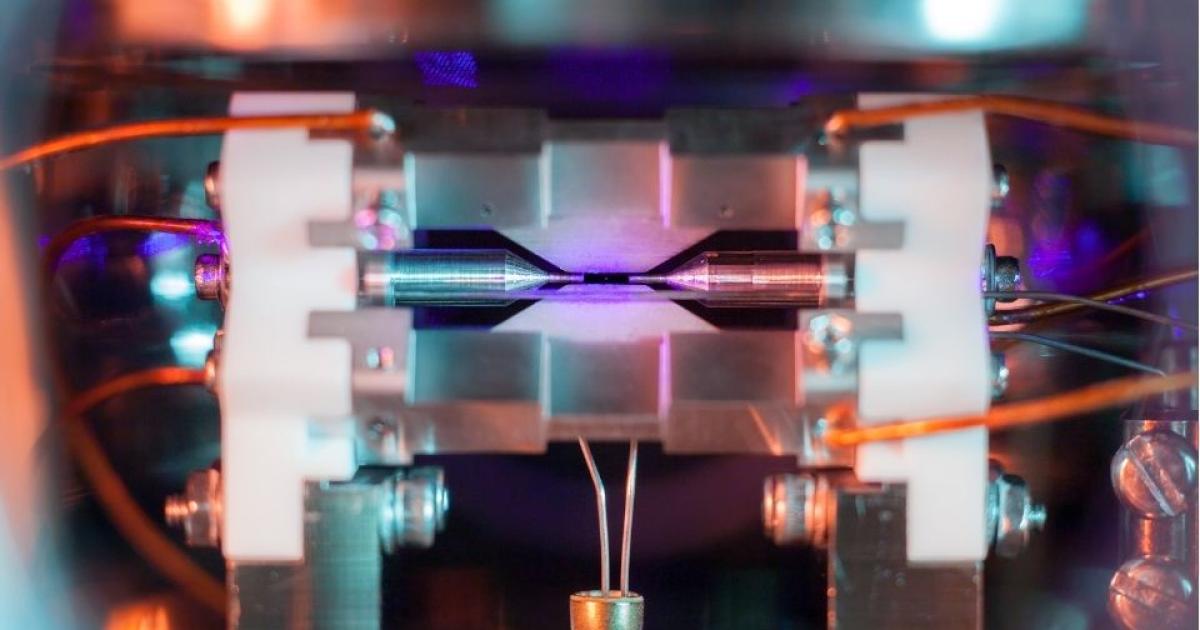
The Nature Physics paper demonstrates an interaction 100 times faster than conventional approaches and opens a new toolkit for quantum simulation, sensing and computing.
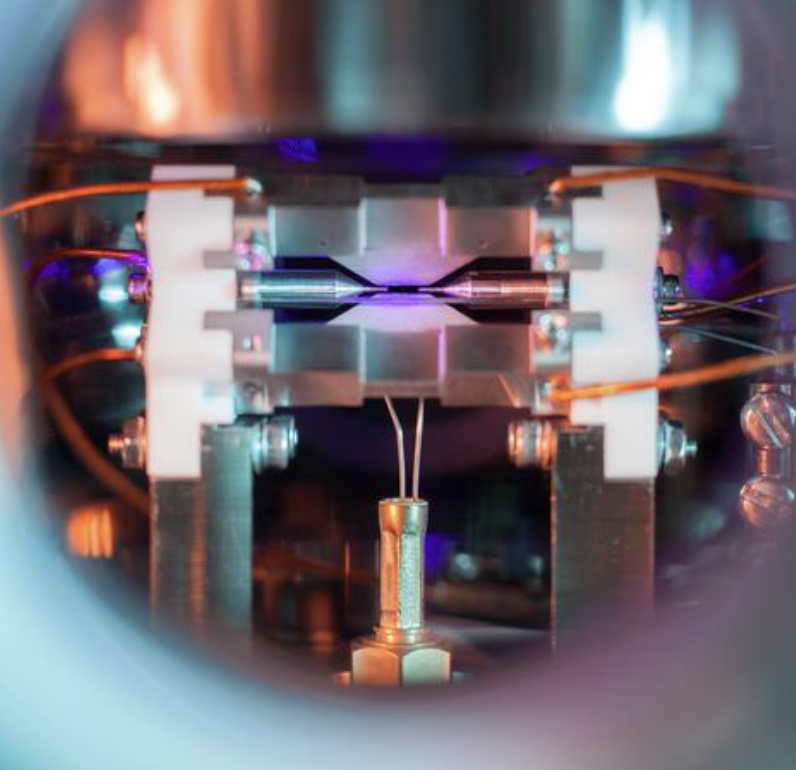
Using a single trapped ion and two precisely tuned, non-commuting laser drives, the team produced an interaction more than 100 times faster than conventional squeezing — and switchable between squeezing, trisqueezing and quadsqueezing in real time.

Using a single trapped ion and two non-commuting forces, the Oxford team generated a fourth-order squeezed state more than 100 times faster than conventional methods — a demonstration that promises to make exotic quantum behaviors usable in real machines.
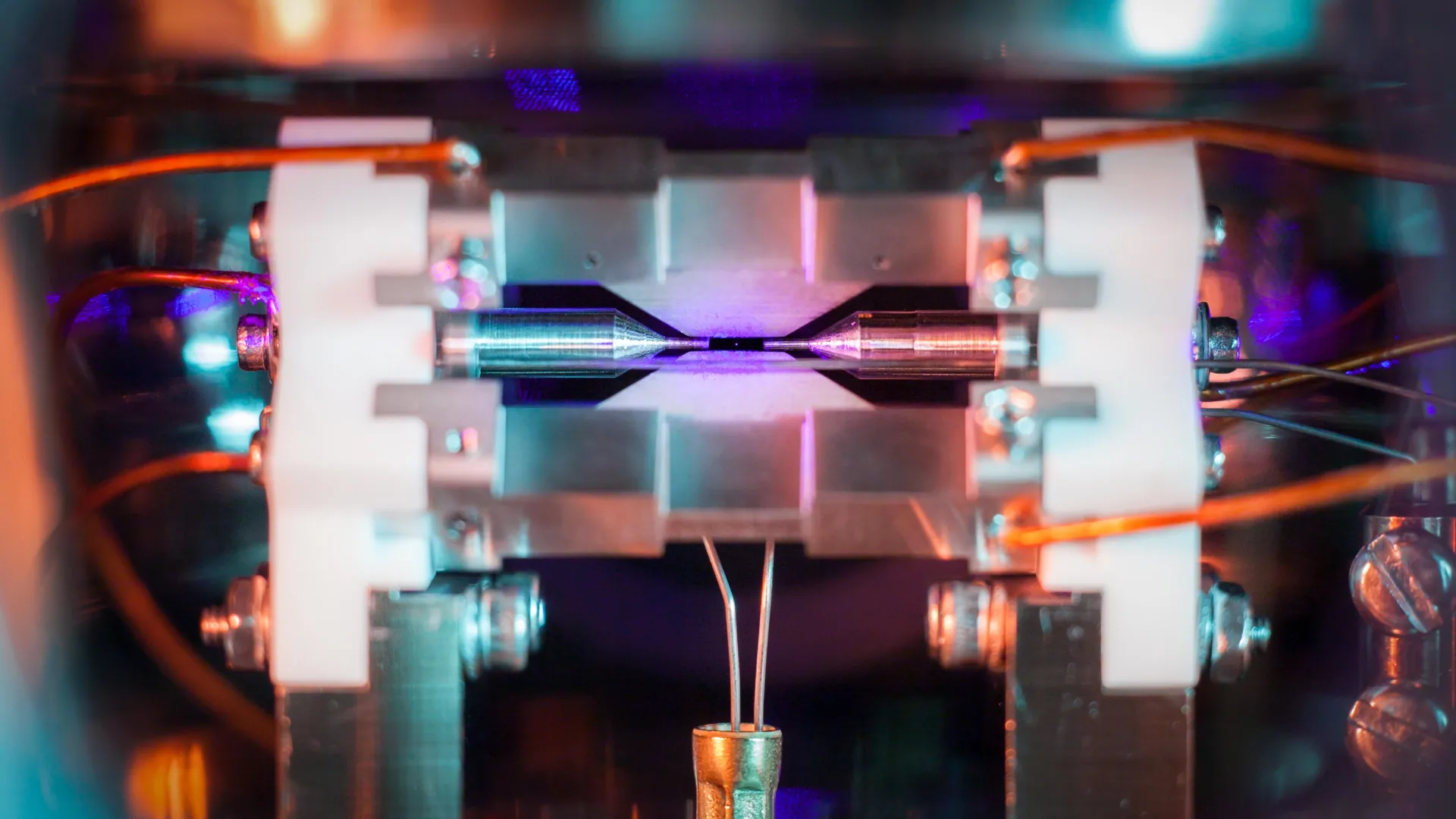
Researchers demonstrate powerful fourth-order quantum effect by combining simple forces, making previously hidden quantum behaviors visible and controllable.
Scientists demonstrate first-ever fourth-order quantum effect using trapped ions, opening new frontiers for quantum technology applications.

Researchers using the James Webb Space Telescope identified L 98-59 d, 35 light-years away, as the first confirmed member of a new planetary class — a 'magma world' with a sulfur-rich atmosphere and a globe-spanning molten rock interior that has never stopped burning.