
Physics
LIGO Data Hint That Many Black Holes Were Born When Stars Died Without a Bang
A Caltech-led study of 257 black hole mergers finds a spike at 10 solar masses and a gap at 12 to 16, matching what 'failed supernova' theories predict.
Topic
61 stories from Planck Standard. Latest: November 12, 2026.
A Caltech-led study of 257 black hole mergers finds a spike at 10 solar masses and a gap at 12 to 16, matching what 'failed supernova' theories predict.

A Leiden-led team used LOFAR to image one patch of sky 20 times more sharply than before, and processed 400 terabytes of data in just a few months.
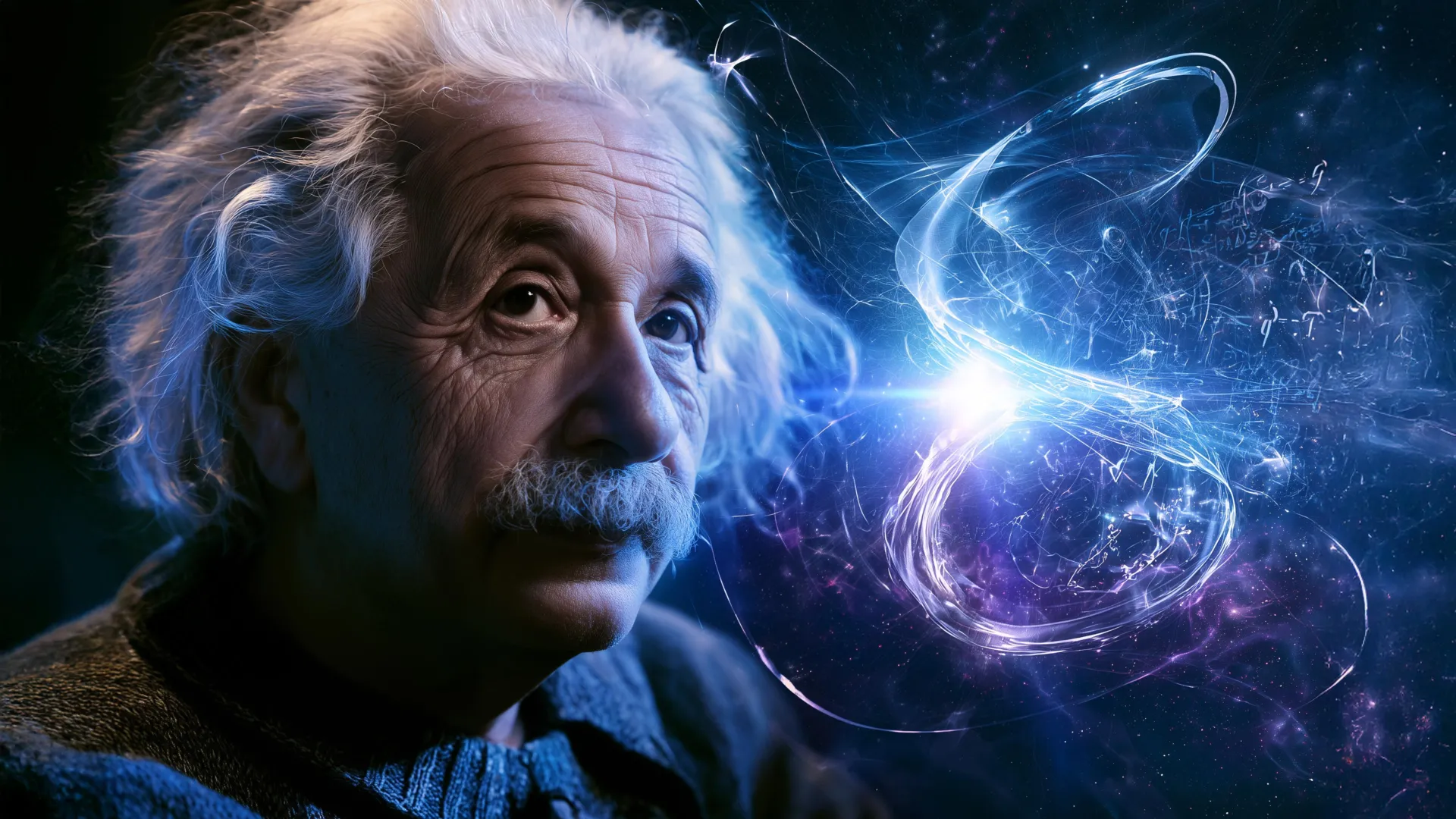
A reformulation of Einstein's equations that resembles plasma physics hints at a 'gravitational reconnection' that could release energy in black hole mergers, though it remains theory.
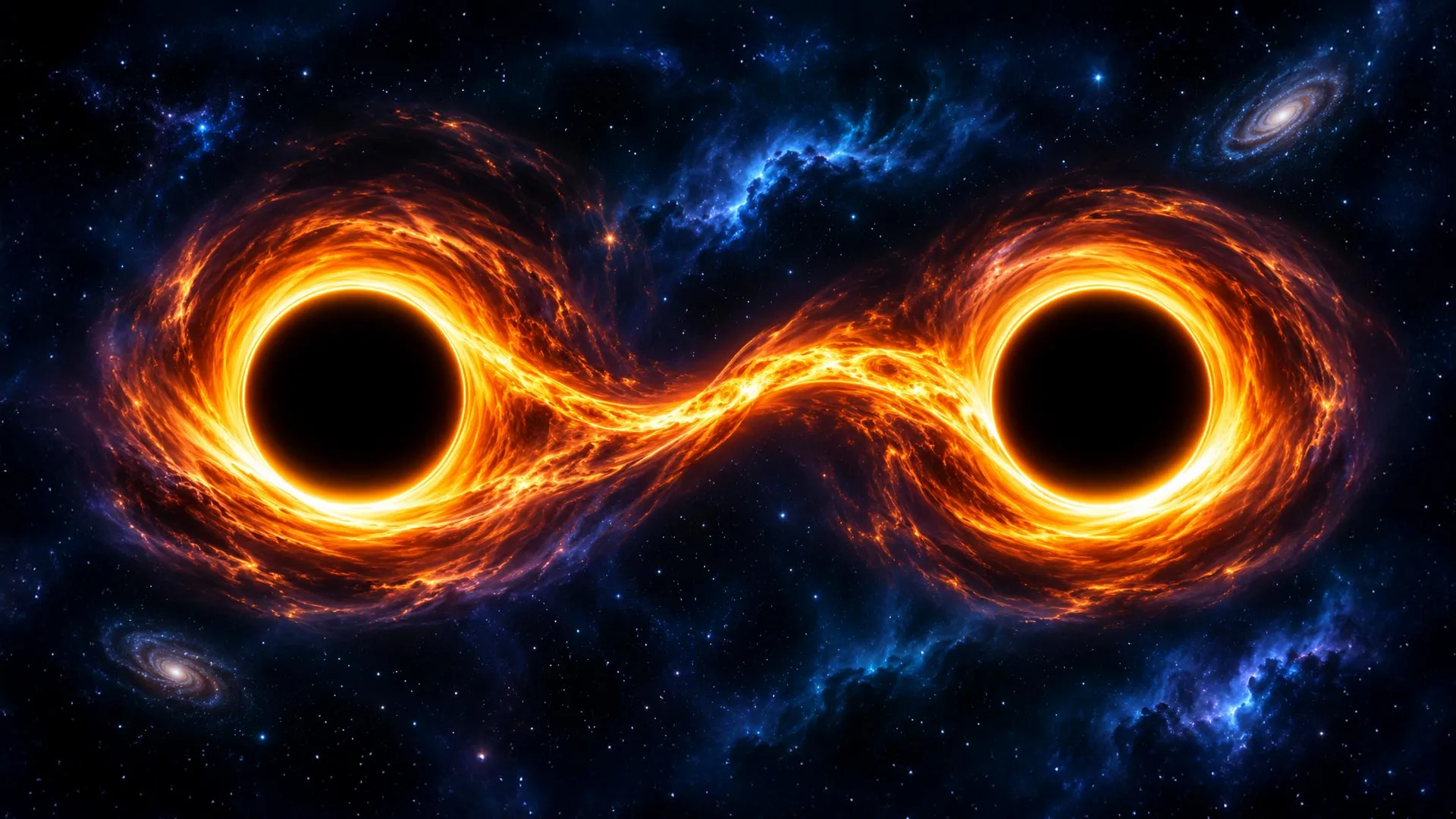
A Physical Review D paper finds that near-maximal rotation might open a narrow loophole in the entropy rules that normally forbid a black hole from dividing. No splitting has ever been observed.

Models of dense, metal-poor clusters seen in two lensed galaxies suggest they could birth black holes of up to 4,000 Suns, a possible head start for supermassive ones.

Columbia and Chilean researchers rewrote Einstein's equations in plasma-style variables and found gravitational field 'sheets' that can reconnect.

Columbia and Chilean researchers rewrote Einstein's equations to look like plasma physics and found a process that moves energy from gravitational fields into matter.

Astronomers checked five candidate isolated black holes within 49 light-years against infrared and radio surveys and concluded they are unlikely to be real, with a big new radio dataset due in 2027.

A theoretical study finds a narrow loophole in the laws of thermodynamics that might let a rapidly rotating black hole divide into two smaller ones, leaving a possible gamma-ray signature.

Astronomers using a gravitational lens say the galaxy MG B2016+112 hosts the most tightly paired black holes yet confirmed at such a distance, seen when the universe was about 2 billion years old.

Khalifa University researchers computed how Planck stars, Bonanno-Reuter and Hayward black holes would sound compared with Einstein's, though today's detectors cannot hear the difference.

A new calculation says that once a black hole's horizon is temporarily distorted in one direction, its radiation cannot return to its original behavior with zero trace.

Galaxies with no central bulge, which have never had a major collision, host supermassive black holes as heavy as their stellar mass predicts, pointing to slow, steady feeding.

By stacking data on hundreds of galaxies, Arizona State astronomers found hydrogen glowing along jet paths deep into the gas halos that feed star birth, but not in other directions.

IRAS 18293-0941 pairs a 10-solar-mass black hole with a hot star. Its jet slams into a gas cloud 100 light-years away, where particles may reach energies about 100 times the Large Hadron Collider's.

In 195 simulated star deaths, adding neutrino 'flavor' changes flipped many stars between 16 and 30 solar masses from supernovae to silent black holes, which could explain why astronomers see fewer explosions than expected.

Two Khalifa University mathematicians computed how black holes 'ring' in five to 26 dimensions and found two very different waves that share exactly the same notes, until a string-inspired correction is added.

Tidal disruption events compress a supermassive black hole's feeding cycle from millennia into years. A Curtin-IAS team found the delayed radio jets, arriving hundreds to thousands of days after a star is torn apart, switch on at the same threshold known from X-ray binaries in our galaxy. 'The physics does not seem to care how big they are.'

NGC 1068 is 45 million light-years away and one of the best-studied active galaxies in the sky. The hidden component moves 300 km/s faster than the visible one, tops 2,000 km/s and is escaping the galaxy for good.

A new three-way diagnostic separates starlight, black-hole radiation and shocks pixel by pixel. It suggests active black holes can trigger star formation as well as choke it.

VT J1906+0849 is the brightest transient in the entire VLA Sky Survey. Its brightness temperature is up to 10 billion kelvin, gas near it moves at thousands of kilometers per second, and it flared again in late 2025. Nothing in the catalog of known galactic sources fits.

Nine years after proposing the test, a Birmingham–Perimeter team measured how rotation squashed the heavier object in GW241011. Rotating boson stars with quartic self-interactions cannot explain it.

Nagoya University physicists found that hidden matter around a black hole shifts the frequency and the decay rate of its gravitational-wave ringdown by different amounts — a mismatch detectors could look for.

DR20 includes half a million black hole spectra, 1.5 million Milky Way stars and the survey's first optical spectroscopy from the Southern Hemisphere — all of it free to anyone who wants it.

Hawking radiation should evaporate anything that small in an instant. Three physicists calculated the point where dark matter falling in outruns the radiation leaking out.

RBH-1 left a trail of newborn stars 202,000 light-years long. A Santa Barbara team worked backward to the merger that threw it out, about 70 million years ago.

When a supermassive black hole switches its jets off, the leftover lobes were thought to glow for a long, slow stretch. A survey with MeerKAT found the afterlife is short — and earlier searches were looking for the wrong thing.

GW231123 was reported as a 190-to-265-solar-mass collision. A Max Planck reanalysis published Thursday says gravitational lensing magnified the signal, and the real total is 100 to 180.
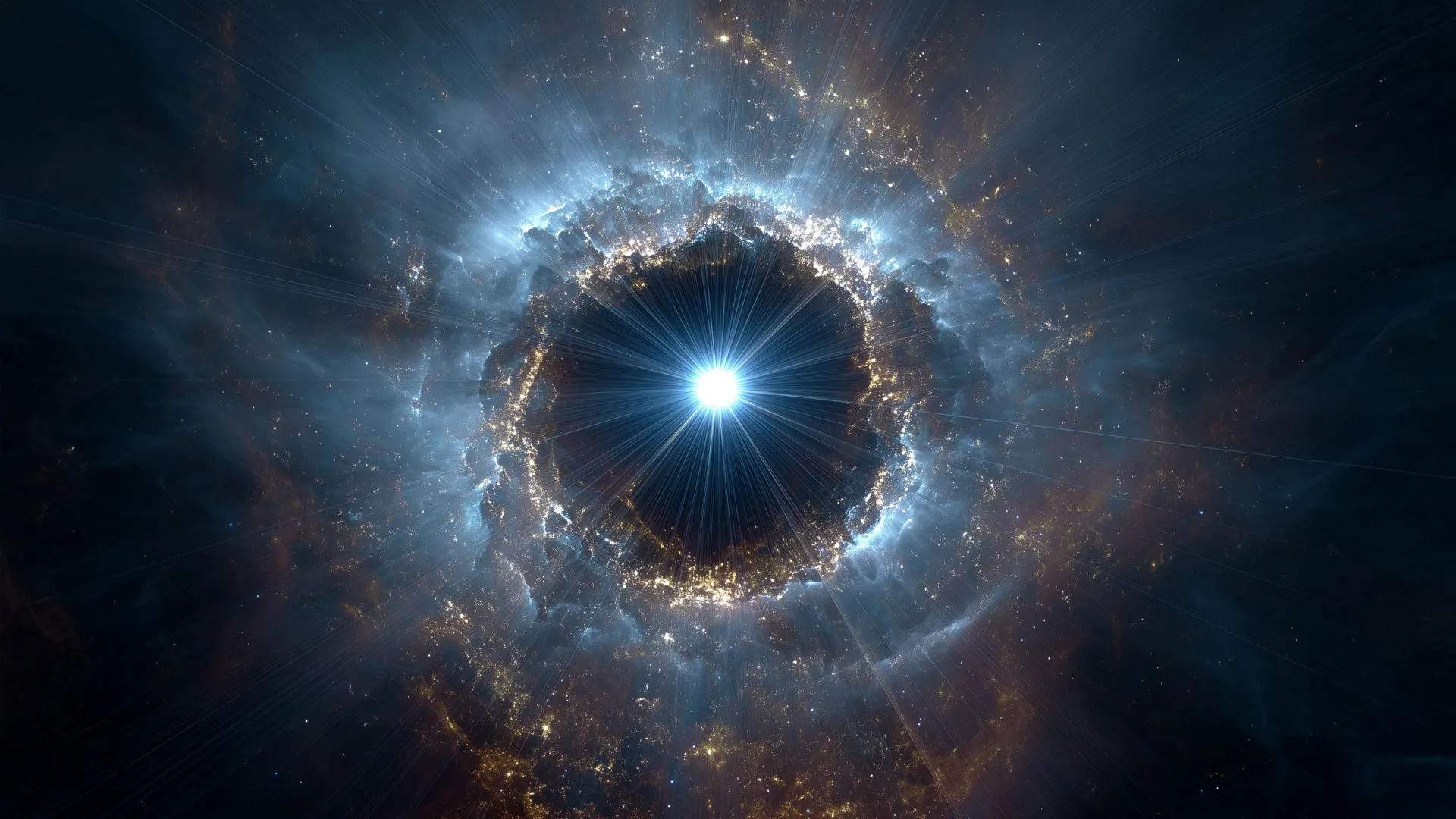
Colgate physicists calculate that the remnants of hypothetical 'Dark Stars' from cosmic dawn could dominate the gravitational-wave background that pulsar timing arrays have been measuring.

A Flatiron Institute simulation of the galaxy’s entire history finds that about 91% of stellar-mass black holes drift alone, and roughly 3% were kicked out of the galaxy altogether.
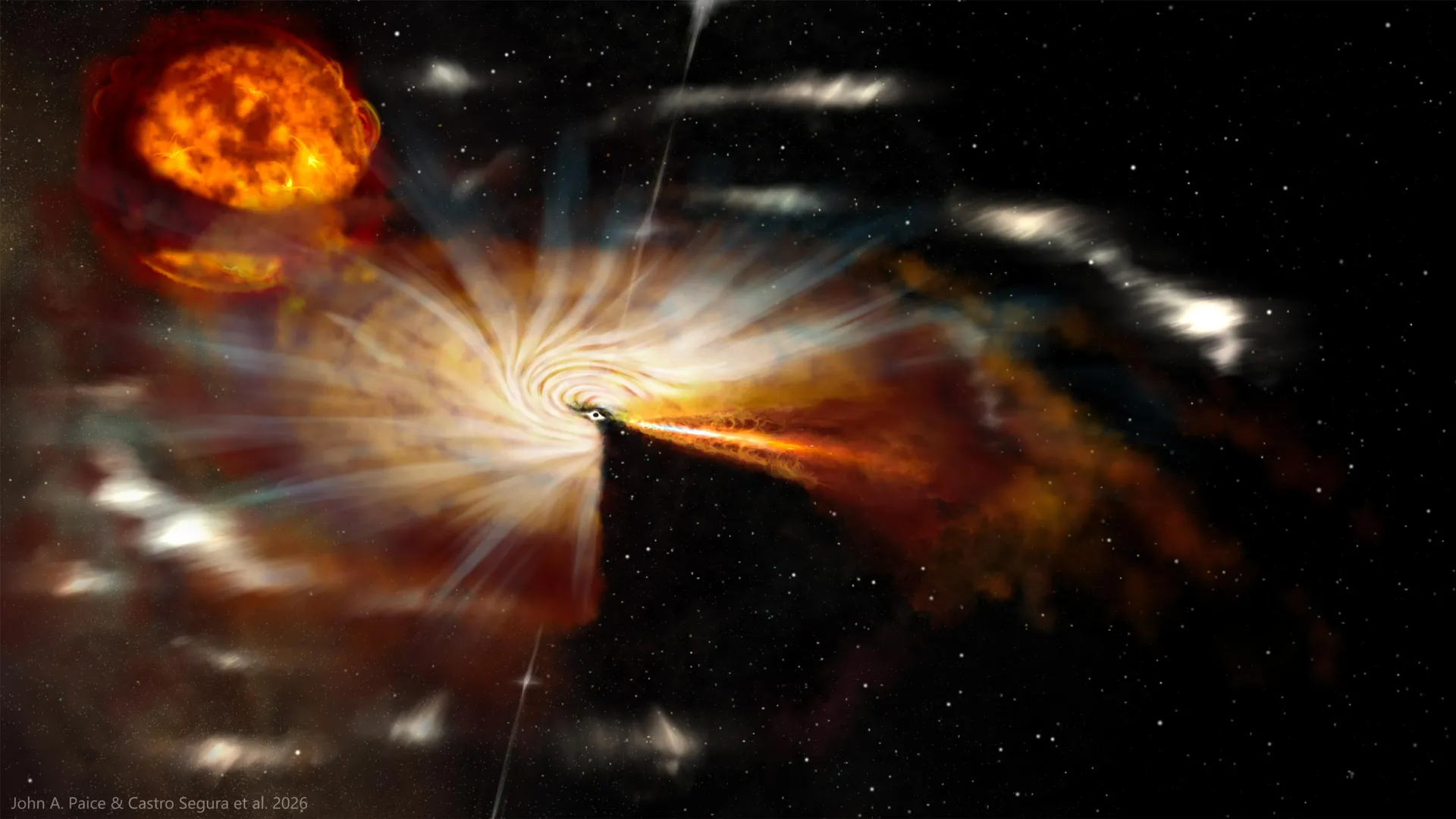
Observations of Swift J1727.8−1613 with the Very Large Telescope caught powerful outflows still running after the system had dimmed to a hundredth of its peak brightness.
A Penn State team led by Abhay Ashtekar has devised a new entropy measure that extends the laws of black hole thermodynamics to objects that grow, merge and evaporate — not just idealized, static ones.
A CUNY team built a spinning system out of engineered metamaterials that amplifies passing waves — reproducing the half-century-old Penrose-Zel'dovich process once thought possible only around a rotating black hole.

Astronomers argue the universe's X-ray-silent, seemingly overmassive black holes are actually smaller objects feeding at furious rates — a finding that could defuse one of cosmology's freshest crises.

A tabletop 'black hole' made of light offers the clearest evidence yet for Stephen Hawking's most famous prediction, and a rare window into quantum gravity.
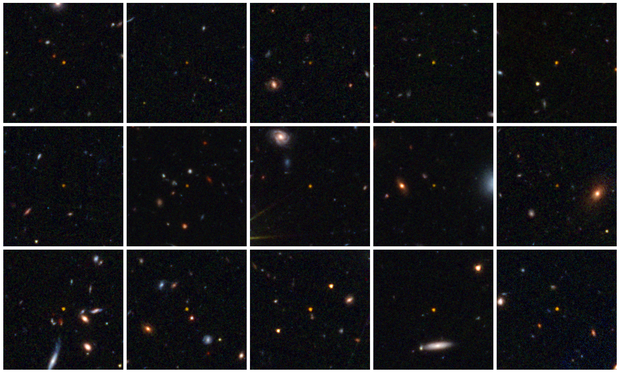
The European space telescope found 31 ancient quasars — two of them shining from when the universe was just 5% of its current age.

A single 10-month observing run added 161 new detections, nearly doubling the record — and delivered the sharpest gravitational-wave signal ever recorded, along with hints that some black holes are built from earlier black holes.
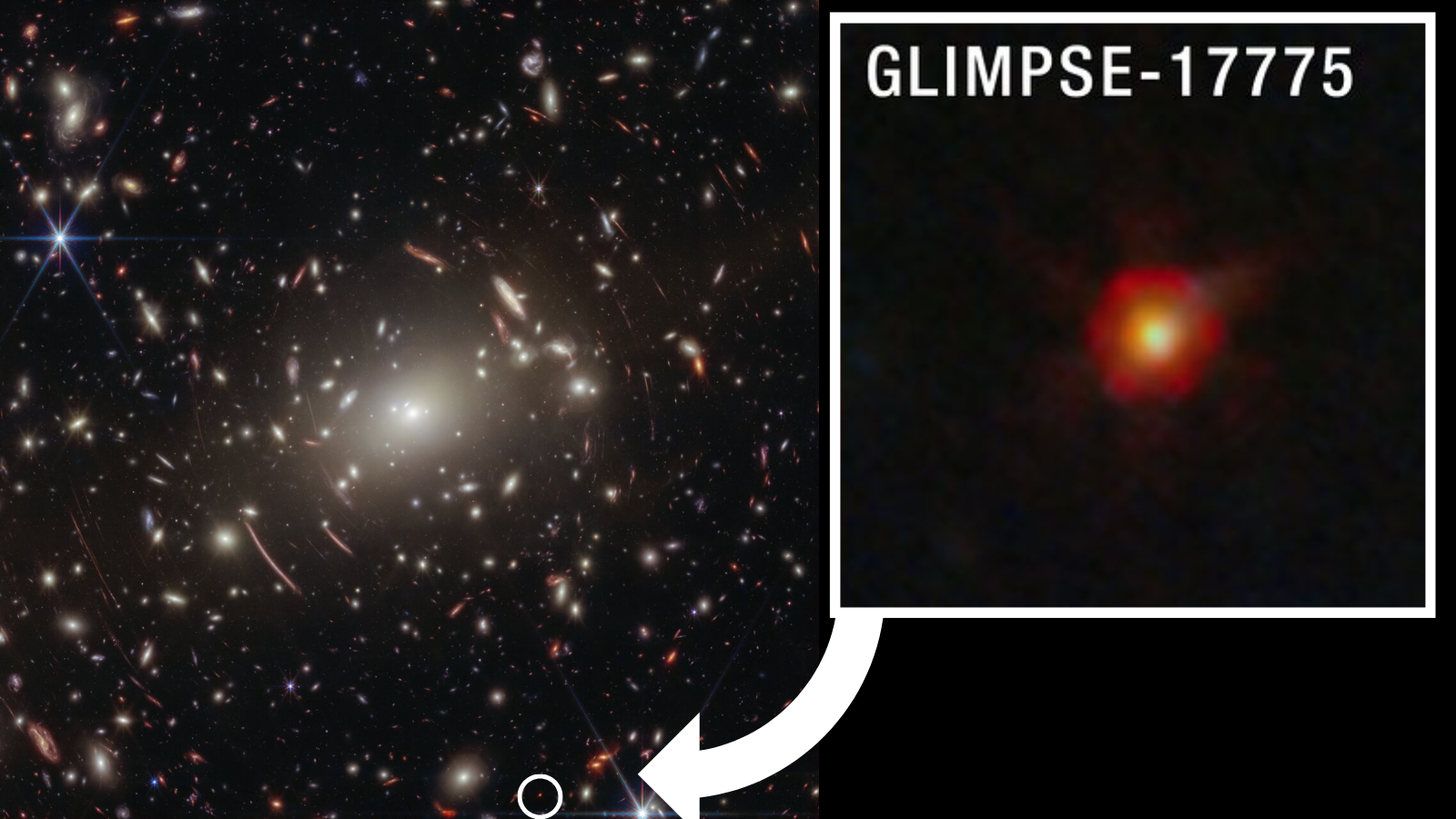
The most detailed spectrum yet of one of these ancient objects strongly favors a black hole cloaked in hot gas over a galaxy full of stars — evidence, researchers say, of heavy black-hole seeds being born in real time.
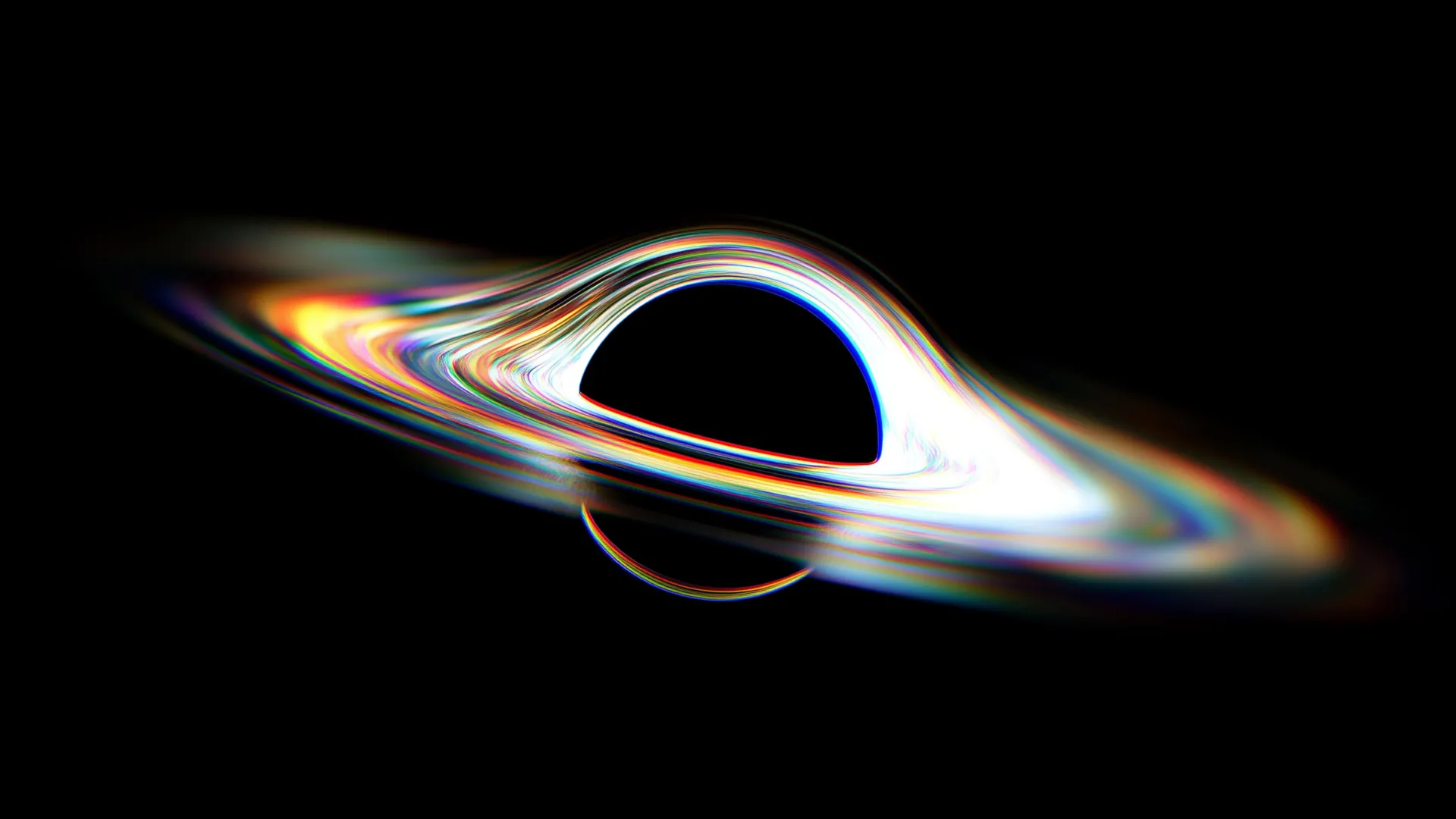
The new LIGO-Virgo-KAGRA release includes the clearest gravitational-wave signal ever recorded and fresh evidence that some black holes are built from the wreckage of earlier mergers.
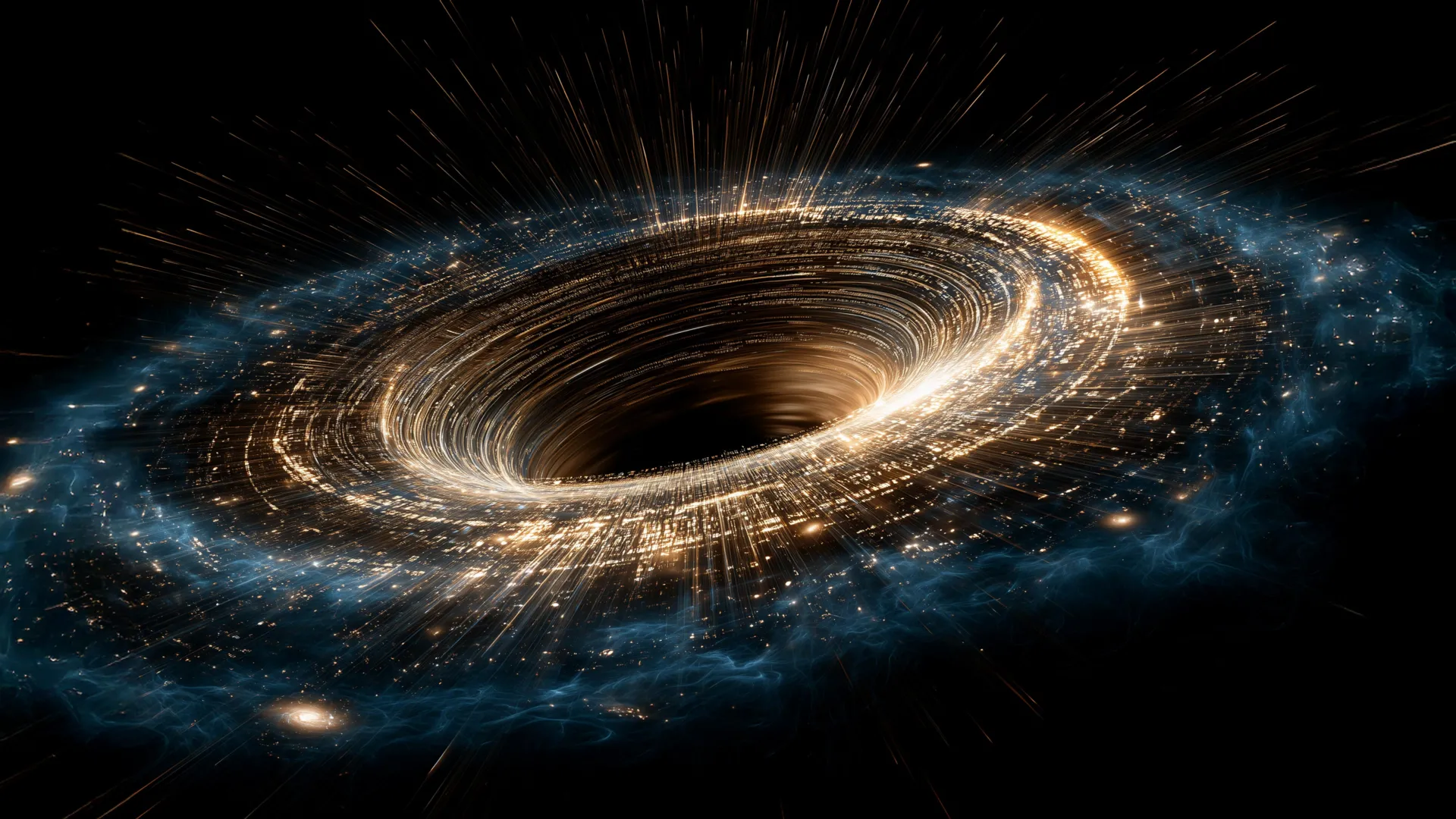
A Leiden University team's 'Quantum Memory Matrix' theory suggests spacetime stores an imprint of every interaction, a single framework its authors say could also resolve the black-hole information paradox.

Oxford and Max Planck scientists say tightly bound black-hole binaries act as cosmic lenses, magnifying background stars into repeating flashes that betray their presence.
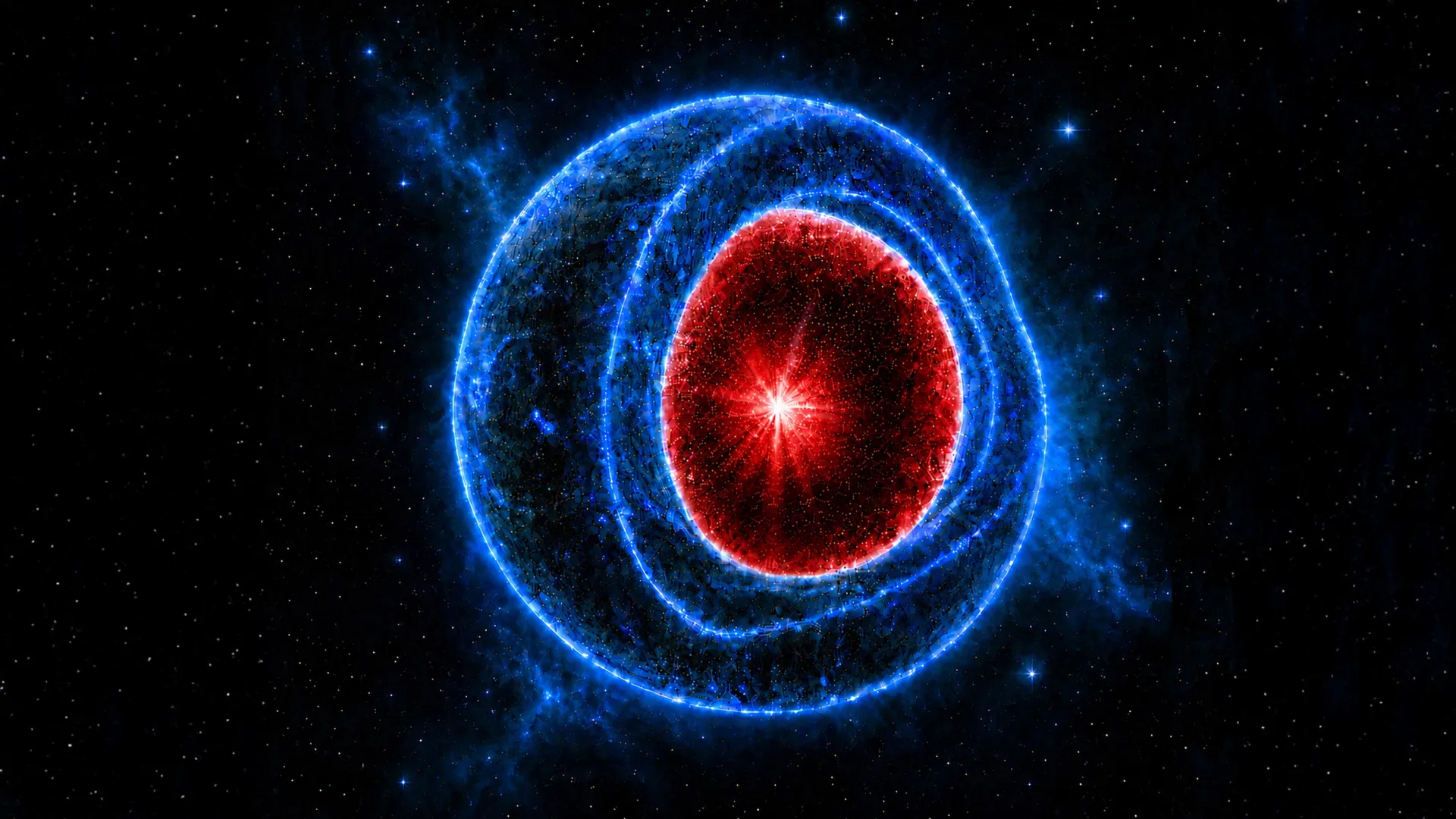
Theoretical study suggests massive stellar collapse might trigger birth of tiny cosmos driven by dark energy, forming exotic objects called gravastars.
Revolutionary gravastar theory suggests massive stellar collapse triggers miniature universe creation, challenging conventional black hole formation.
Scientists propose that massive stellar collapse might trigger the birth of a tiny cosmos inside the dying star.
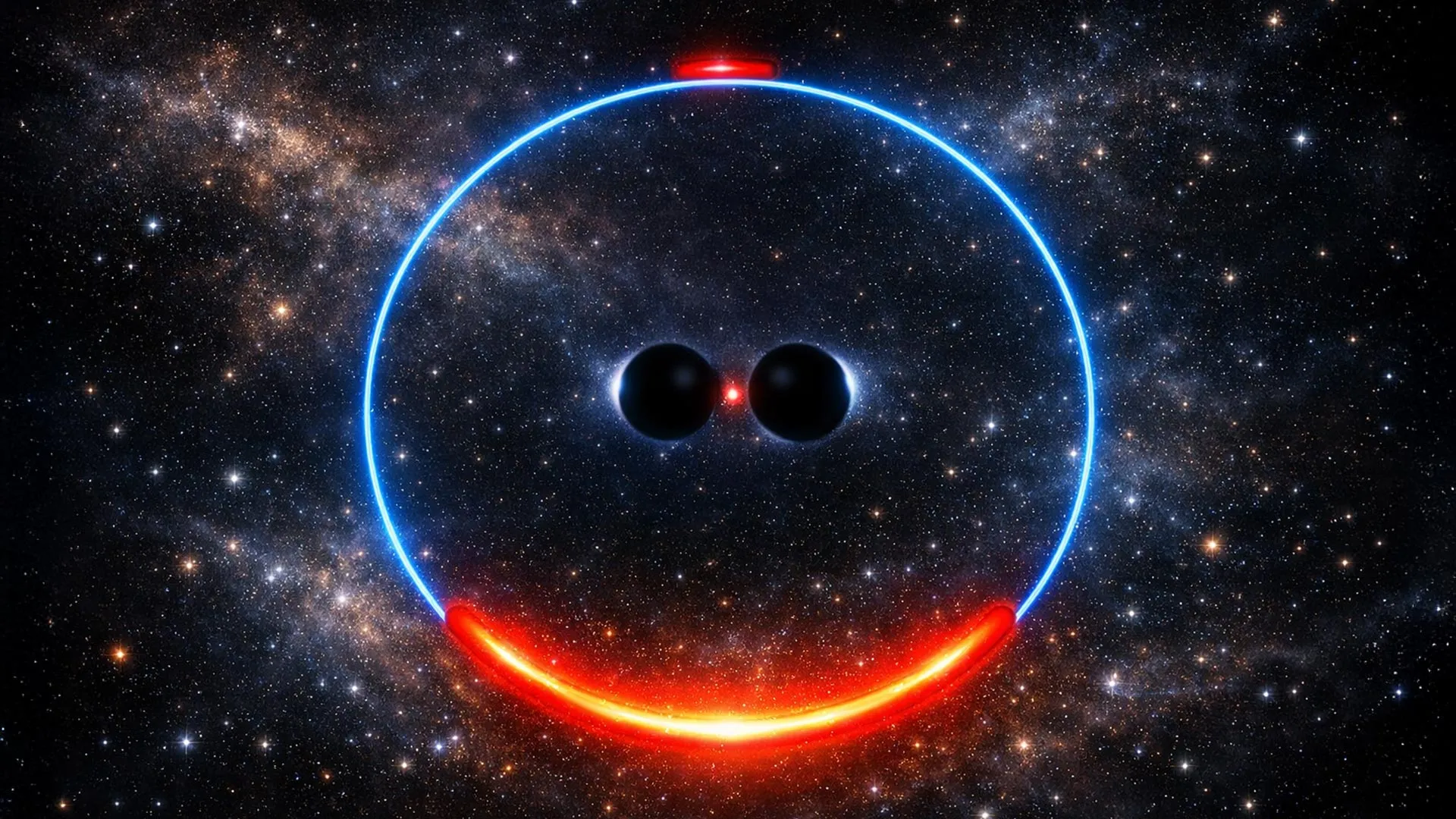
Researchers at Oxford and the Max Planck Institute propose hunting elusive supermassive black hole binaries by watching for repeating flashes of background starlight bent and magnified as the pair orbits.
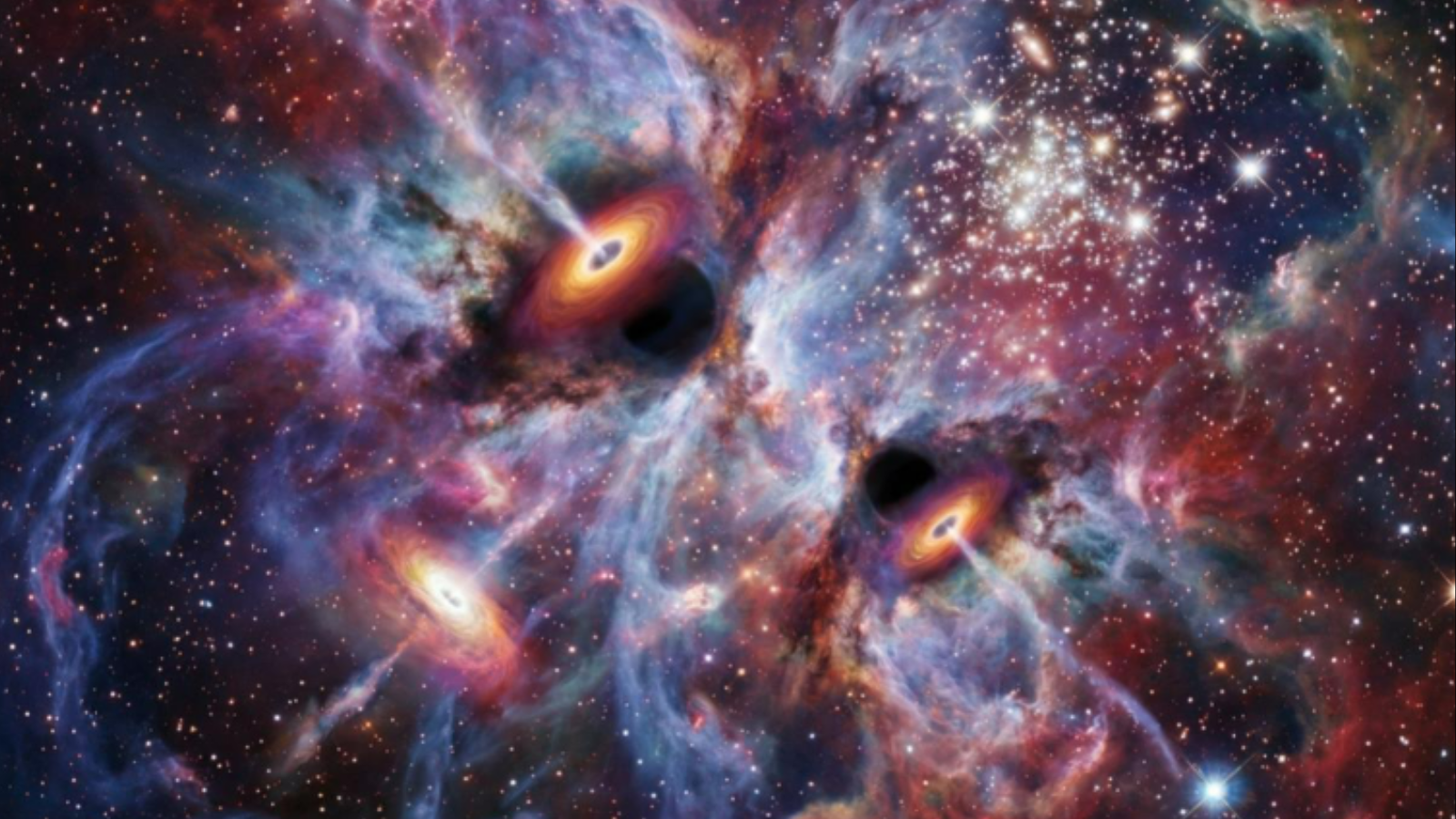
New simulations suggest small 'seed' black holes gorged on gas faster than thought possible, explaining the monsters the James Webb telescope found just after the Big Bang.
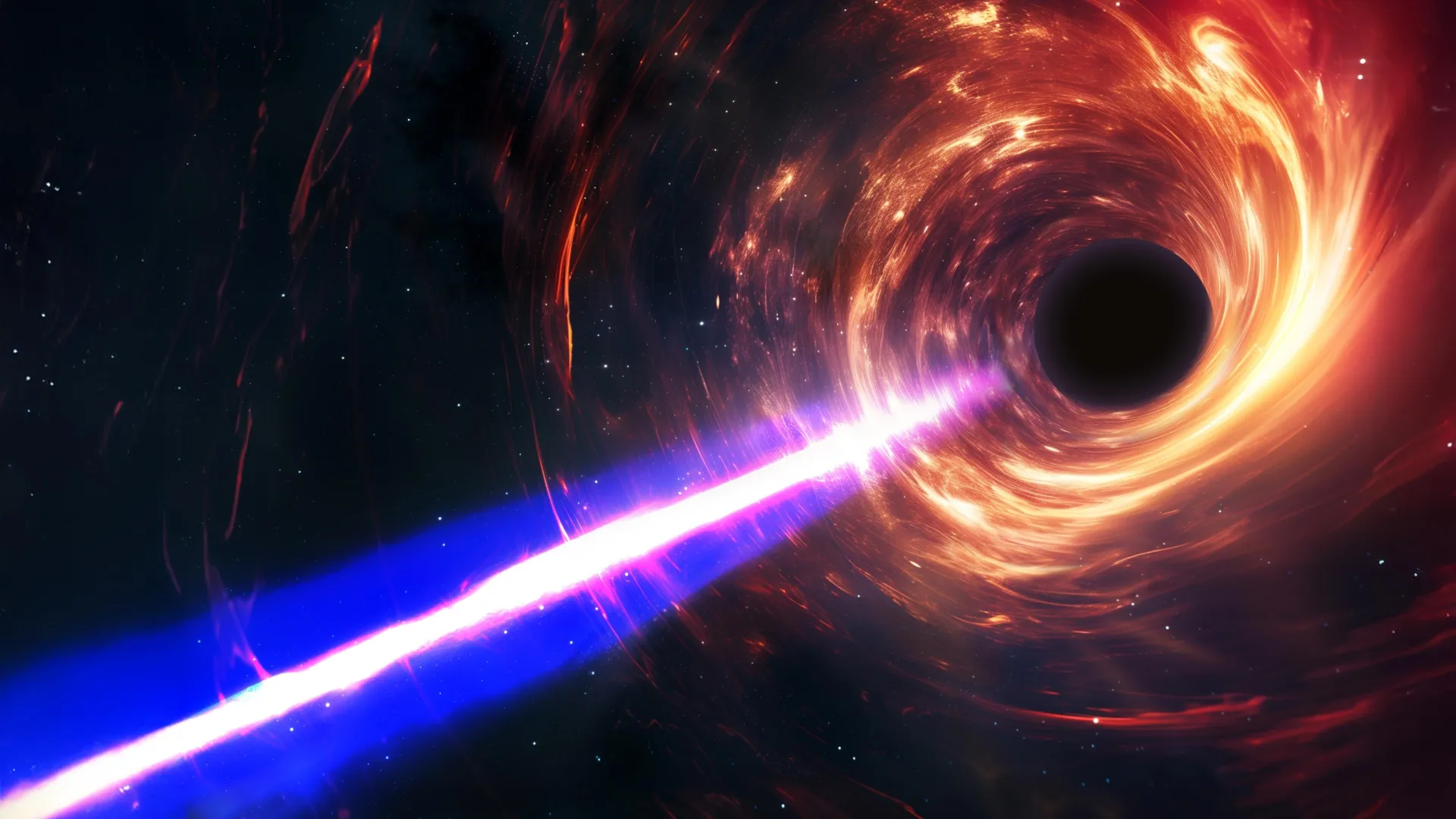
Researchers point to blazars—supermassive black holes shooting plasma jets toward Earth—as likely origin of record-breaking 220 PeV particle.
Researchers believe the 220 PeV particle detected in Mediterranean Sea originated from supermassive black holes shooting jets directly toward Earth.
Researchers believe the record-breaking 220 PeV particle detected in the Mediterranean Sea originated from supermassive black holes shooting jets directly toward Earth.
Researchers identify blazars as likely culprits behind record-breaking cosmic particle detected in Mediterranean Sea.
Researchers trace mysterious 220 PeV particle that slammed through Mediterranean Sea to blazars—supermassive black holes shooting jets directly at Earth.
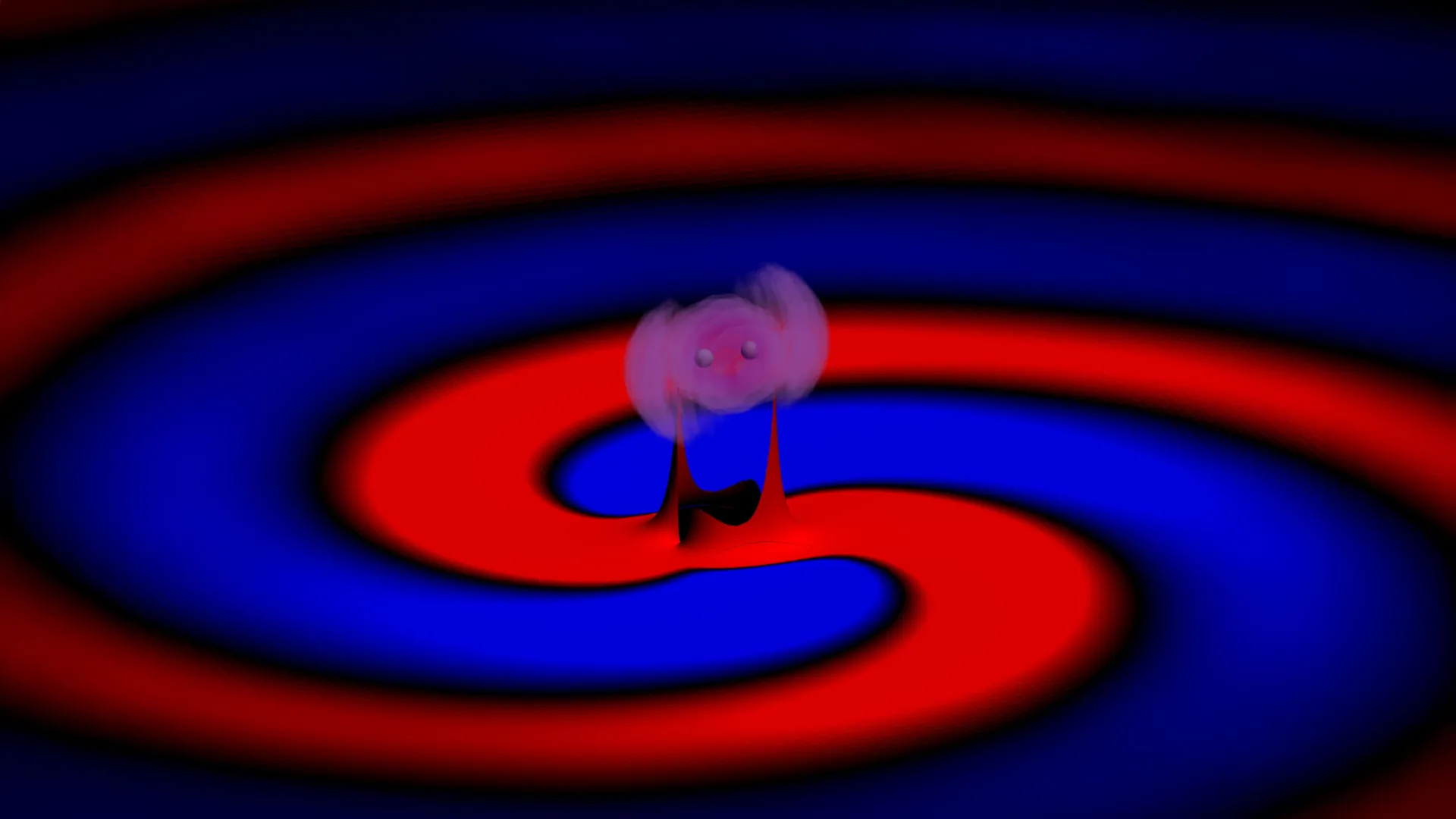
MIT physicists develop new method to detect dark matter interactions hidden within cosmic collisions, with one LIGO signal showing potential evidence.
MIT physicists have developed a new method to search for dark matter signatures in ripples from merging black holes, with one LIGO signal showing promising results.

New JWST observations of COLA1 and NEPLA4 — galaxies seen only 800 million years after the Big Bang — show black holes far larger relative to their host galaxies than any modern counterpart, deepening the puzzle of how the universe built its giants so quickly.
MIT physicists detect potential dark matter signature in LIGO data, offering new way to study the universe's most mysterious substance.
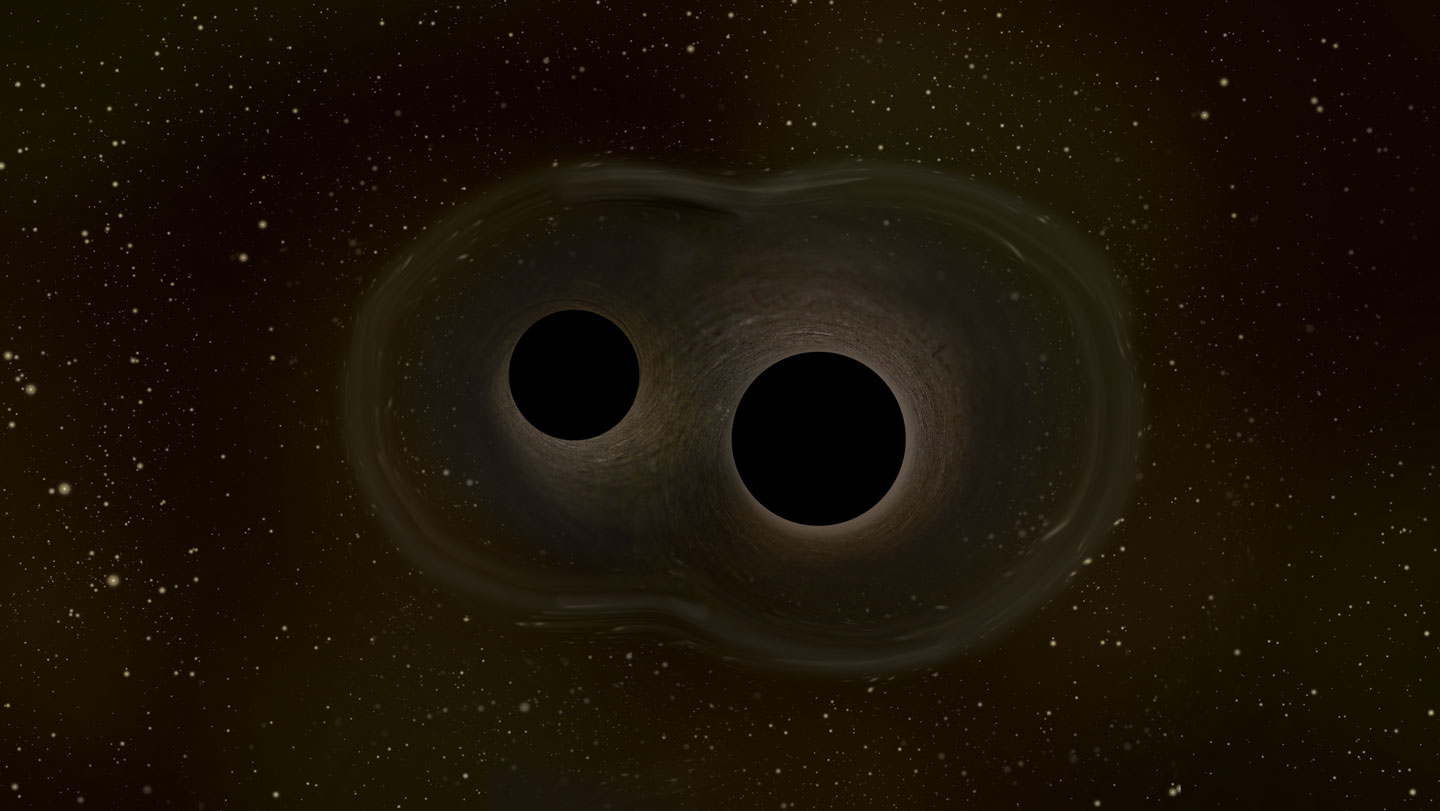
A starless gulf 3,200 light-years across at the heart of galaxy Abell 402-BCG turns out to be a gravitational scar carved by two ultramassive black holes, together weighing 60 billion suns and headed for an eventual merger LISA may one day hear.

A new Nature paper from the Niels Bohr Institute slashes black-hole mass estimates 100-fold and finally explains the strange crimson points scattered across Webb's deep-field images.

The clearest black hole merger ever recorded — with a signal-to-noise ratio nearly three times higher than LIGO's first detection — verified multiple tones predicted by Einstein's general relativity.
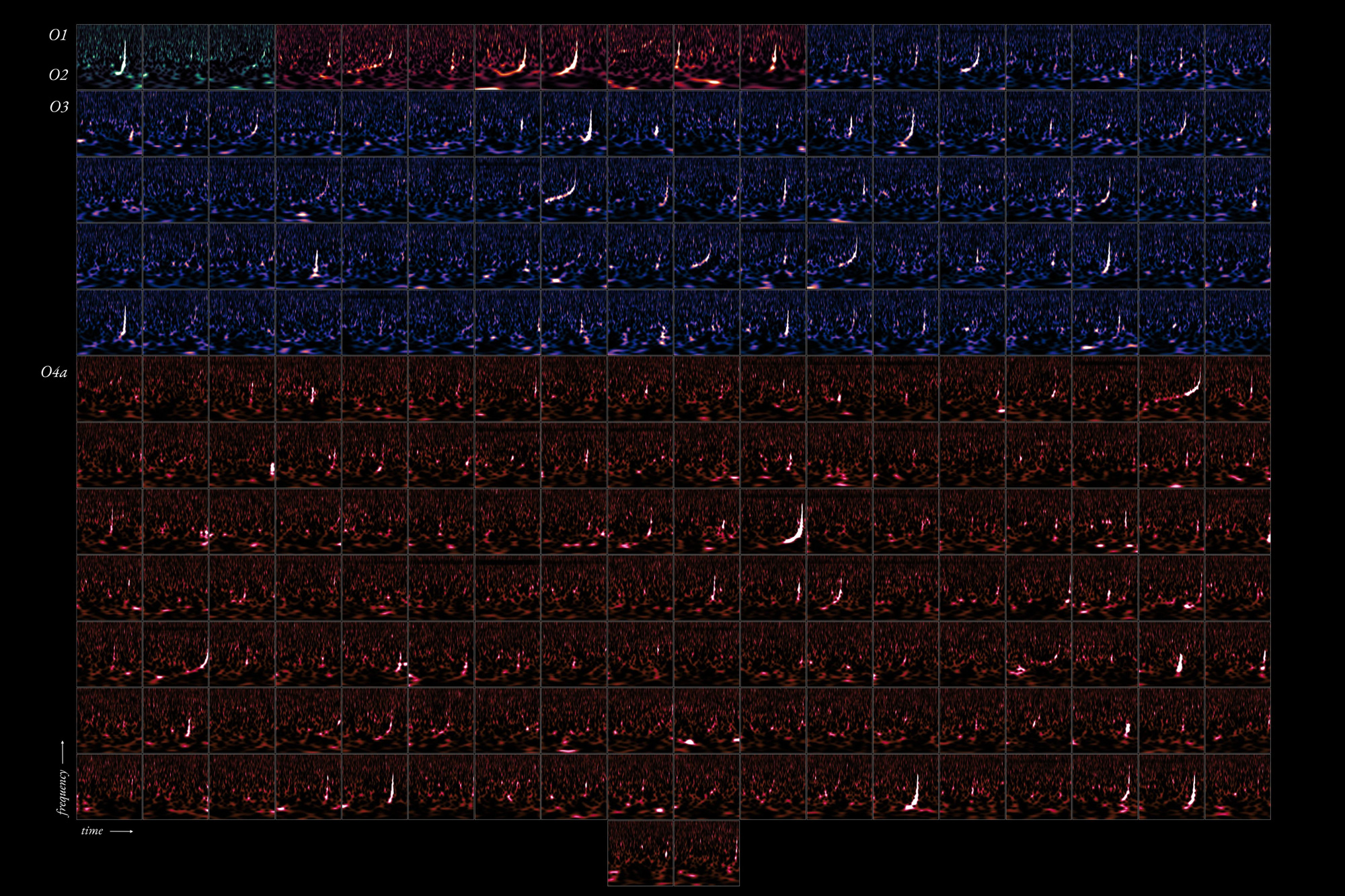
The GWTC-4 catalog, led by MIT, adds 128 new events from LIGO's fourth observing run — including a 260-solar-mass merger, the fastest-spinning binary on record, and a new measurement of the universe's expansion rate.
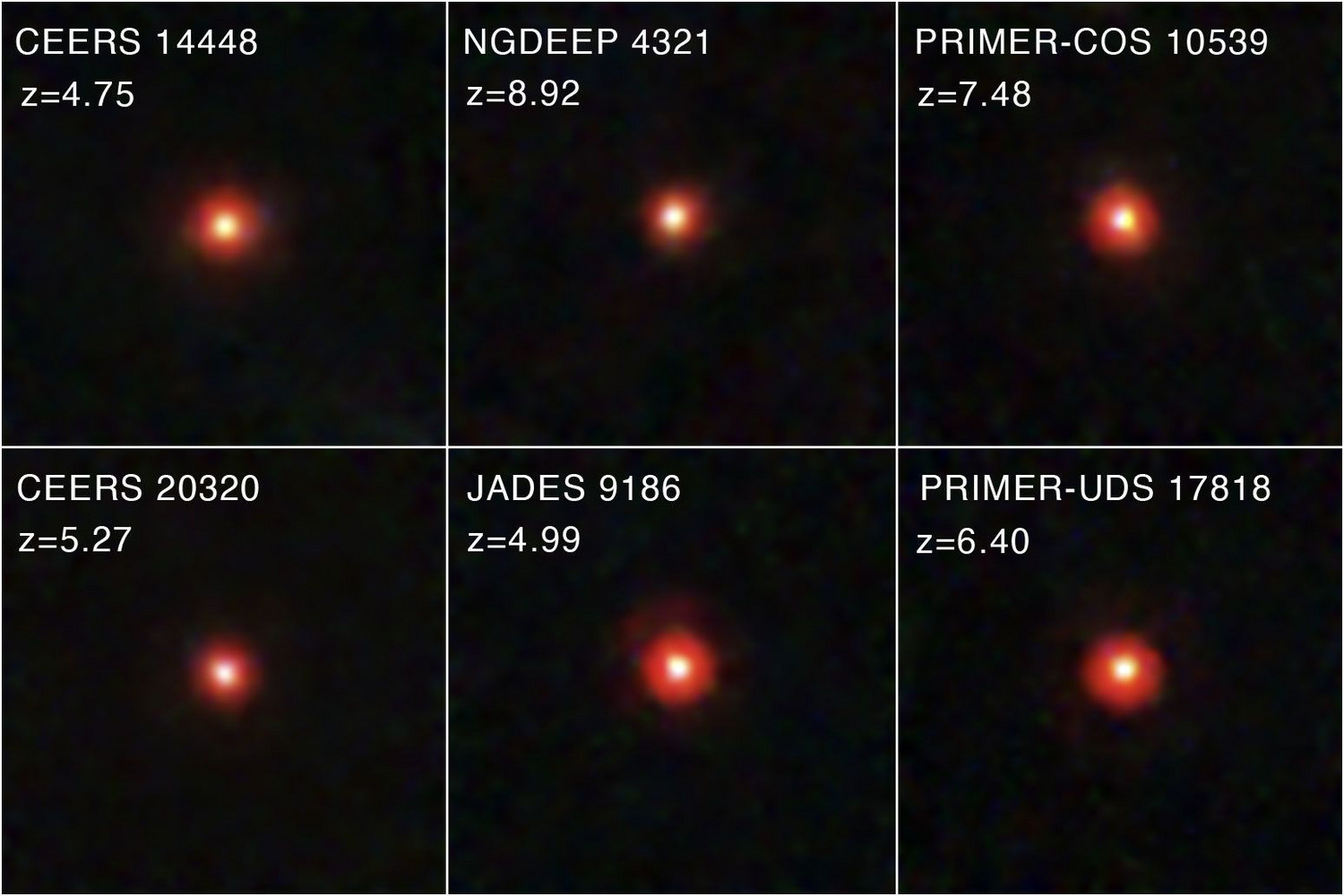
Appearing in nearly every deep-field image since Webb launched, hundreds of mysterious luminous objects in the early universe remain unexplained despite hundreds of scientific studies — and may force a rethink of how the first black holes formed.
Showing the latest 60. More in Physics.