Astronomers Release Largest Gravitational Wave Catalog Ever: 218 Detections Including the Heaviest Black Hole Binary in History
The GWTC-4 catalog, led by MIT, adds 128 new events from LIGO's fourth observing run — including a 260-solar-mass merger, the fastest-spinning binary on record, and a new measurement of the universe's expansion rate.
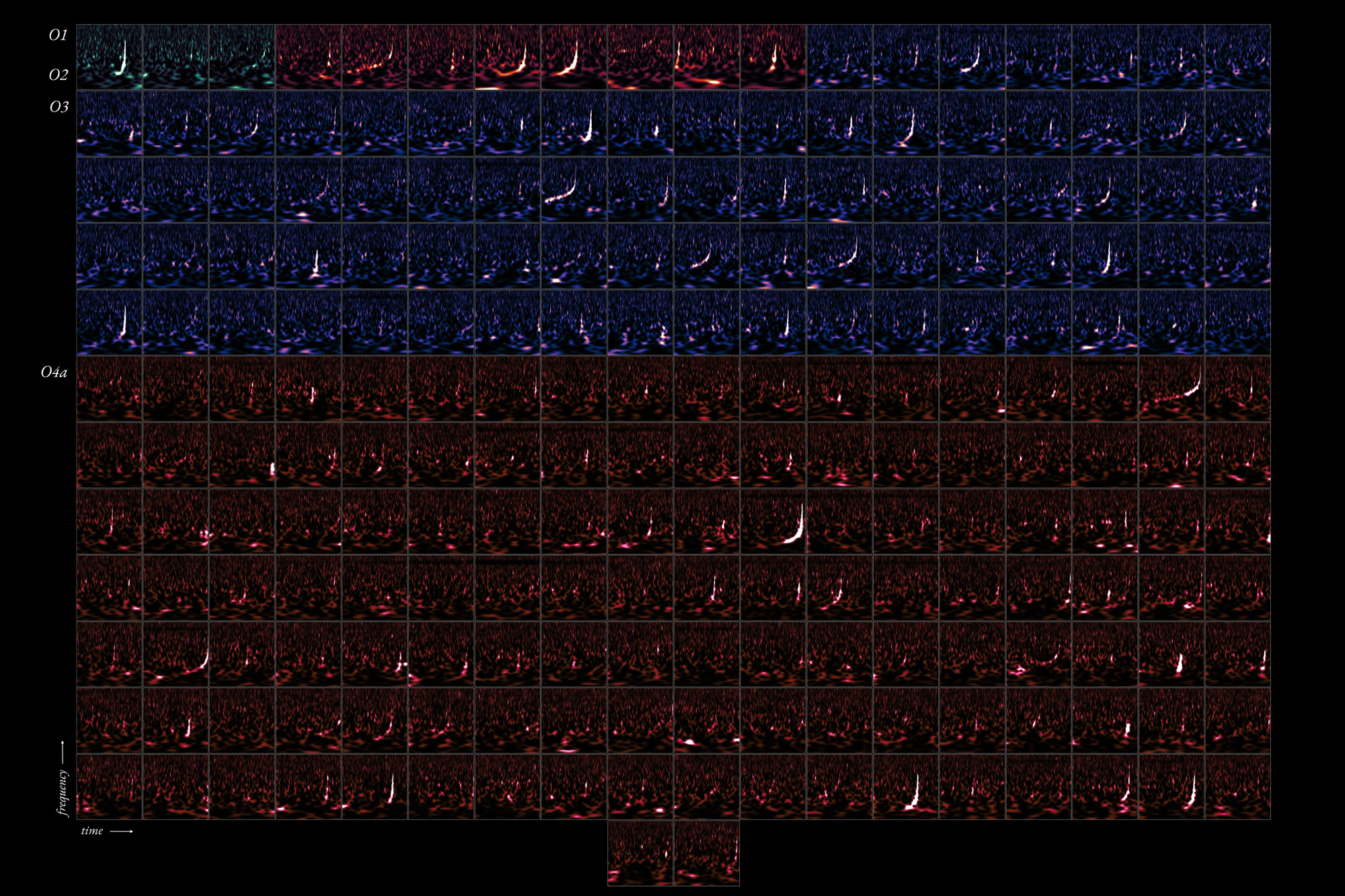
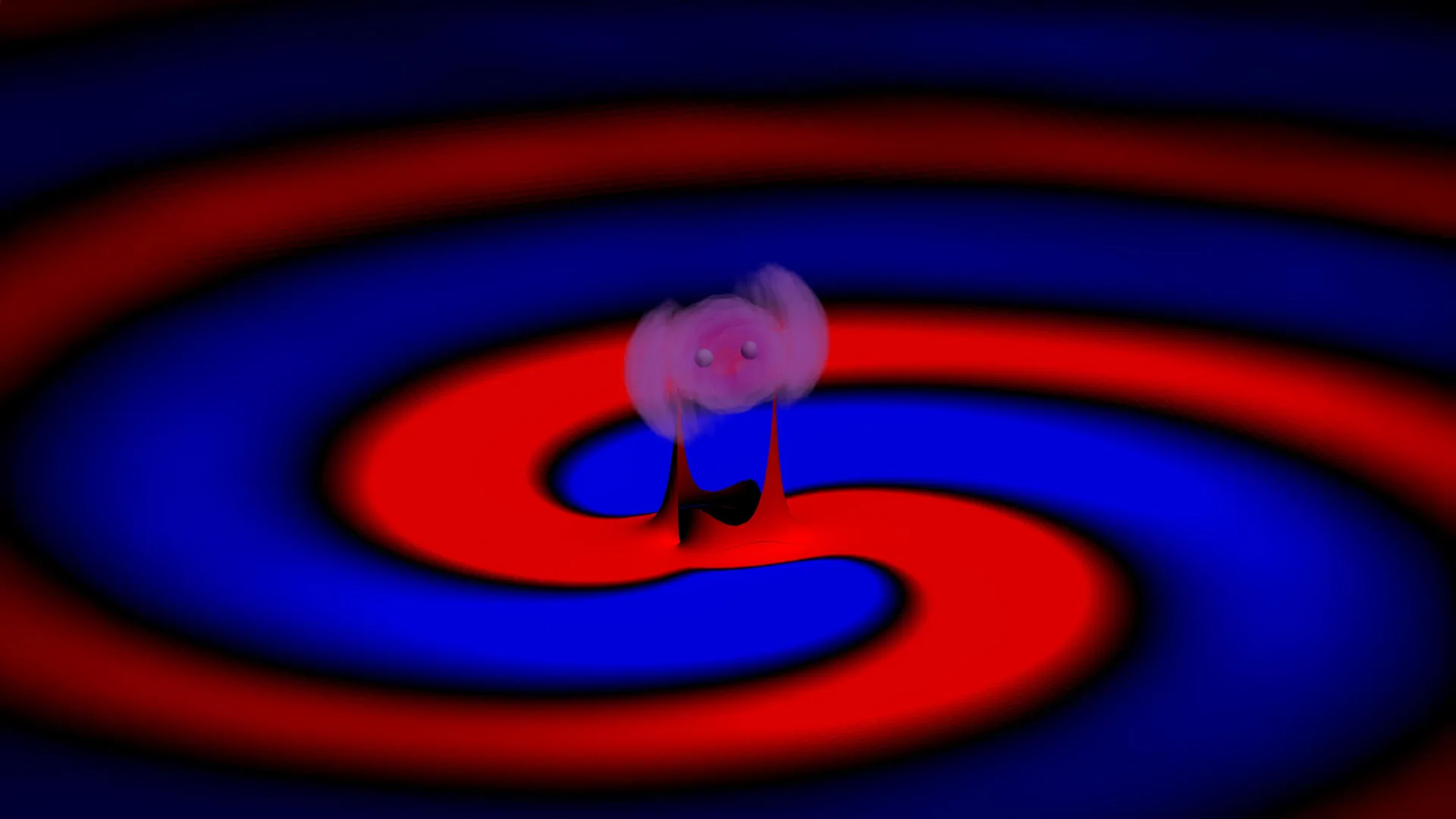
Astronomers have released the largest catalog of gravitational wave detections ever compiled, adding 128 new confirmed events to the scientific record and bringing the all-time total to 218 gravitational wave signals detected since the groundbreaking first detection in 2015. The GWTC-4 catalog, released by the LIGO-Virgo-KAGRA Collaboration with MIT leading much of the analysis, covers the first portion of Observing Run 4 — from May 2023 through January 2024 — and reveals a universe that is stranger, more violent, and more varied than even optimistic theorists had predicted.
Among the standout detections in the new catalog: the heaviest black hole binary ever observed, in which each member of the merging pair weighed approximately 130 times the mass of the Sun, producing a final black hole of roughly 250 solar masses. A separate event captured the fastest-spinning binary on record, with one black hole spinning at a rate that approaches the theoretical maximum set by general relativity. A third detection involved a dramatically asymmetric pair — one object roughly three times heavier than its partner — a configuration that challenges models of how binary systems form and evolve over cosmic time.
"We are expanding into new parts of parameter space and seeing things that are more massive, spinning faster, and more astrophysically interesting," said Daniel Williams of the University of Glasgow, one of the lead analysts on the catalog. MIT graduate student Jack Heinzel, who contributed key computational work, noted: "Some black holes are over 100 times the mass of our sun, others as small as a few times." The sheer range of masses, spins, and mass ratios observed across 218 events is now large enough for genuine statistical astrophysics — mapping out the full population of compact objects that the universe produces as stars live and die.
The catalog also yields a new, independent measurement of the Hubble constant — the rate at which the universe is expanding — at approximately 76 kilometers per second per megaparsec. This measurement, derived purely from gravitational wave signals by treating binary mergers as "standard sirens" of known intrinsic luminosity, sits between the two conflicting measurements that have produced the "Hubble tension" — one of the most debated puzzles in modern cosmology. Neither resolving nor deepening the tension, the gravitational wave measurement adds a third independent data point that researchers hope will eventually help determine whether the discrepancy reflects new physics or systematic errors in existing methods.
The LIGO-Virgo-KAGRA network has undergone substantial sensitivity upgrades since its original design, and Observing Run 4 is expected to yield another major tranche of detections when the second half of its data — running through early 2025 — is analyzed for the forthcoming GWTC-4.1 release. The network is also preparing for the addition of LIGO India, a third LIGO facility expected to begin science operations in 2028, which will dramatically improve the network's ability to localize signals on the sky — a critical capability for the multi-messenger astronomy that has already linked gravitational waves to visible light, radio, and gamma-ray counterparts.