Euclid Telescope Spots the Oldest Quasars Ever Seen, Deepening a Cosmic Mystery
The European space telescope found 31 ancient quasars — two of them shining from when the universe was just 5% of its current age.
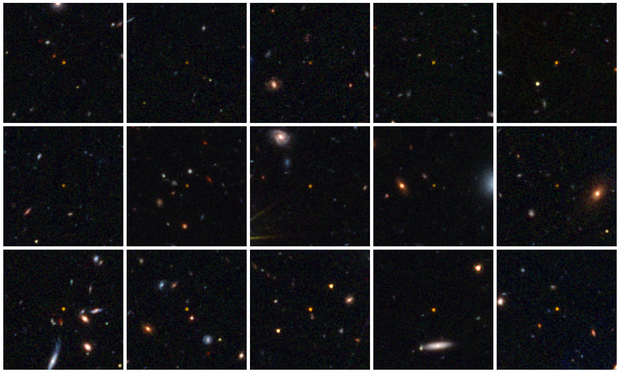
Astronomers using Europe's Euclid space telescope have discovered 31 of the oldest quasars ever documented, including the two most ancient ever observed — blazing beacons that were already shining when the universe was a mere 5% of its current age.
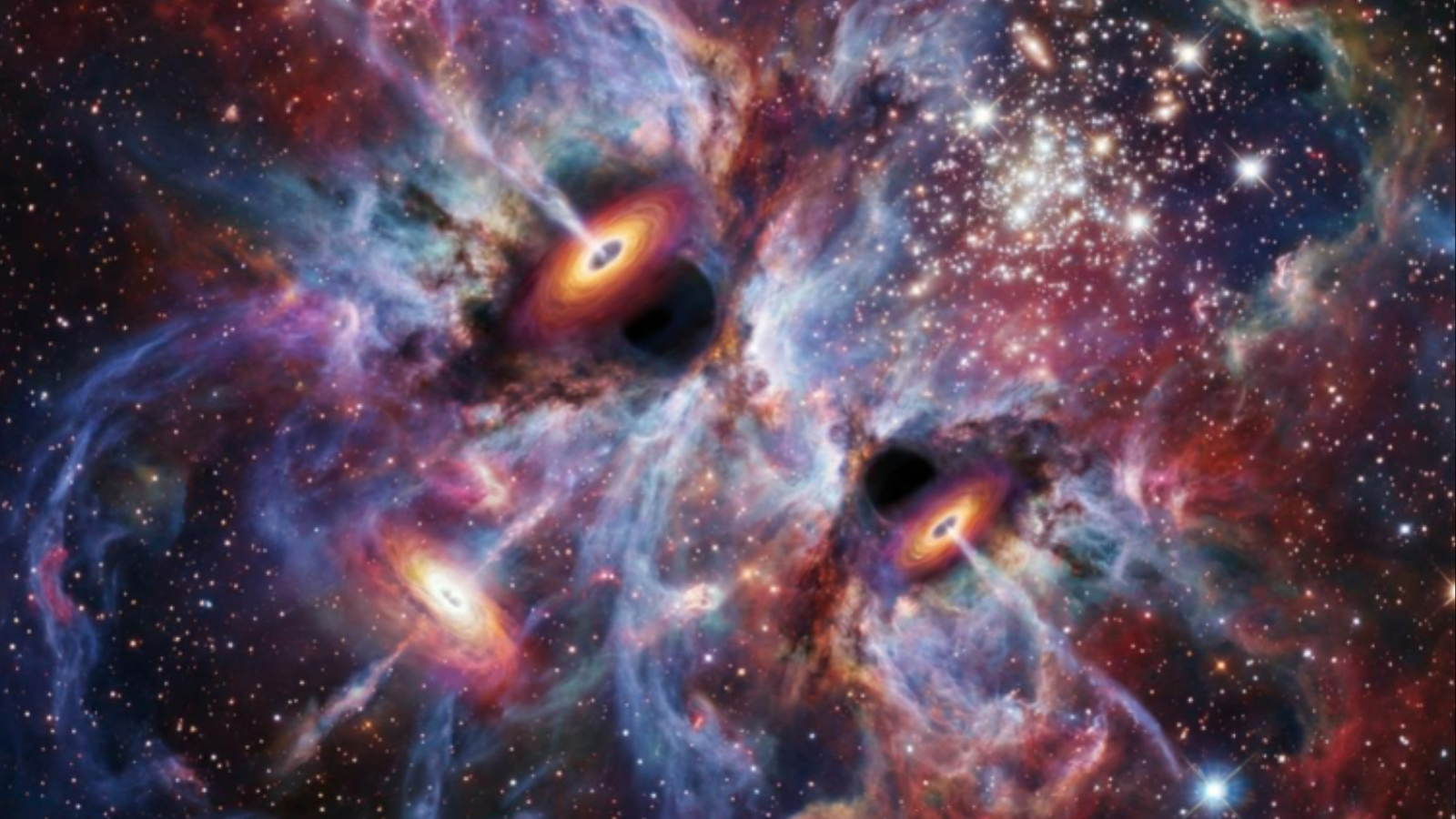
Quasars are the brilliant cores of young galaxies, powered by supermassive black holes devouring surrounding gas so ferociously that they outshine entire galaxies. The two record-breakers formed during the universe's first 670 million years, and their light has traveled roughly 13 billion years to reach Earth. Of the 31 imaged, a dozen date to the first 770 million years after the Big Bang. In just two years of observations, Euclid has doubled the number of such ancient quasars known to science.
The findings, published July 6 in the journal Astronomy & Astrophysics, sharpen a puzzle that has vexed cosmologists for years: how black holes weighing billions of times the mass of the sun could have grown so massive so quickly, when there was scarcely enough time since the Big Bang for them to form. "These monsters — weighing billions of times the mass of our sun — somehow already existed when the universe was in its infancy," said study co-author Joseph Hennawi.
Euclid, led by the European Space Agency with contributions from NASA, was designed to map billions of galaxies across a third of the sky to probe the nature of dark matter and dark energy. Its wide field of view has proven unexpectedly powerful for hunting rare, faint quasars that earlier telescopes struggled to catch. "Euclid is a true game-changer," said lead author Daming Yang of Leiden University. "Before, we could only find a handful of the very brightest ancient quasars, but Euclid lets us search far more efficiently across huge areas of sky to capture much fainter light."
The discovery matters because quasars act as cosmic lighthouses, illuminating an era astronomers call the cosmic dawn, when the first stars and galaxies switched on and began flooding the universe with light. The radiation streaming from these early black holes helped strip electrons from the primordial fog of hydrogen, a transformation known as reionization that made the young cosmos transparent. Pinning down when and how the earliest quasars formed helps researchers reconstruct that pivotal chapter of cosmic history.
The haul is only a preview. Euclid has years of surveying ahead, and astronomers expect it to uncover hundreds more of these primordial giants, giving them a statistical sample large enough to test competing theories of how the first black holes were seeded. Each new detection pushes the record closer to the cosmic dawn — and forces theorists to reckon with a young universe that built its biggest structures far faster than the textbooks predicted.