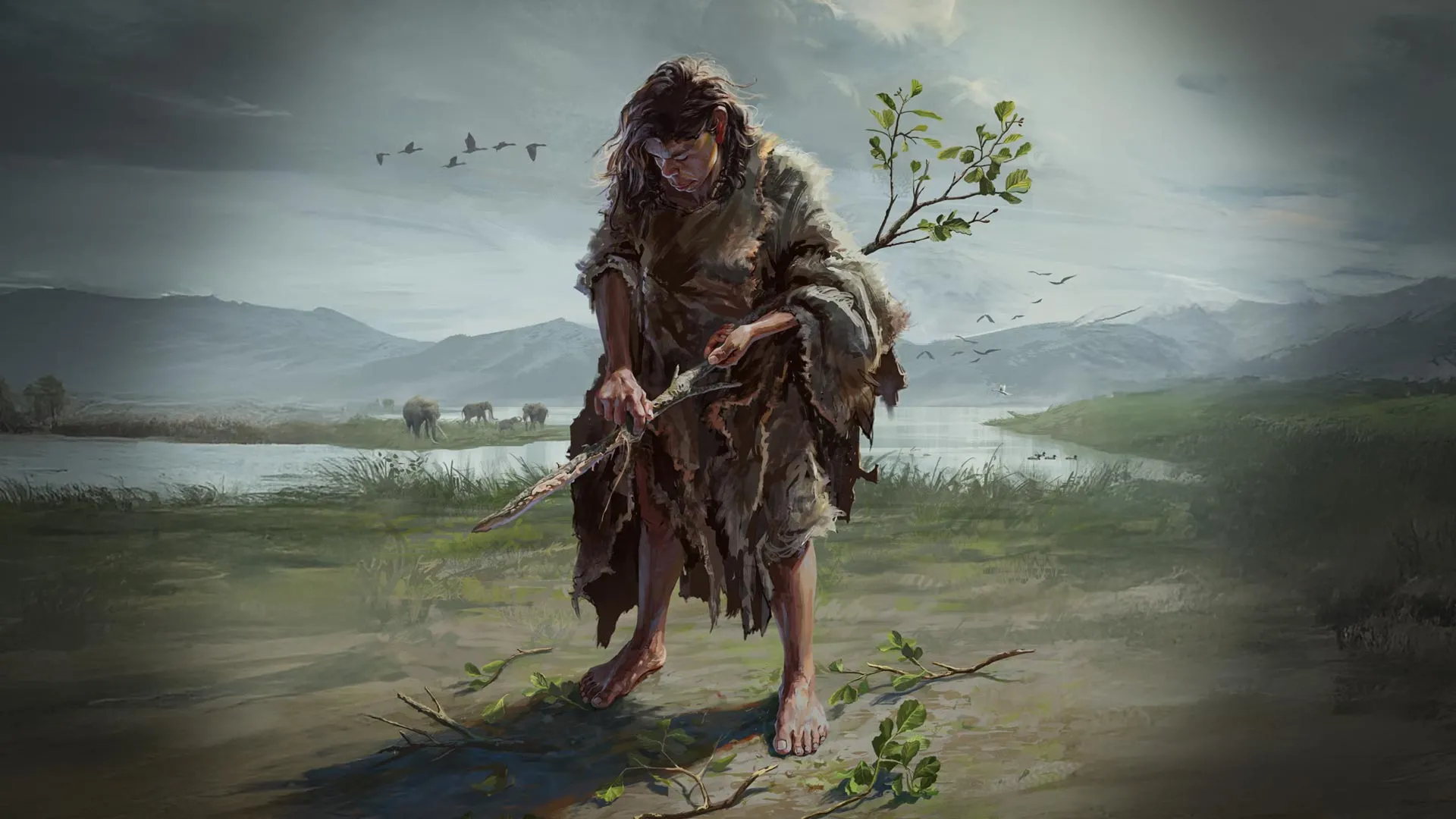
The 'Hobbit' Human May Have Scavenged Komodo Dragons' Leftovers to Survive
A new analysis of bones from an Indonesian cave suggests Homo floresiensis neither hunted big game nor controlled fire, deepening the mystery of its origins.

The tiny, big-footed human relative nicknamed "the Hobbit" may have survived not by hunting, but by scavenging the carcasses of animals killed and partly eaten by Komodo dragons, according to a new study that challenges long-held assumptions about the mysterious species.
Homo floresiensis stood barely more than a meter tall and lived on the Indonesian island of Flores until roughly 50,000 years ago. Ever since its 2003 discovery in Liang Bua cave, researchers have debated how so small-brained a creature managed to survive alongside giant reptiles and dwarf elephants. Many assumed it was a capable hunter that used tools and fire. The new analysis of animal bones from the cave points in a different, humbler direction.
Researchers examined more than 3,100 fossilized bone fragments from extinct dwarf elephants, called Stegodon, along with some 7,000 rodent bones from the site. They found 54 cut marks that appeared to be made by stone tools — but nearly twice as many tooth marks left by Komodo dragons. To be sure, the team compared the ancient marks with fresh bite marks on the bones of a goat fed to a living Komodo dragon at Zoo Atlanta, confirming that reptilian scavengers, not just hominins, had worked over the carcasses.
The study also cast doubt on whether Homo floresiensis controlled fire. Scientists found no burned Stegodon bones in the layers associated with the species, and an examination of more than 4,000 rodent bones from the same deposits turned up no signs of burning either. Dark stains that might once have been mistaken for the residue of campfires appeared instead to be natural manganese staining, the researchers concluded.
The findings feed directly into one of paleoanthropology's most heated debates. When Homo floresiensis was first unveiled in 2004, its combination of a chimp-sized brain and clearly human features stunned researchers, and some initially dismissed the bones as those of a diseased modern human. Decades of further discoveries on Flores, including even older and smaller fossils, have largely settled that it was a genuine species, likely a product of "island dwarfism," in which large animals marooned on islands shrink over generations to fit limited resources.
If the Hobbit was a scavenger that never mastered fire, it suggests the species followed a distinctly different, and perhaps less technologically advanced, evolutionary path than modern humans — and deepens the enduring puzzle of where it came from. Some scientists argue Homo floresiensis descended from Homo erectus, which shrank over generations on the isolated island; others suspect it branched off from a far more primitive ancestor. Either way, the picture emerging from Liang Bua is of a resourceful little human making a living on the leftovers of a dangerous world.