LIGO Data Hint That Many Black Holes Were Born When Stars Died Without a Bang
A Caltech-led study of 257 black hole mergers finds a spike at 10 solar masses and a gap at 12 to 16, matching what 'failed supernova' theories predict.

When the most massive stars die, many explode as supernovae, blasting most of their matter into space and leaving behind a neutron star or a black hole. Theory says some stars may skip the explosion entirely and collapse straight inward. A new Caltech-led study of gravitational-wave data finds hints that a large family of black holes may have been born that way.
The researchers stress that they did not find direct evidence of failed supernovae. What they found is that the observed black holes match what theorists predicted such a population would look like. The study was published in the journal Physical Review D.
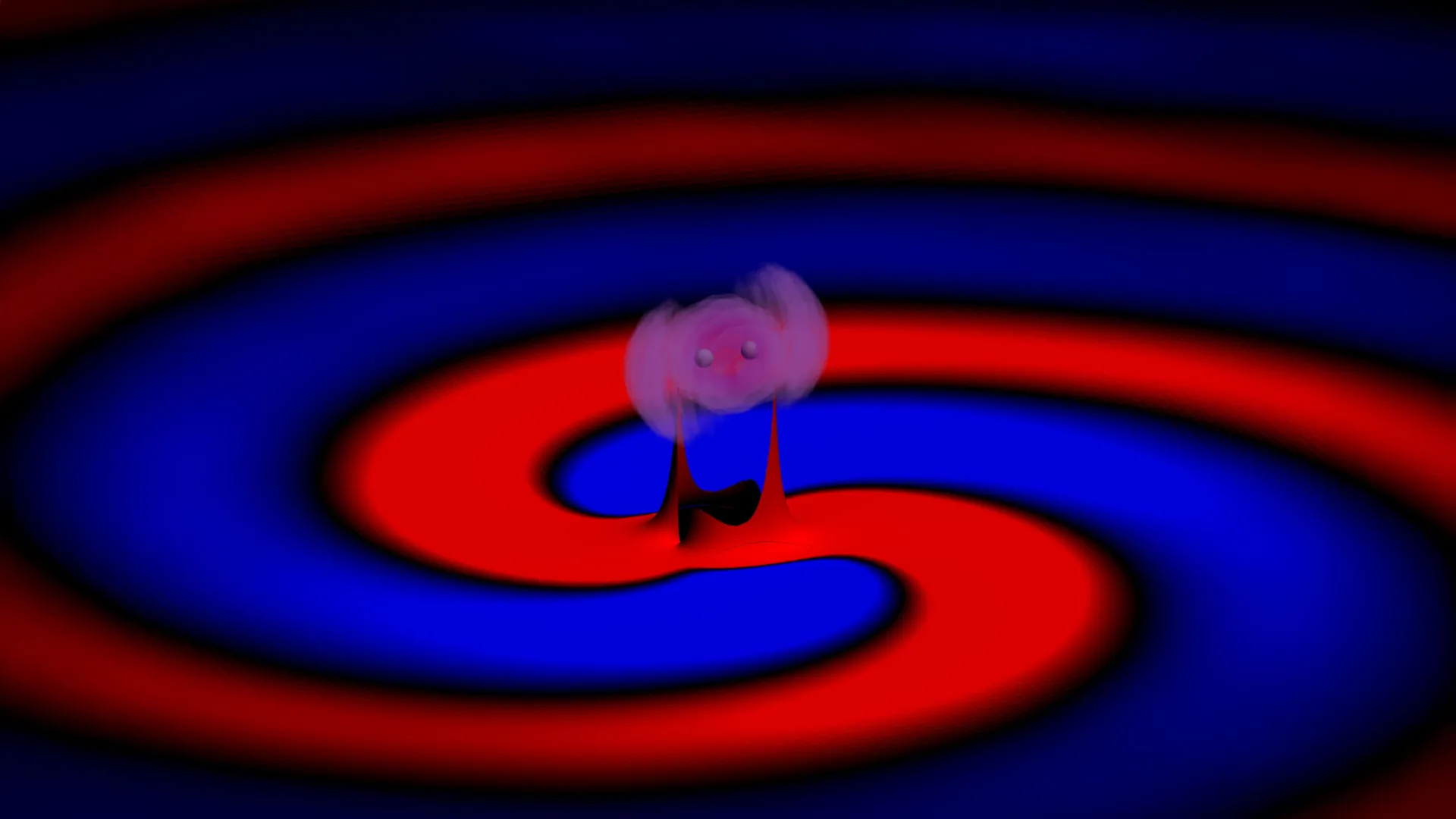
The team used data from the LIGO-Virgo-KAGRA network. LIGO, with detectors in Louisiana and Washington, made the first direct detection of gravitational waves, ripples in space-time, in 2015 from two colliding black holes. Since then Virgo in Italy and KAGRA in Japan have joined, and the network has spotted more than 300 black hole collisions.
The researchers examined the masses of 257 mergers detected over the past 10 years. Three-quarters of the sample falls in a sharp peak at about 10 times the mass of the sun. For the first time, the team also found a distinct lack of black holes in the 12 to 16 solar-mass range. "We see 10-solar-mass black holes merging all the time," said lead author Isaac Legred, a postdoc at the University of Illinois Urbana-Champaign who did the work at Caltech. "But why are, say, 14-solar-mass black holes so rare? The gap we see in the distribution of masses indicates there may be a special cocktail of internal physics that goes into forming the abundance of 10-solar-mass black holes."
The spins of the black holes add to the picture. The population at 10 solar masses fell into a narrower range of spin rates than the rest of the sample, which is what would be expected if those black holes share a common origin.
"Our data are showing that this group of black holes may have a common origin—they may be a distinct subpopulation that failed to go supernova," said Katerina Chatziioannou, the Caltech physics professor who led the research. "These results represent a connection between the gravitational-wave data and underlying astrophysics we are trying to extract."
Astronomers have seen a candidate for such a death in visible light. Hubble images from 2007 and 2015 show a giant star in the galaxy NGC 6946, called N6946-BH1, that vanished from view, likely after imploding to form a black hole. The new work links that kind of quiet collapse to the black holes that LIGO hears colliding billions of light-years away, and future detections should show whether the 10-solar-mass peak and the mass gap hold up.