The Biggest Black Hole Merger Ever Detected Just Shrank. A Lens in the Way Made It Look Twice as Heavy
GW231123 was reported as a 190-to-265-solar-mass collision. A Max Planck reanalysis published Thursday says gravitational lensing magnified the signal, and the real total is 100 to 180.

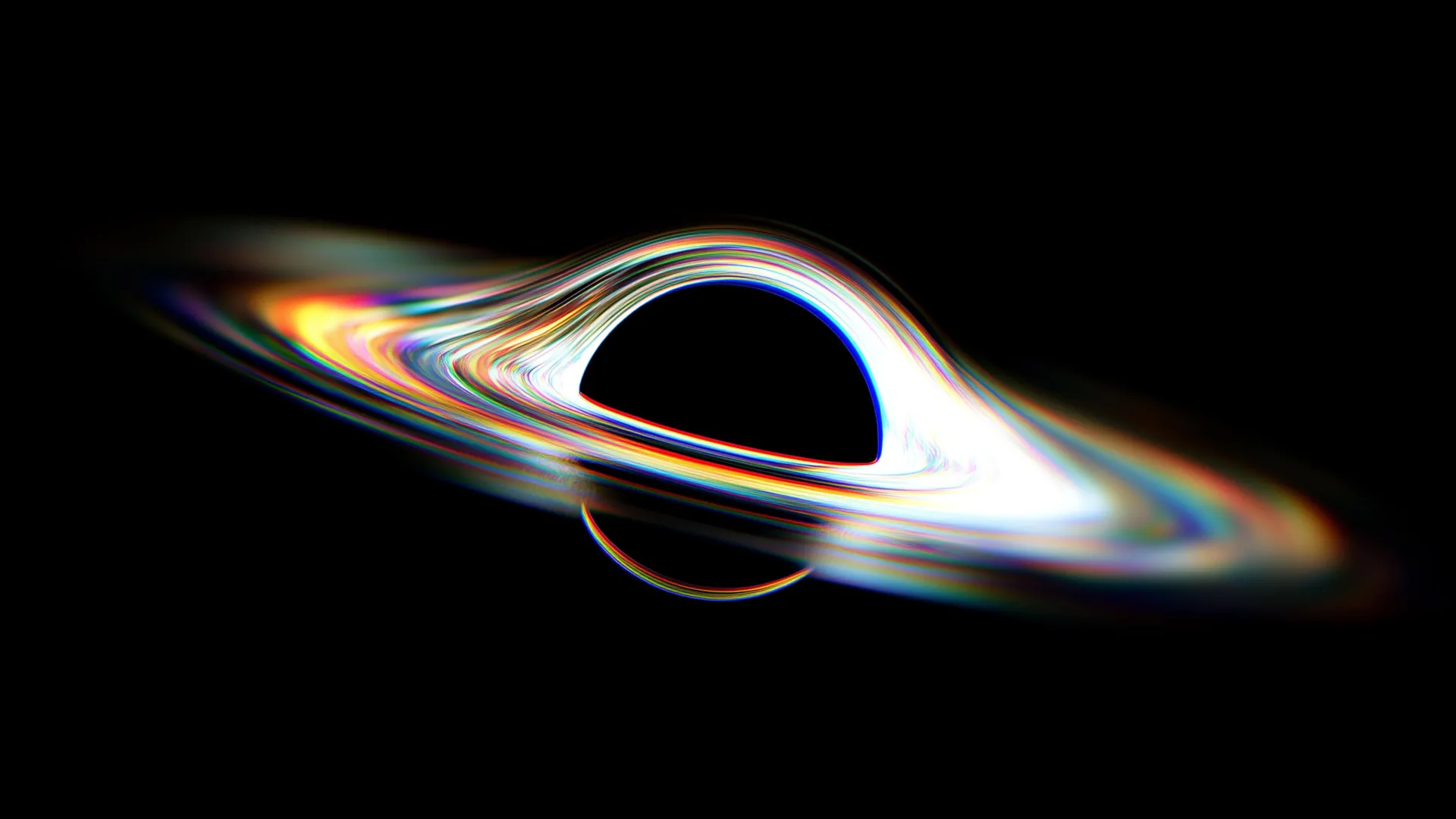
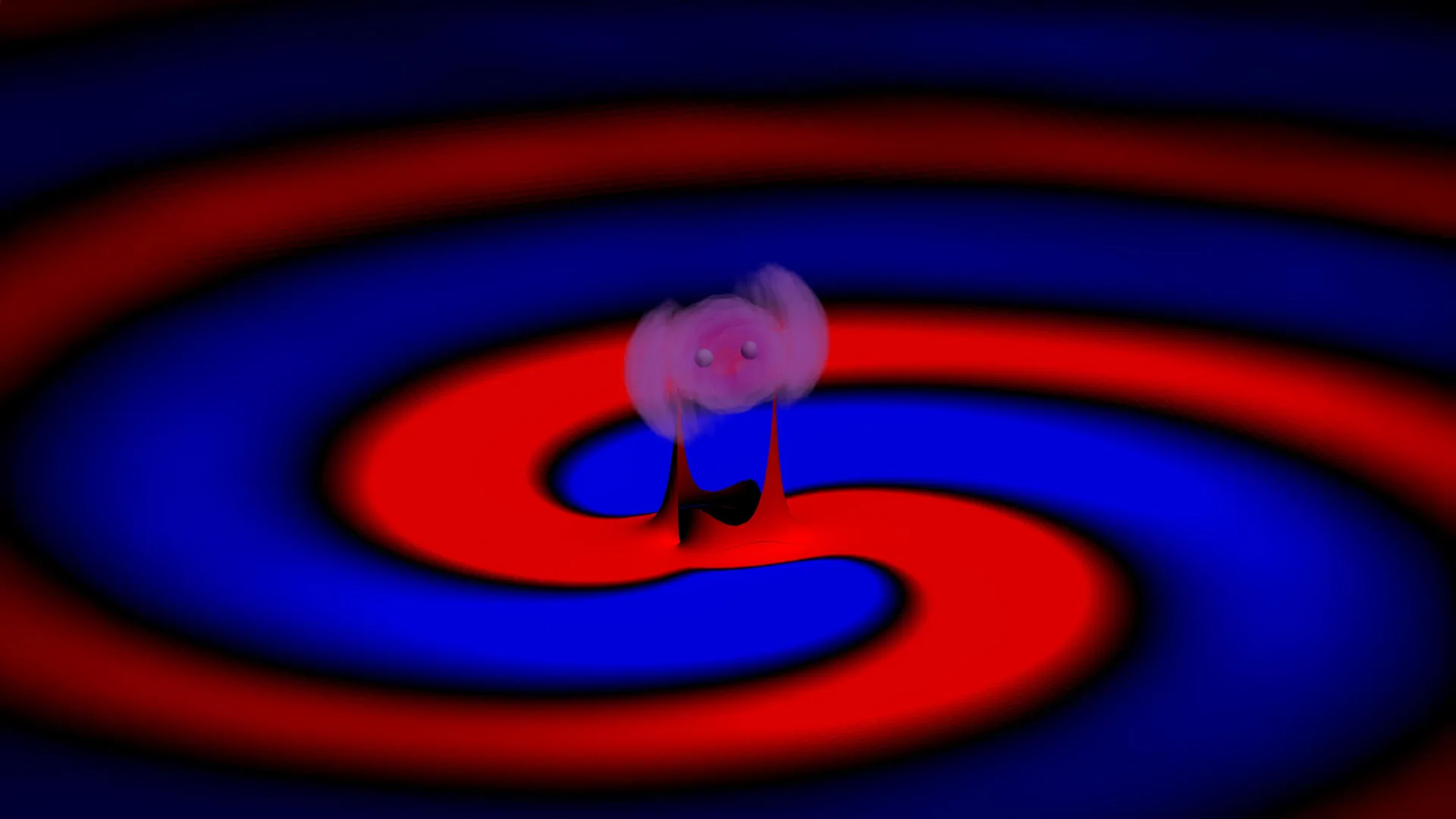
The heaviest black hole collision ever recorded may not be the heaviest black hole collision ever recorded. A reanalysis published Thursday in The Astrophysical Journal Letters argues that the signal known as GW231123 was magnified on its way to Earth by an intervening mass, and that the merging black holes were roughly half as heavy as first reported.
GW231123 was picked up in November 2023 by the LIGO-Virgo-KAGRA detector network and announced as the largest binary black hole system ever seen, with a combined mass somewhere between 190 and 265 times the mass of the Sun. That was a problem, because standard models of how stars collapse do not comfortably produce black holes that big. Stars above a certain mass are expected to blow themselves apart entirely rather than leave a remnant behind, which left GW231123 sitting in a gap the theory says should be mostly empty.
The new work, led by Srashti Goyal with Miguel Zumalacárregui and colleagues at the Max Planck Institute for Gravitational Physics, proposes a less exotic explanation: something got in the way. Their model includes a compact object along the line of sight — possibly an intermediate-mass black hole — sitting inside a larger galaxy-scale gravitational field. That configuration bends and amplifies the passing gravitational wave.
This matters because of how gravitational-wave astronomy infers mass. A merger's mass and its distance are entangled in the signal: a heavier, farther event and a lighter, closer one can look nearly identical. Magnification breaks the assumption the original analysis rested on. If the wave was boosted, the source is closer and lighter than the raw amplitude suggests. Run the lensed model and the combined mass drops to between 100 and 180 solar masses, which lands back inside the range that ordinary stellar collapse can produce.
The team's statistical case is that the specific distortion pattern they see in the data is unlikely to be coincidence, with less than a 1% probability of arising by chance. That is not the five-sigma standard physics uses for a discovery claim, but it is strong enough to make the lensing interpretation the more economical reading of the event.
The wider implication is uncomfortable for the field's existing catalog. If lensing can inflate one event's apparent mass by a factor of nearly two, other unusually heavy mergers deserve the same treatment, and some of the most theoretically awkward detections may turn out to be ordinary black holes seen through a magnifying glass. As detector sensitivity improves and the catalog grows, distinguishing genuinely record-breaking sources from amplified ones becomes a routine requirement rather than a curiosity.
The paper is published under DOI 10.3847/2041-8213/ae93b1.