Object Near Nikumaroro Is Driftwood, Not Earhart's Plane, Expedition Concludes
A 17-member team that sailed five days to a remote Pacific lagoon found that the 'Taraia Object' spotted in satellite imagery was a pile of trees coated in coral sand.
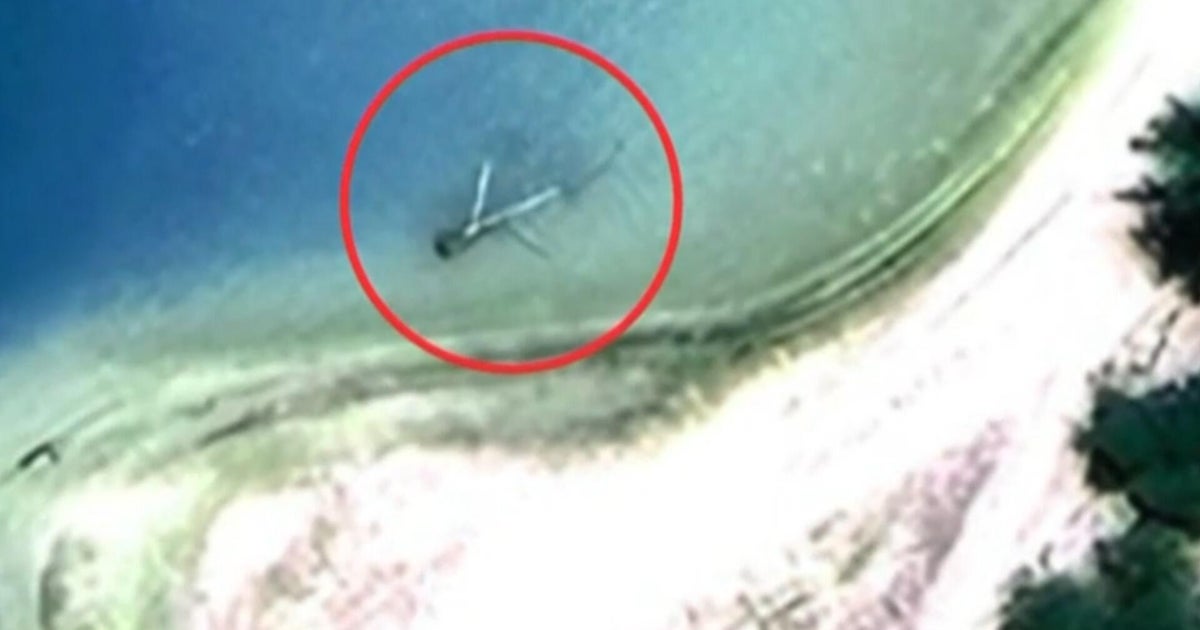
A mysterious object near a remote Pacific island is not the wreckage of Amelia Earhart's missing plane, researchers said Sunday after an expedition to the site, dealing another setback to the effort to solve one of aviation's greatest mysteries nearly 90 years after the pilot vanished.
"Evidence gathered at the Taraia Peninsula on Nikumaroro confirmed that the visual anomaly first seen in satellite imagery in 2020 was likely a collection of large trees deposited along the peninsula's sandspit," the team said. "By the time the team arrived at the site, a good portion of the debris had fragmented and washed away, leaving only a single Y-shaped segment," which the researchers had initially hoped was part of the plane. The reflective surface that led them to believe the object could be metal turned out to be a carbonate veneer, and other items nearby were "similarly coated with a shiny concretized amalgam of coral sand."
The 17-member expedition, led by Purdue University's Steve Schultz and Richard Pettigrew of the Archaeological Legacy Institute, set out Oct. 14 to investigate what aerial photos suggested might be Earhart's Lockheed Electra 10-E. The search area was so remote that it took five days at sea to reach it. Severe weather kept the team aboard its ship for three of the five days allotted for the search, and limited fuel and supplies prevented an extension. The researchers focused on a lagoon off Nikumaroro and the Taraia Object, an anomaly a Navy veteran spotted in satellite imagery during the COVID pandemic. It is visible in aerial photos dating to 1938 but went unnoticed until 2020.
The team had planned to photograph and film the lagoon and the object, survey the area with magnetometers and sonar, and retrieve the object for identification. Before leaving, the researchers had said in a news release that there was "very strong" evidence the object was Earhart's lost plane. "Amelia Earhart's spirit of courage and curiosity drove every step of the search," Pettigrew said Sunday. "We accomplished our goal to determine what the Taraia Object was, and we're deeply grateful to the private donors who shared our vision and made this journey possible. Our team remains in great spirits and proud of what was accomplished."
Earhart and her navigator, Fred Noonan, disappeared on July 2, 1937, roughly 22,000 miles into an attempt to make Earhart the first woman to fly around the world and the first pilot to circle the globe at the equator. They were headed for Howland Island, about 400 miles northwest of Nikumaroro, part of the Pacific nation of Kiribati, which lies roughly halfway between Australia and Hawaii.
Pettigrew believes Earhart and Noonan landed on Nikumaroro and survived there for some time, pointing to relics from the 1930s and human remains discovered on the island that were later lost. Several competing theories about the disappearance have emerged over the decades, many without conclusive evidence. In 2024, another expedition captured a sonar image of what appeared to be an aircraft on the ocean floor, but the object was later identified as a rock formation. President Trump recently ordered the declassification of records related to Earhart.