
Physics
LIGO Data Hint That Many Black Holes Were Born When Stars Died Without a Bang
A Caltech-led study of 257 black hole mergers finds a spike at 10 solar masses and a gap at 12 to 16, matching what 'failed supernova' theories predict.
Topic
51 stories from Planck Standard. Latest: November 12, 2026.
A Caltech-led study of 257 black hole mergers finds a spike at 10 solar masses and a gap at 12 to 16, matching what 'failed supernova' theories predict.

A Berlin mathematician adds a gravitational-wave term to lunar tidal models and lists the errors that must be controlled before any leftover signal could count as real.

An analysis of about 100,000 quasars shows faster-moving black holes are redder and dustier, as general relativity's recoil prediction implies; the authors say it could mean about half the sample recently merged.

A Southampton and IIT Kanpur team argues a long-ignored 'decoupled' heavy neutrino could have briefly dominated the early universe and shaped the matter-antimatter imbalance.

Australian physicists showed an infrared handover method that works with crystalline mirror coatings that absorb the green light current detectors rely on.
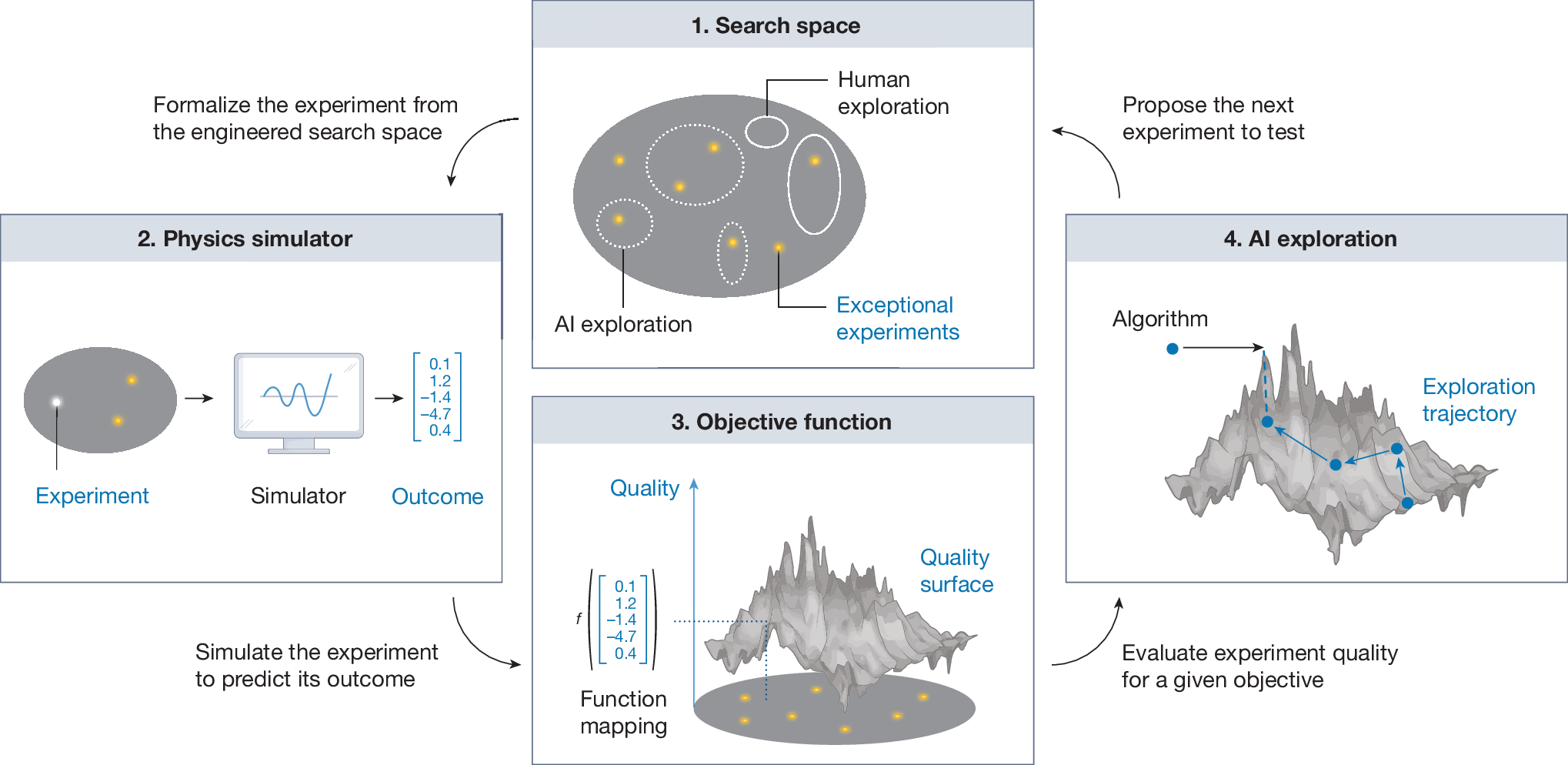
Instead of a chatbot, the method treats lab design as a search problem over lasers, lenses and detectors. It has produced better designs for gravitational-wave detectors, fusion reactors and microscopes.

Two Khalifa University mathematicians computed how black holes 'ring' in five to 26 dimensions and found two very different waves that share exactly the same notes, until a string-inspired correction is added.

Nine years after proposing the test, a Birmingham–Perimeter team measured how rotation squashed the heavier object in GW241011. Rotating boson stars with quartic self-interactions cannot explain it.

eRASSU J0608 pulses every 374 seconds. Its orbit is decaying at one of the fastest rates ever measured, which would make it one of the loudest gravitational-wave sources in the sky — if astronomers can work out how far away it is.

Nagoya University physicists found that hidden matter around a black hole shifts the frequency and the decay rate of its gravitational-wave ringdown by different amounts — a mismatch detectors could look for.

RBH-1 left a trail of newborn stars 202,000 light-years long. A Santa Barbara team worked backward to the merger that threw it out, about 70 million years ago.

A Nature paper from Mario Krenn's group shows algorithms designing setups for quantum optics, electron microscopy, gravitational-wave detectors and fusion machines that beat the human versions.

GW231123 was reported as a 190-to-265-solar-mass collision. A Max Planck reanalysis published Thursday says gravitational lensing magnified the signal, and the real total is 100 to 180.
Colgate physicists calculate that the remnants of hypothetical 'Dark Stars' from cosmic dawn could dominate the gravitational-wave background that pulsar timing arrays have been measuring.

Physicists at UC Riverside found that photographing the detector's mirrors with a commercial infrared camera solves a heat-warping problem that has quietly capped its sensitivity for years.
A Penn State team led by Abhay Ashtekar has devised a new entropy measure that extends the laws of black hole thermodynamics to objects that grow, merge and evaporate — not just idealized, static ones.
An Imperial College team paired two clouds of ultracold strontium atoms under a single laser, letting them subtract the vibrations that have long blinded such instruments to faint cosmic signals.

A single 10-month observing run added 161 new detections, nearly doubling the record — and delivered the sharpest gravitational-wave signal ever recorded, along with hints that some black holes are built from earlier black holes.
Physicists say a collision between two objects lighter than the Sun, detected last November, could point to black holes born in the first instant after the Big Bang — and to the identity of dark matter.
A gravitational wave from an impossibly light object has scientists asking whether primordial black holes could explain dark matter.
The new LIGO-Virgo-KAGRA release includes the clearest gravitational-wave signal ever recorded and fresh evidence that some black holes are built from the wreckage of earlier mergers.

Oxford and Max Planck scientists say tightly bound black-hole binaries act as cosmic lenses, magnifying background stars into repeating flashes that betray their presence.
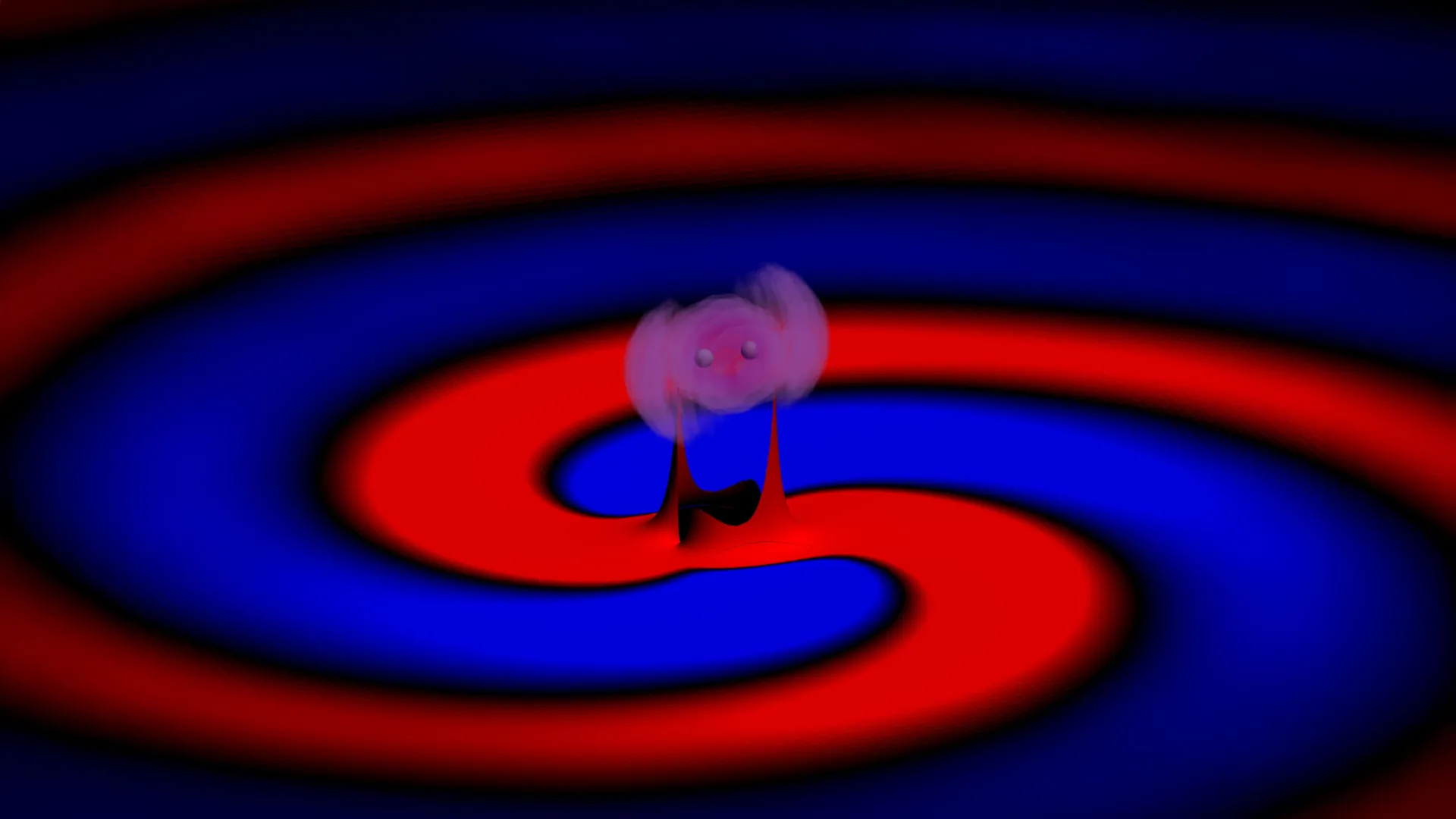
MIT physicists develop new method to detect dark matter interactions hidden within cosmic collisions, with one LIGO signal showing potential evidence.
MIT physicists have developed a new method to search for dark matter signatures in ripples from merging black holes, with one LIGO signal showing promising results.
MIT physicists detect potential dark matter signature in LIGO data, offering new way to study the universe's most mysterious substance.
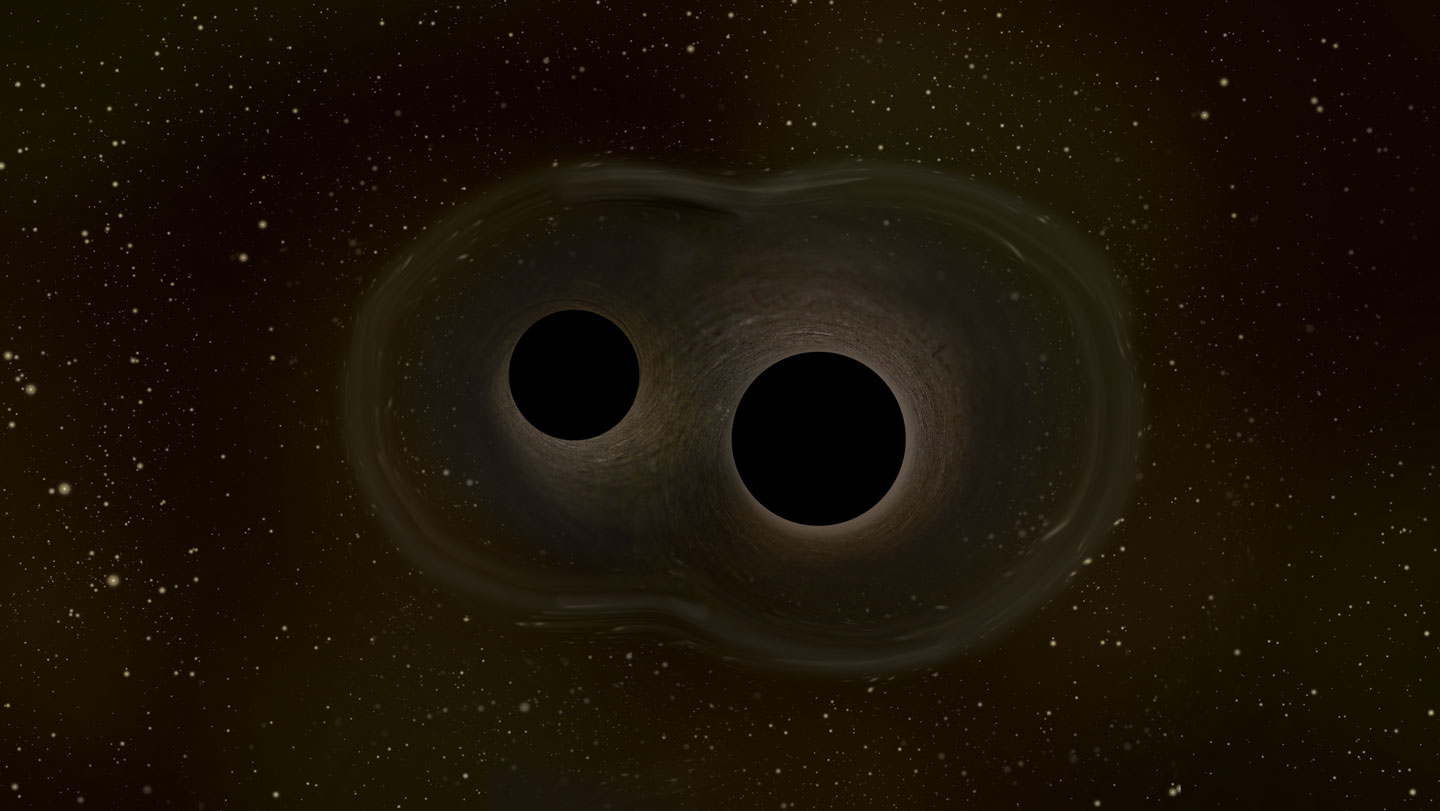
A starless gulf 3,200 light-years across at the heart of galaxy Abell 402-BCG turns out to be a gravitational scar carved by two ultramassive black holes, together weighing 60 billion suns and headed for an eventual merger LISA may one day hear.
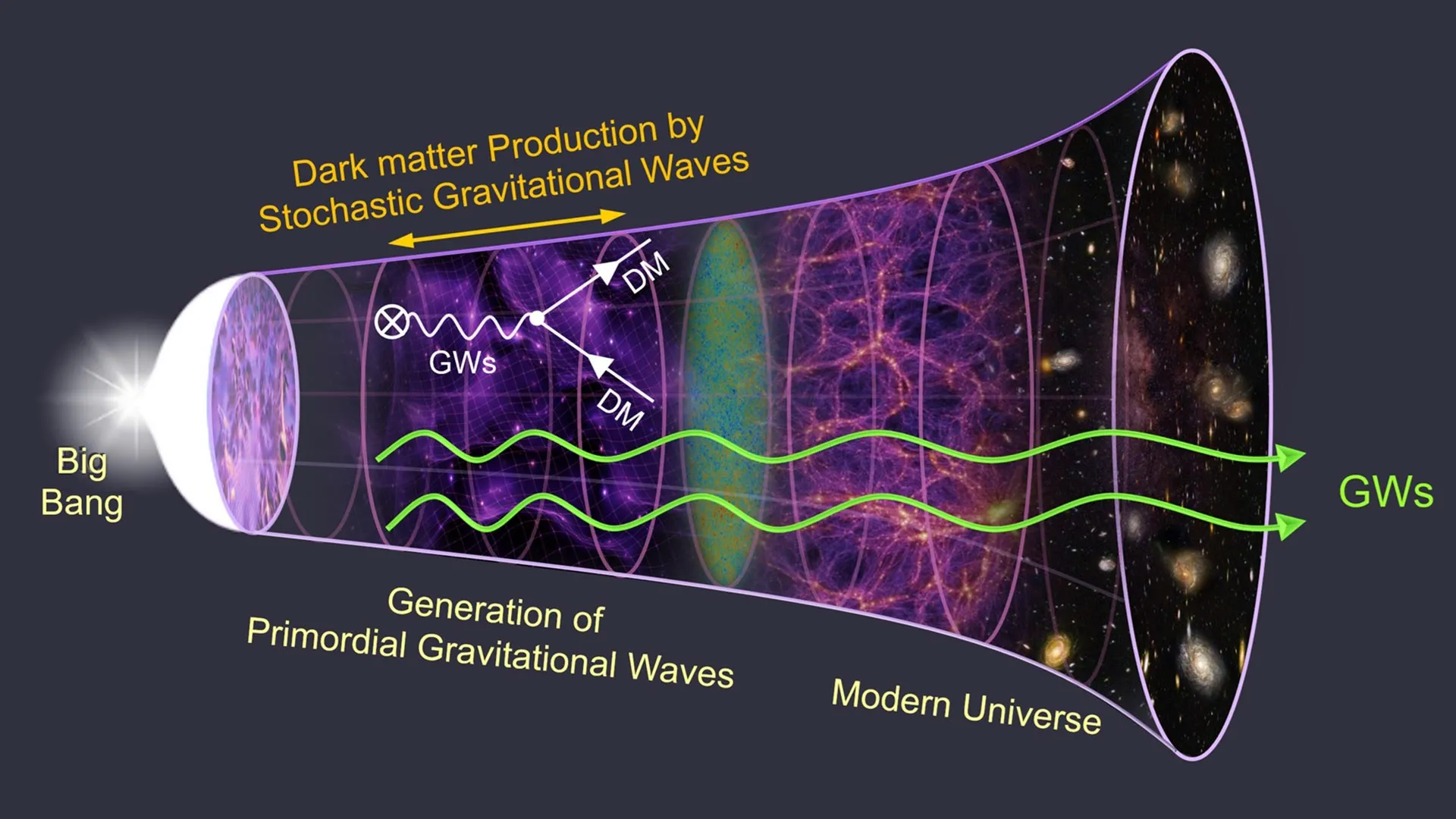
New research suggests ancient ripples in spacetime could have transformed into the invisible particles that shape galaxies today.
New research suggests ancient ripples in spacetime could have transformed into particles that became the invisible substance shaping galaxies today.
New research suggests ancient ripples in spacetime could have transformed into particles that became the invisible substance shaping galaxies today.
Researchers discover that spacetime ripples from the Big Bang may have transformed into particles that became the invisible substance shaping galaxies today.

A new paper in Physical Review Letters proposes that stochastic gravitational waves generated in the first moments after the Big Bang could have been converted into dark matter particles — a mechanism never before proposed that could solve one of physics' most fundamental mysteries.
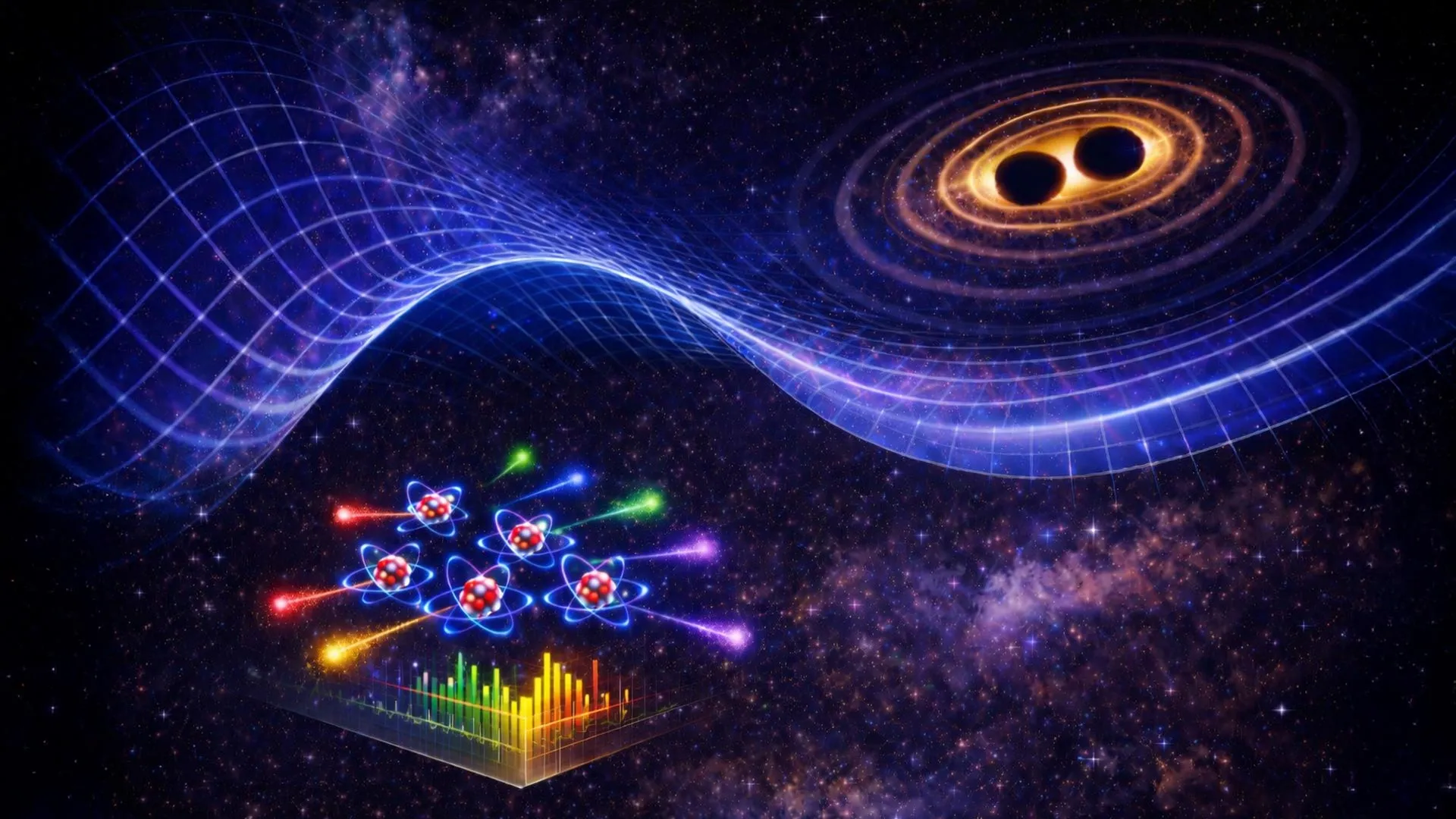
Revolutionary theory proposes detecting cosmic ripples through subtle frequency shifts in atomic light emission, potentially enabling ultra-compact detectors.

Researchers propose detecting spacetime ripples by observing how they subtly change photon frequencies, potentially enabling ultra-compact gravitational wave detectors.

Scientists propose revolutionary detection method that could lead to ultra-compact detectors using cold-atom systems, observing frequency shifts in emitted photons.

Revolutionary new detection method could lead to ultra-compact gravitational wave detectors using cold-atom systems.

Researchers suggest gravitational waves may subtly alter the frequency of light emitted by atoms, potentially enabling ultra-compact detectors using cold-atom systems.

Stockholm University researchers suggest that gravitational waves subtly alter light emitted by atoms, offering a path to ultra-compact detectors using cold-atom systems.

New theory suggests gravitational waves create detectable frequency shifts in photons emitted by atoms, potentially enabling ultra-compact detectors.

Scientists tracking galaxy Markarian 501 for 23 years found two black holes orbiting each other every 121 days at a separation of just 250–540 AU — a system unprecedented in astronomical history.

The clearest black hole merger ever recorded — with a signal-to-noise ratio nearly three times higher than LIGO's first detection — verified multiple tones predicted by Einstein's general relativity.

Revolutionary breakthrough could enable ultra-compact detectors using cold-atom systems, offering new way to observe cosmic events.

Revolutionary discovery shows gravitational waves subtly alter photon frequencies, opening path to ultra-compact detectors using cold-atom systems.

Researchers propose detecting spacetime ripples by observing how they subtly shift photon frequencies, potentially enabling ultra-compact detectors using cold-atom systems.

Breakthrough research shows gravitational waves can be detected by observing subtle changes in the light emitted by atoms, opening door to compact detectors.

Revolutionary detection method could lead to ultra-compact detectors using cold-atom systems, bypassing need for kilometer-scale instruments.

New unified framework could enable LIGO and smaller experiments to test quantum gravity theories much sooner than expected.

Researchers create the first unified method to detect tiny gravitational ripples that could unlock quantum gravity secrets using existing technology.

Breakthrough provides first unified method to search for tiny quantum fluctuations that could reveal how gravity and quantum mechanics connect.
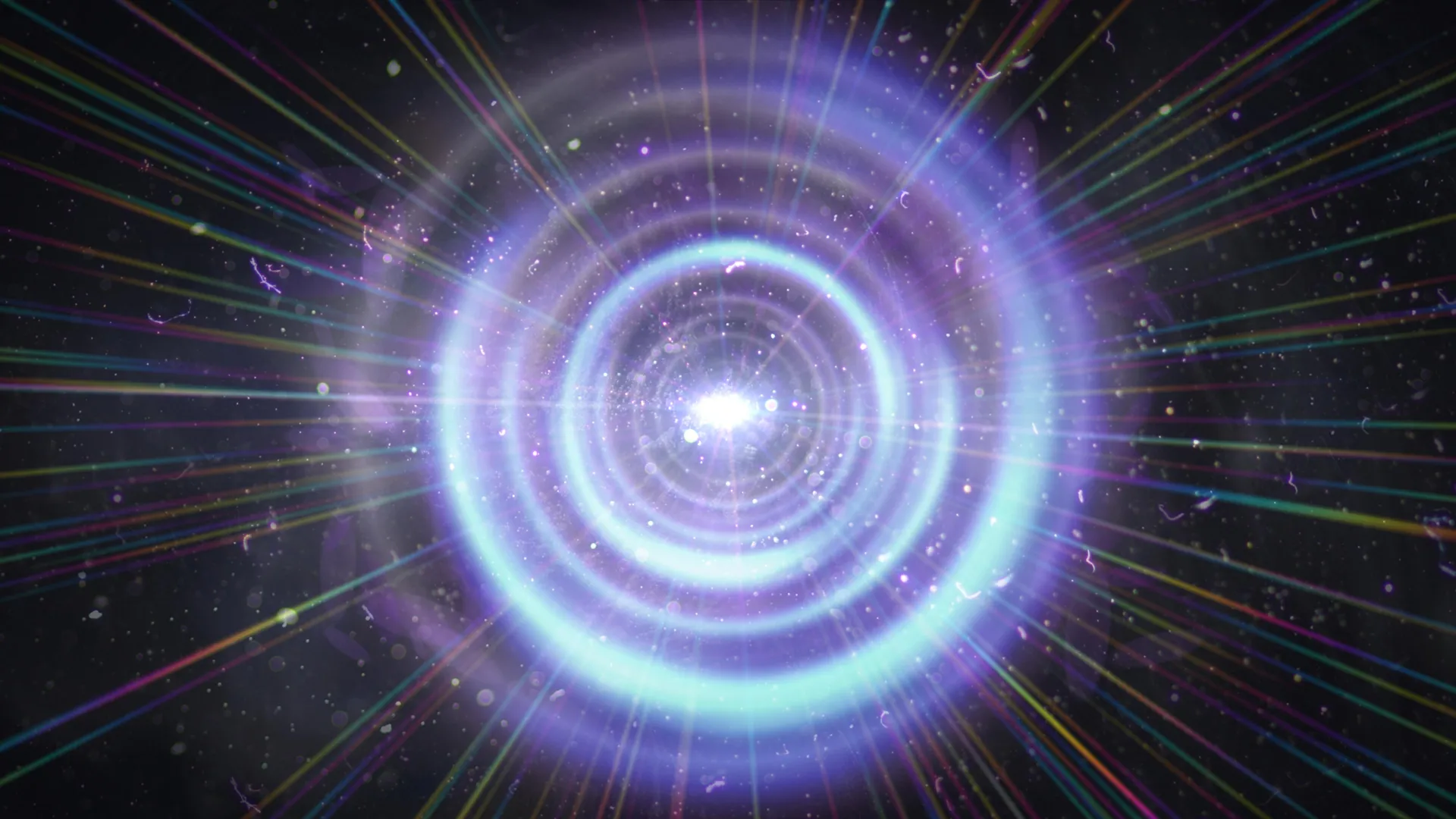
University of Waterloo researchers propose that the Big Bang's explosive expansion emerges naturally from deeper quantum gravity framework, offering testable predictions.

University of Waterloo researchers propose that Big Bang inflation arises naturally from deeper quantum gravity framework, offering testable predictions for future experiments.
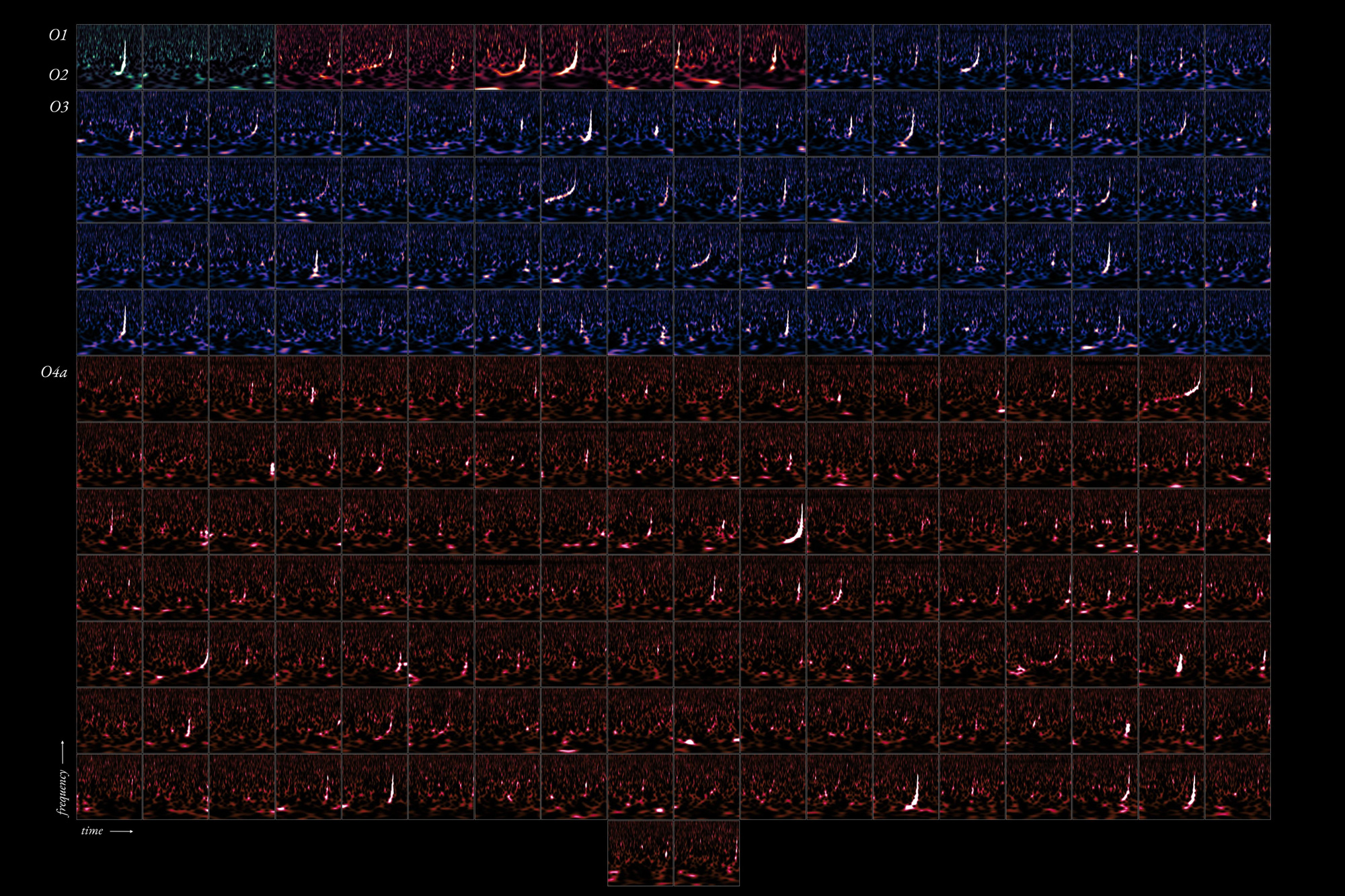
The GWTC-4 catalog, led by MIT, adds 128 new events from LIGO's fourth observing run — including a 260-solar-mass merger, the fastest-spinning binary on record, and a new measurement of the universe's expansion rate.