Scientists Unveil Revolutionary Theory of Universe's Origin Through Quantum Gravity
University of Waterloo researchers propose that the Big Bang's explosive expansion emerges naturally from deeper quantum gravity framework, offering testable predictions.
Scientists at the University of Waterloo have proposed a groundbreaking new explanation for how the universe began, suggesting that the Big Bang's explosive early expansion may emerge naturally from a deeper theoretical framework called quantum gravity. Led by Dr. Niayesh Afshordi, a professor of physics and astronomy at the University of Waterloo and the Perimeter Institute, the research team has developed an approach that could fundamentally reshape our understanding of cosmic origins without relying on the patchwork of assumptions that characterize current Big Bang models.
The new theory employs Quadratic Quantum Gravity, a mathematical framework that remains stable even under the extreme energy conditions present during the universe's birth. Unlike Einstein's general relativity, which breaks down at the quantum scale, this approach successfully bridges the gap between gravity and quantum mechanics. Most current explanations of the Big Bang require additional elements to be artificially introduced to make the models work, but this unified approach provides a more elegant and complete picture linking the universe's earliest moments directly to well-tested cosmological models.
The researchers discovered that rapid cosmic inflation—the period of explosive expansion that shaped the large-scale structure of the universe—can arise naturally from this consistent theory of quantum gravity. This finding eliminates the need for separate inflationary mechanisms that have been added to standard Big Bang models. The theory suggests that the universe's expansion emerges as an inevitable consequence of quantum gravitational effects rather than requiring additional assumptions about exotic energy fields or particles.
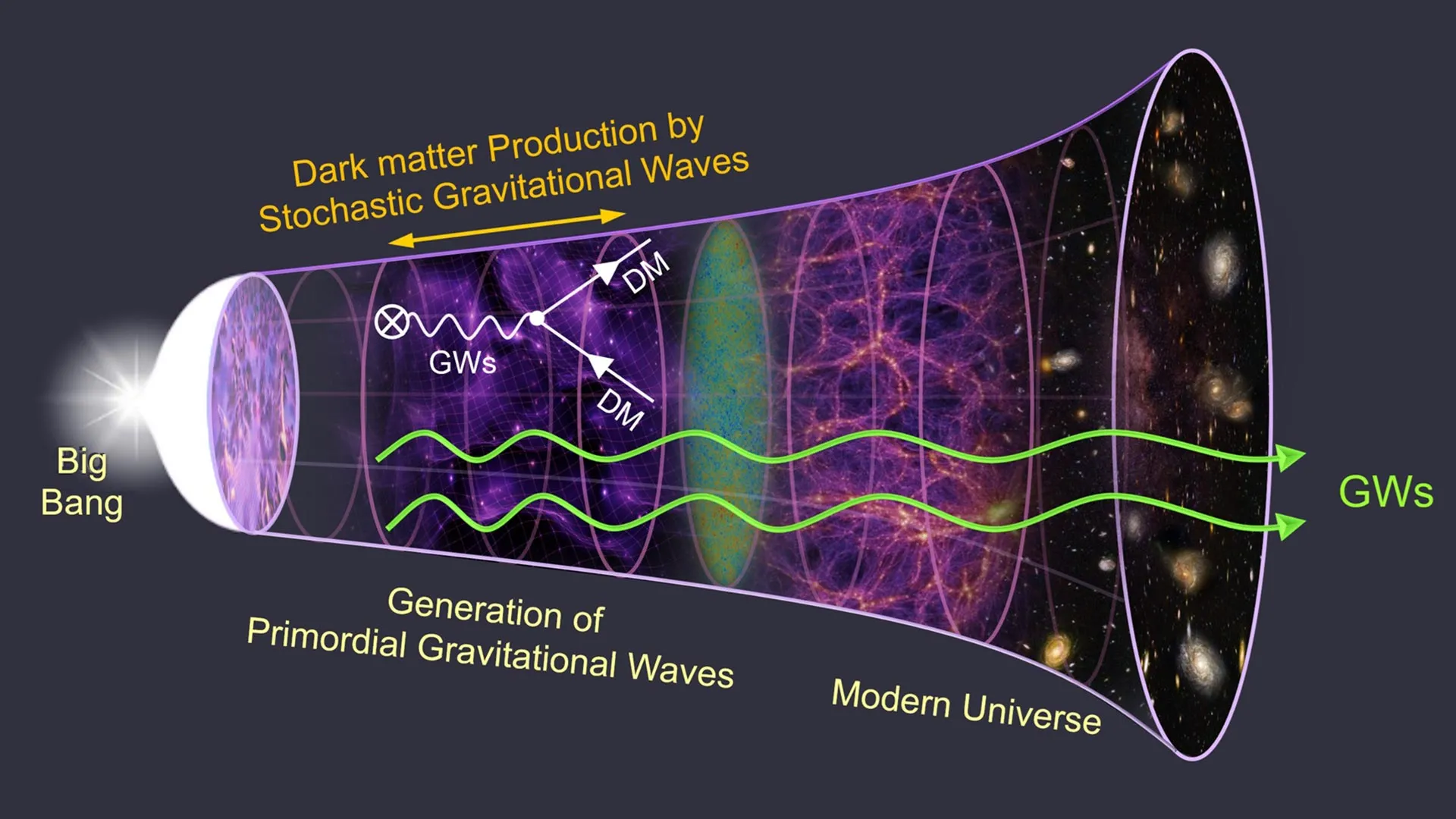
Perhaps most significantly, the model makes specific, testable predictions about primordial gravitational waves—tiny ripples in spacetime created shortly after the Big Bang. The theory predicts a minimum level of these gravitational waves that future experiments should be able to detect. "This work shows that the universe's explosive early growth can come directly from a deeper theory of gravity itself," Afshordi explained. "Instead of adding new pieces to Einstein's theory, we found that the rapid expansion emerges naturally once gravity is treated in a way that remains consistent at extremely high energies."
The breakthrough arrives at a pivotal moment in cosmology, as new instruments achieve unprecedented precision in measuring the universe. Upcoming galaxy surveys, cosmic microwave background studies, and gravitational wave detectors are reaching the sensitivity needed to test ideas that were once purely theoretical. The direct connection between quantum gravity and observable data represents a rare opportunity to probe the fundamental nature of reality at its most extreme scales, potentially opening new avenues for understanding both the cosmos and the deepest laws of physics.