James Webb and VLT Spot Most Massive Black Hole Pair Ever Found — Two 30-Billion-Solar-Mass Giants Bound for Merger
A starless gulf 3,200 light-years across at the heart of galaxy Abell 402-BCG turns out to be a gravitational scar carved by two ultramassive black holes, together weighing 60 billion suns and headed for an eventual merger LISA may one day hear.
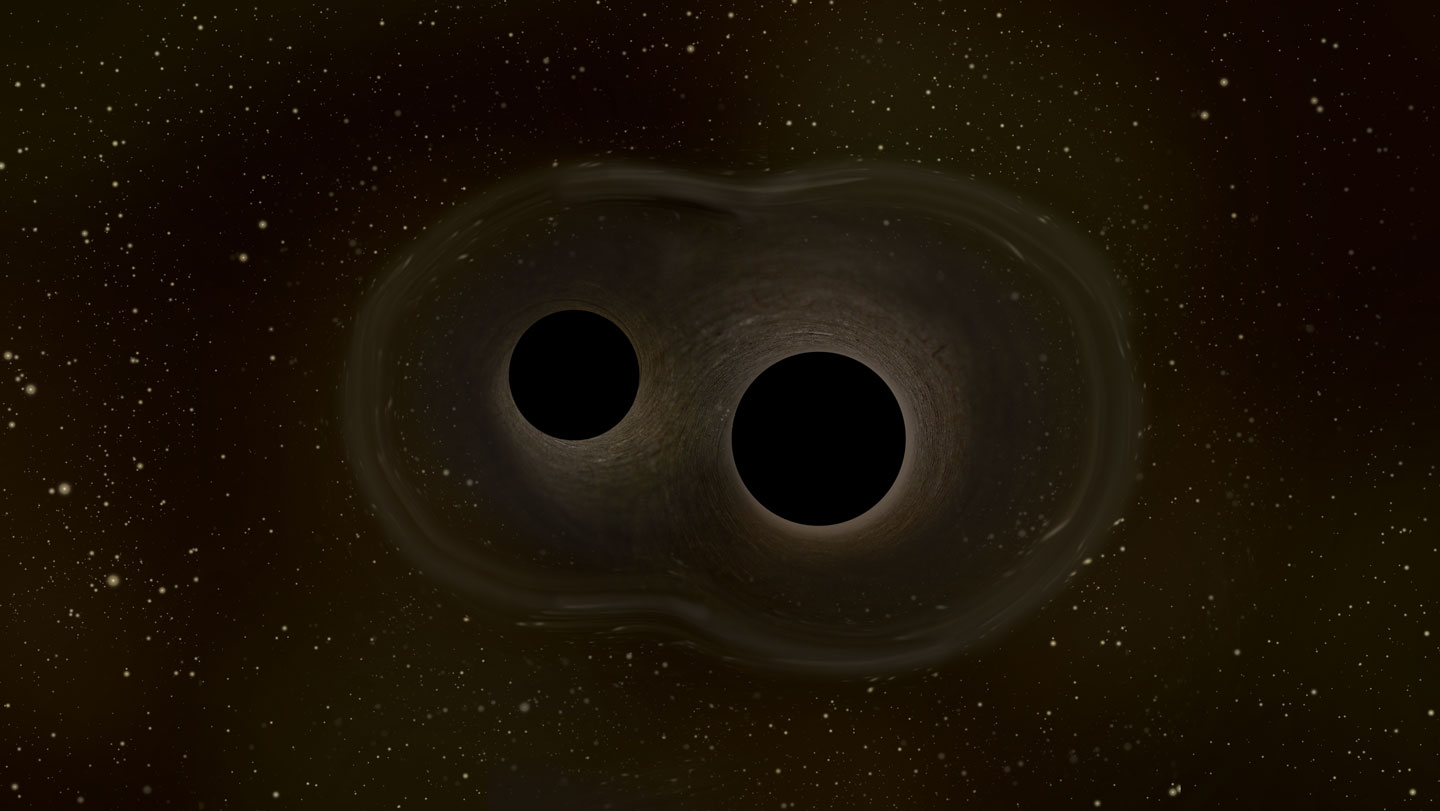
PASADENA, Calif. — Astronomers using the James Webb Space Telescope and the European Southern Observatory's Very Large Telescope say they have spotted what may be the most massive pair of supermassive black holes ever found, two ultramassive giants whose combined mass tips the scales at roughly 60 billion times that of the Sun and which sit, together, in a starless gulf at the heart of a galaxy 4.4 billion light-years from Earth.
The binary lurks in Abell 402-BCG, the brightest cluster galaxy of a massive galaxy cluster, where a peculiar 3,200-light-year-wide patch had long appeared empty of stars in earlier optical images. New JWST near-infrared and VLT spectroscopic observations, reported April 23 in The Astrophysical Journal Letters, confirm that the gap is genuinely star-free — the gravitational scouring expected from a tight binary of black holes that have stripped surrounding stars and flung them out of the central region. "This is a smoking-gun signature of two extremely massive black holes sitting close together," said MIT astrophysicist Michael McDonald, the study's senior author, in a press call last week.
Each black hole appears to weigh about 30 billion solar masses, placing them in the rarefied class of "ultramassive" black holes that exist near the theoretical upper limit. For comparison, the supermassive black hole at the center of the Milky Way, Sagittarius A*, contains a comparatively dainty 4.3 million solar masses. The Abell 402-BCG pair is roughly seven times heavier than the previous record holder, OJ 287, a long-studied blazar with a confirmed binary at its core, and at least double the combined mass of the next most massive duo on record.
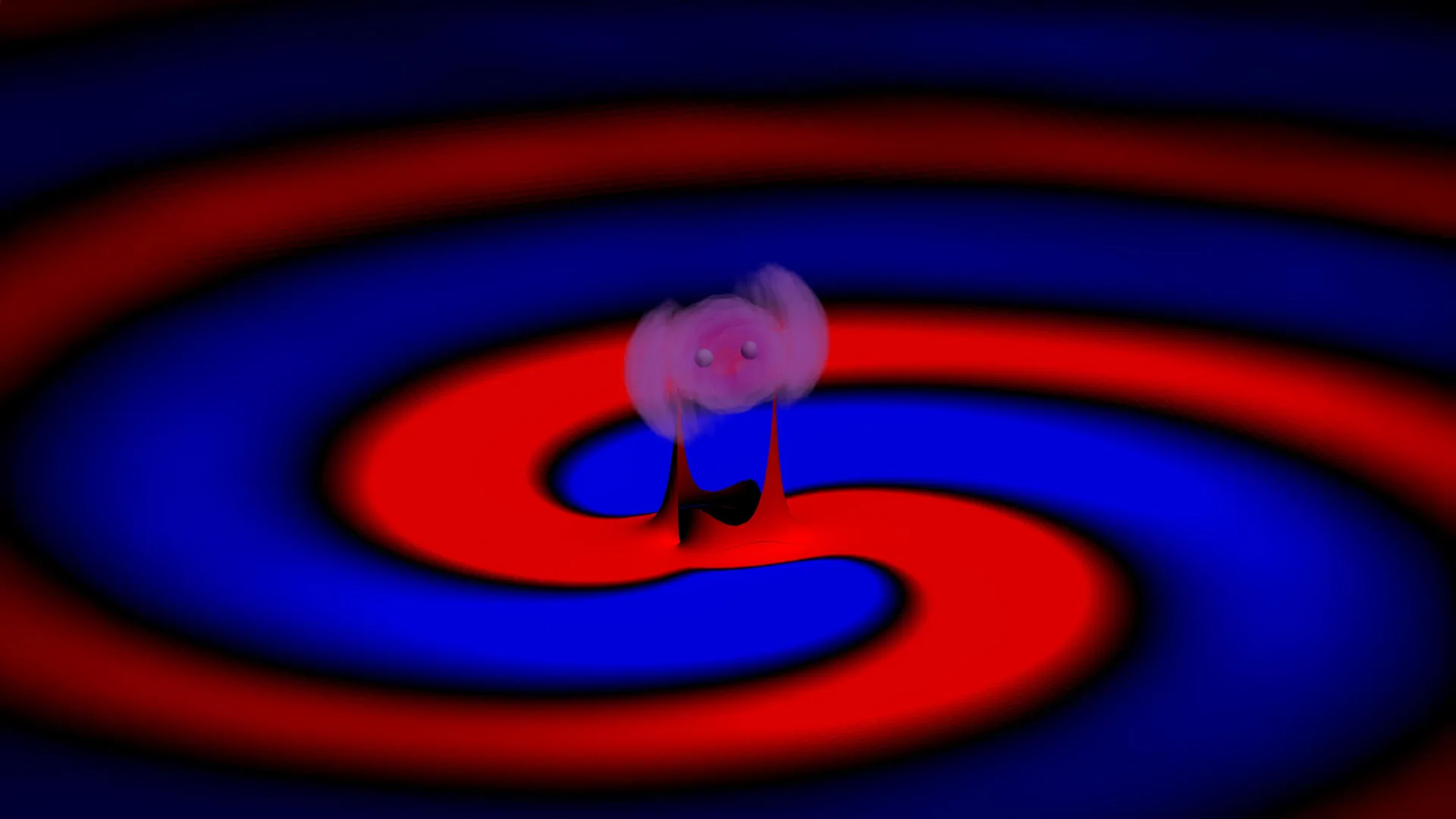
The two giants will not stay separate forever. Energy dissipation from their slow orbital decay around their common center, driven mostly by interactions with passing stars and the surrounding hot intracluster gas, means the system will eventually merge into a single black hole approaching the theoretical upper-mass limit for any black hole that can form in the present universe. When that happens, McDonald's team estimates, the merger should release a thunderous burst of low-frequency gravitational waves — the kind that current ground-based detectors like LIGO and Virgo cannot hear but that the planned LISA space mission, scheduled for launch by ESA in 2035, will be tuned to detect.
Most intriguingly, McDonald and his collaborators argue that the binary appears to have come together only "a few tens of millions of years" ago, which on cosmic time scales is the equivalent of a couple of weeks in a long human life. That conflicts with leading theories of galaxy evolution, which assume the central black holes of merging galaxies should pair up far more slowly. "Either we are looking at a system that was assembled unusually fast, or our models of how galaxies and their black holes grow together need a serious update," said coauthor Helen Russell of the University of Nottingham. The team plans follow-up JWST observations later this year to search for the faint X-ray and radio signatures expected if the binary is actively accreting hot gas.