They Gave an AI a Bench Full of Lasers and Mirrors. It Returned Experiments Physicists Had Not Thought Of
A Nature paper from Mario Krenn's group shows algorithms designing setups for quantum optics, electron microscopy, gravitational-wave detectors and fusion machines that beat the human versions.

The part of experimental physics that has always been considered craft — knowing which lens goes where, which mirror at which angle, how to arrange a bench so a measurement becomes possible at all — turns out to be something an algorithm can do better than the people who trained for it.
That is the claim in a Nature paper published Thursday, "Designing physics experiments with artificial intelligence," from a team led by Mario Krenn, now professor of machine learning in science at the University of Tubingen, with Philipp Haslinger, who heads the Center for Electron Microscopy at TU Wien, and colleagues including Jonathan Klimesch.
The approach is less mysterious than the result. The system is given an inventory of what a lab actually contains — lasers, lenses, mirrors, detectors, electronics — and a target: a quantum state to produce, a sensitivity to reach, a signal to isolate. Then it searches. "It is an enormous optimization problem," Krenn said, describing "an overwhelmingly large space of possible experiments." Every additional component multiplies the number of arrangements, which is exactly the condition under which human intuition stops being useful and brute search starts winning.
Krenn's account of the first success is the sort of thing that gets repeated in the field. "When I came into the office the next day, the program had produced a file containing a proposed solution," he said. The setup worked and no person had thought of it.
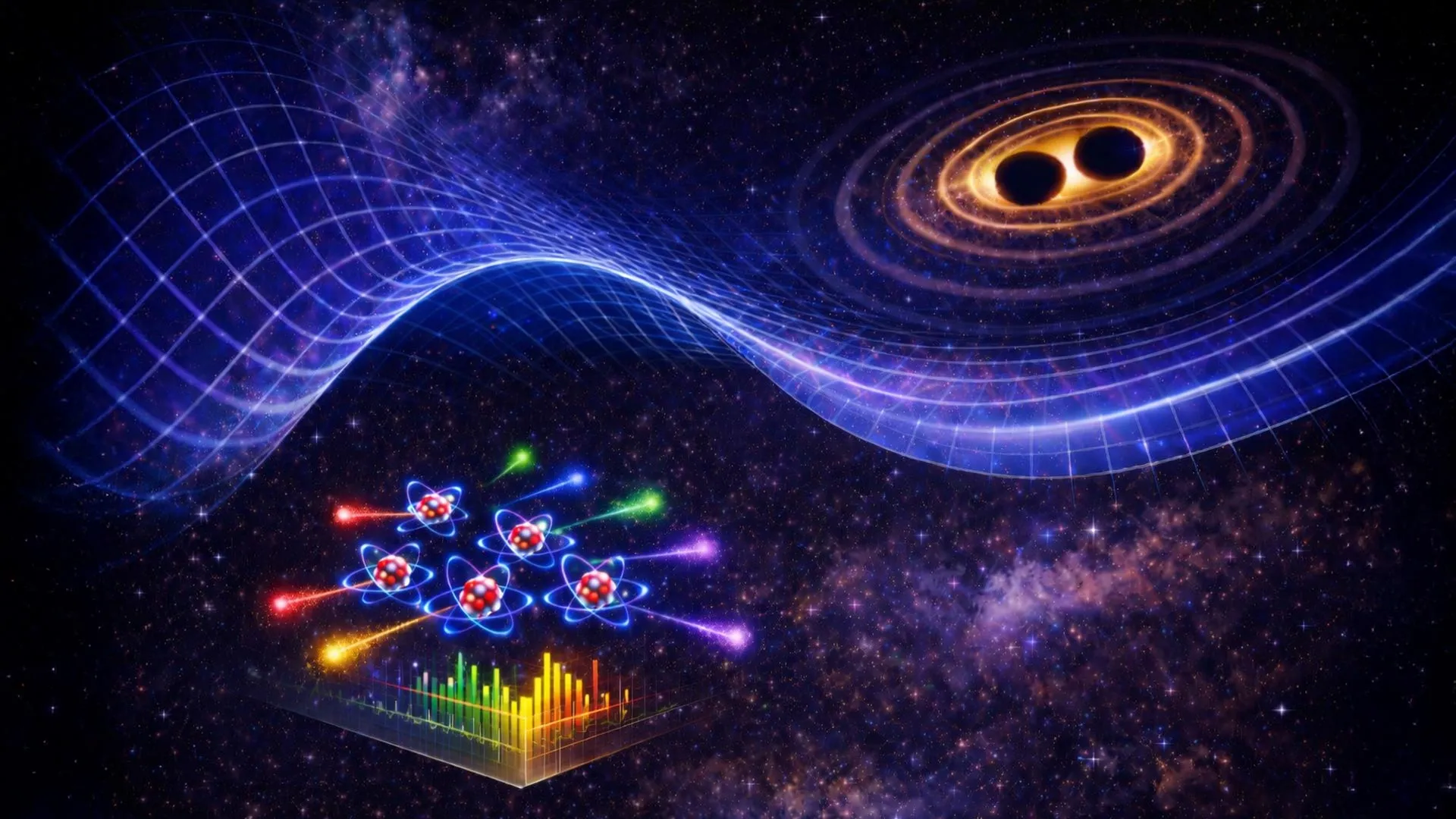
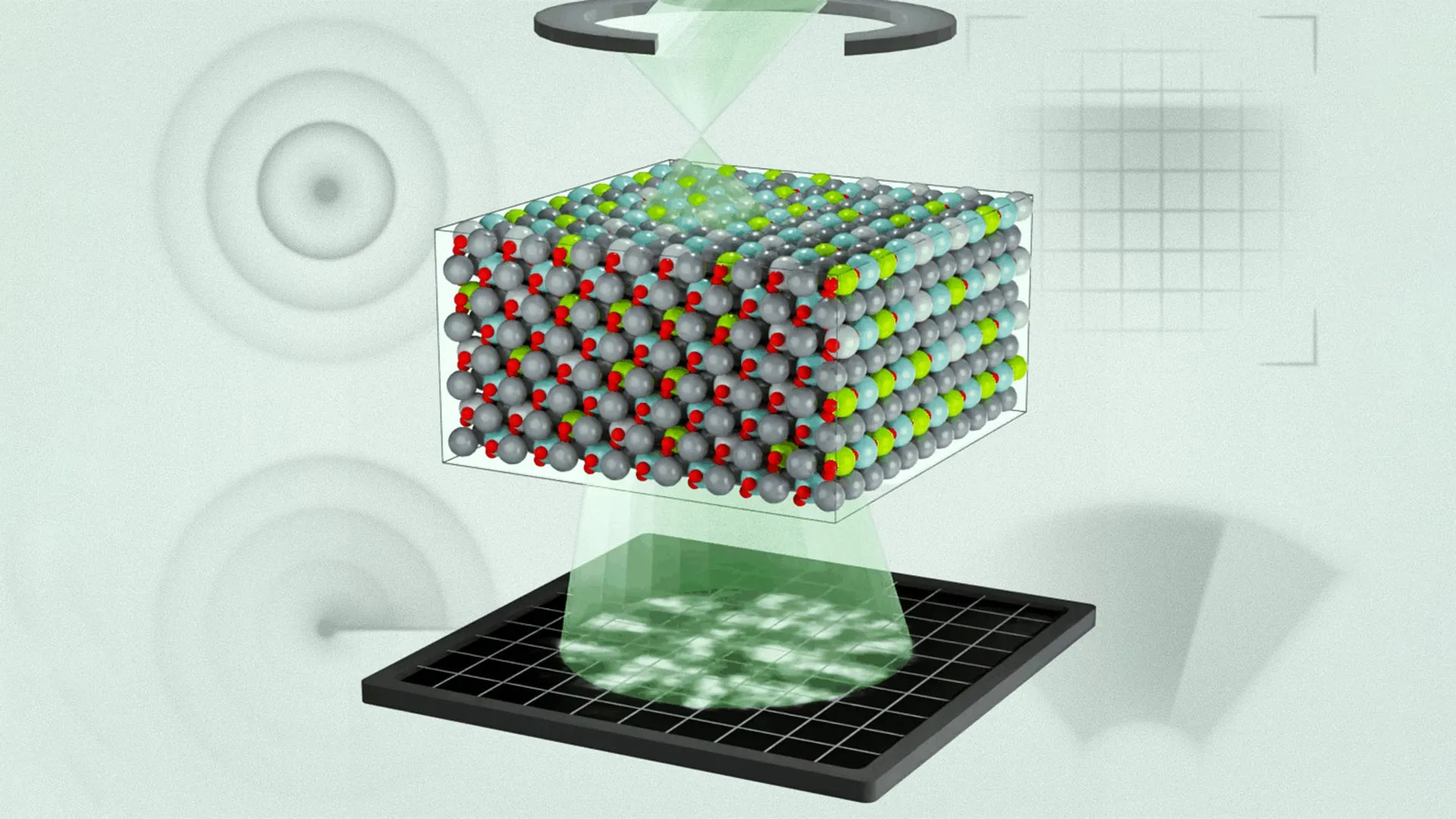
The paper's scope is what separates it from earlier one-off demonstrations. The method produced improved designs across quantum optics, where it found entanglement-generating configurations researchers had not identified; electron microscopy, where it proposed using quantum entanglement to improve imaging; and, on paper, fusion reactors, particle detectors and gravitational-wave observatories, all of which showed enhanced sensitivity in the designs the algorithm returned.
Haslinger was direct about why this works in his own field. "Human intuition in this area is often still very limited," he said. Quantum microscopy is a young discipline with few practitioners and no accumulated body of design heuristics, so there is little for intuition to draw on. The machine has no intuition either, but it does not need any — it needs an objective function and time.
The division of labor the authors describe leaves the interesting half with people. The algorithm does not decide what is worth measuring, what counts as a good result, or which constraints are physical and which are merely budgetary. Humans define the objective and the boundaries; the search fills in the middle. That is a narrower role than "AI discovers physics," and a considerably more plausible one.
The practical stake is instruments. Gravitational-wave detectors and fusion machines are decade-scale, billion-dollar builds whose performance is fixed by geometry chosen early. If a search algorithm can improve that geometry before the concrete is poured, it is worth more than any result it produces on an optical bench.