An AI That Designs Physics Experiments Beat Human-Built Setups, Nature Reports
Instead of a chatbot, the method treats lab design as a search problem over lasers, lenses and detectors. It has produced better designs for gravitational-wave detectors, fusion reactors and microscopes.
An international team has shown that artificial intelligence can propose physics experiments that outperform setups designed by people, in work published Sept. 3 in the journal Nature.
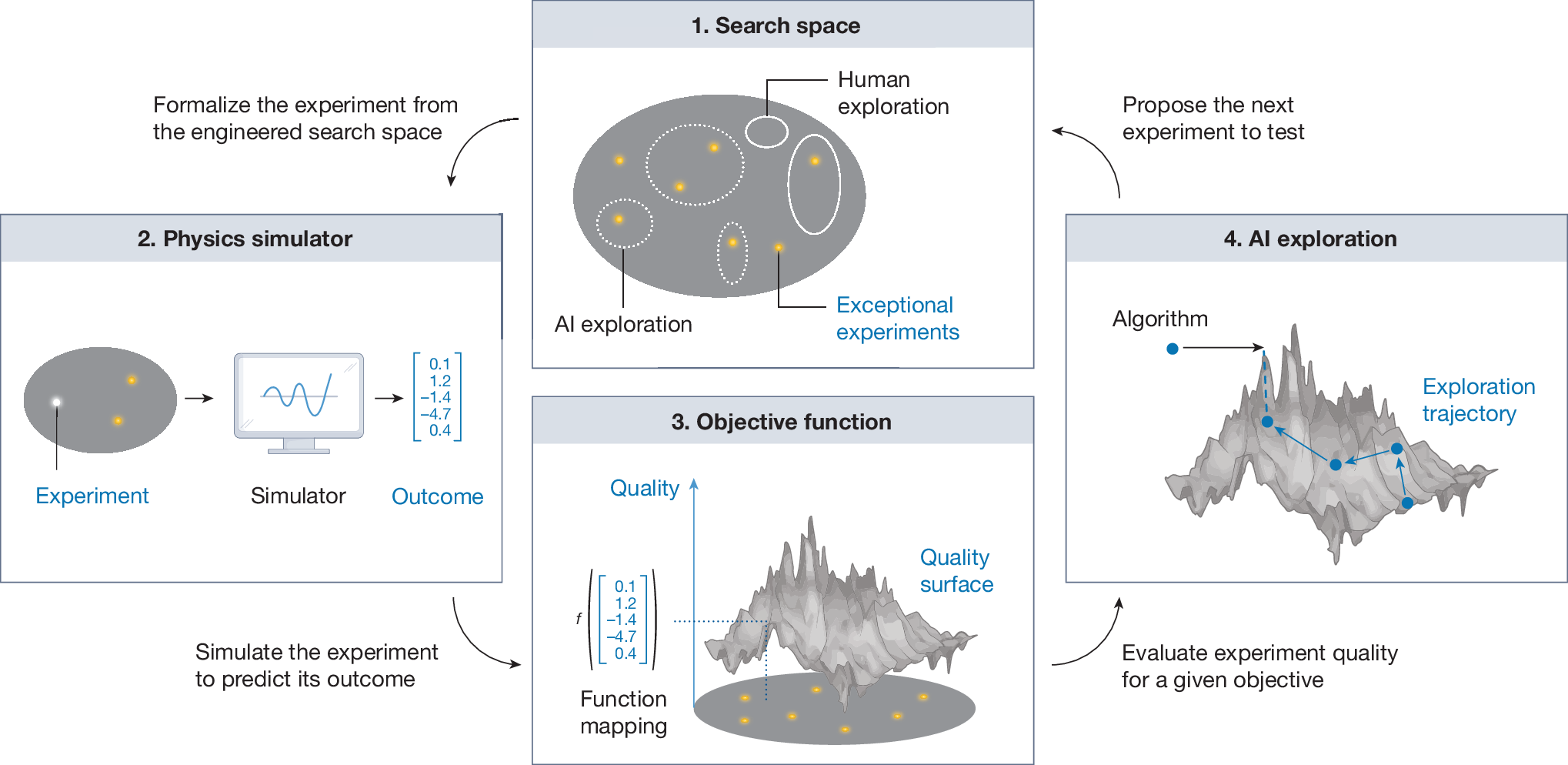
The lead researcher, Mario Krenn, now a machine learning professor at the University of Tubingen, developed the approach as a student at Vienna University of Technology. It is not a chatbot trained on patterns in text. The method treats experiment design as an optimization problem. Researchers describe mathematically the components available in the laboratory, such as lasers, lenses and detectors, along with a goal, and the algorithm searches through the combinations to find the best arrangement.
Krenn recalled how the idea first worked. "When I came into the office the next day, the program had produced a file containing a proposed solution," he said. The computer-generated setup demonstrated quantum effects that his research group had struggled to achieve by hand.
The paper describes successful uses across several fields. In quantum optics and microscopy, the software found arrangements for producing and measuring quantum states. In fusion research, it proposed improvements to reactor designs. It has also been applied to particle detector development and to boosting the sensitivity of gravitational-wave detectors, where a small gain in measurement precision can open a new range of the sky.
Philipp Haslinger of the Center for Electron Microscopy at TU Wien said the approach finds designs "a human would probably never have come up with, but which can produce significantly better images." That is the core advantage: a search algorithm is not limited by habit or by what earlier experiments looked like, so it can land on unfamiliar layouts that still obey physical law.
The authors are careful about the limits of the method. Defining what an experiment is supposed to achieve, and the constraints on cost, energy and equipment, is still human work. The software answers the question it is given; choosing which question is worth asking remains with physicists.
For working labs, the result suggests a practical change in how apparatus gets built. Rather than a graduate student spending months trying layouts, a researcher can describe the parts on the shelf and the target, let the optimizer run overnight, and then test the best candidates on the bench. The paper's examples indicate that the gains come not from faster calculation alone but from designs outside the range people typically explore.
The work also carries a caution about trust. Because the designs can look strange to human eyes, researchers still have to build and verify them in the lab rather than accept a simulation on faith. Krenn and his colleagues present the tool as an addition to the physicist's workbench, one that widens the set of ideas worth testing without removing the need for people to decide which results matter.