
Physics
Light Beams Trapped in Warm Rubidium Vapor Form Discrete Solitons for the First Time
Croatian physicists built an optical lattice out of laser interference in atomic gas and showed a beam can hold its shape inside it.
Topic
10 stories from Planck Standard. Latest: October 29, 2026.
Croatian physicists built an optical lattice out of laser interference in atomic gas and showed a beam can hold its shape inside it.
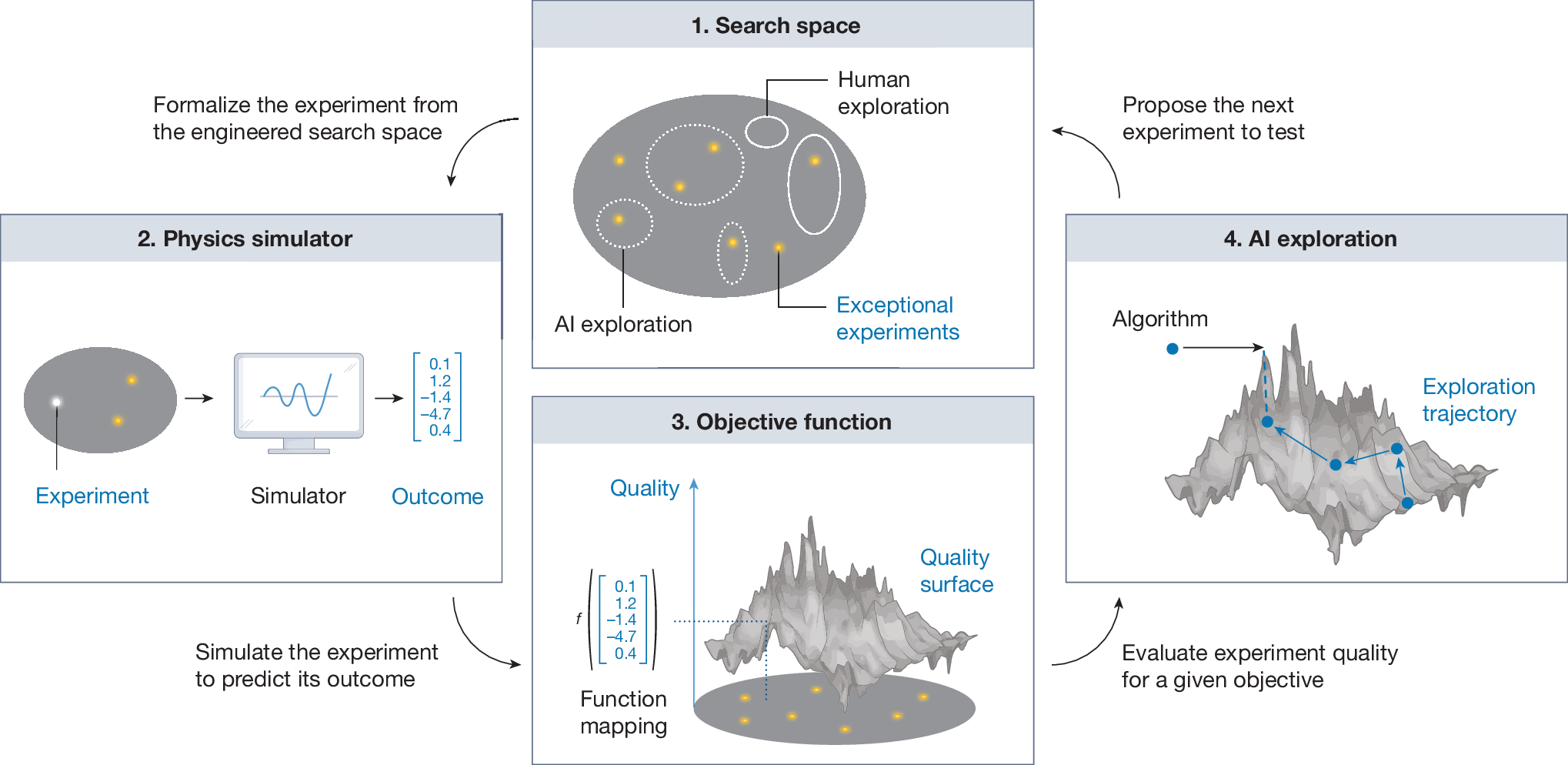
Instead of a chatbot, the method treats lab design as a search problem over lasers, lenses and detectors. It has produced better designs for gravitational-wave detectors, fusion reactors and microscopes.

Reported in Physical Review Letters, the trick is timing: match the speed of the atoms' motion to the length of the light pulse they emit together, and up to 89% of the light goes one direction. No mirrors, no lattice, no chiral structure required.

The sideways shift depends only on the light's wavelength, not on how tightly the beam is focused. For trapped-ion quantum computers it is either a new source of error or a new way to couple qubits.

Instead of coaxing fragile quantum states into existence, physicists sent bright classical light through a random optical network and counted photons one at a time on the way out, exposing hidden multiphoton quantum behavior with 861 measurable components that survives noise and loss.

A Nature paper from Mario Krenn's group shows algorithms designing setups for quantum optics, electron microscopy, gravitational-wave detectors and fusion machines that beat the human versions.

A Fresnel lens, a cone-shaped concentrator and a millimeter of crystal produced photon pairs 94% faithful to a perfect entangled state — and they violated Bell's inequality.
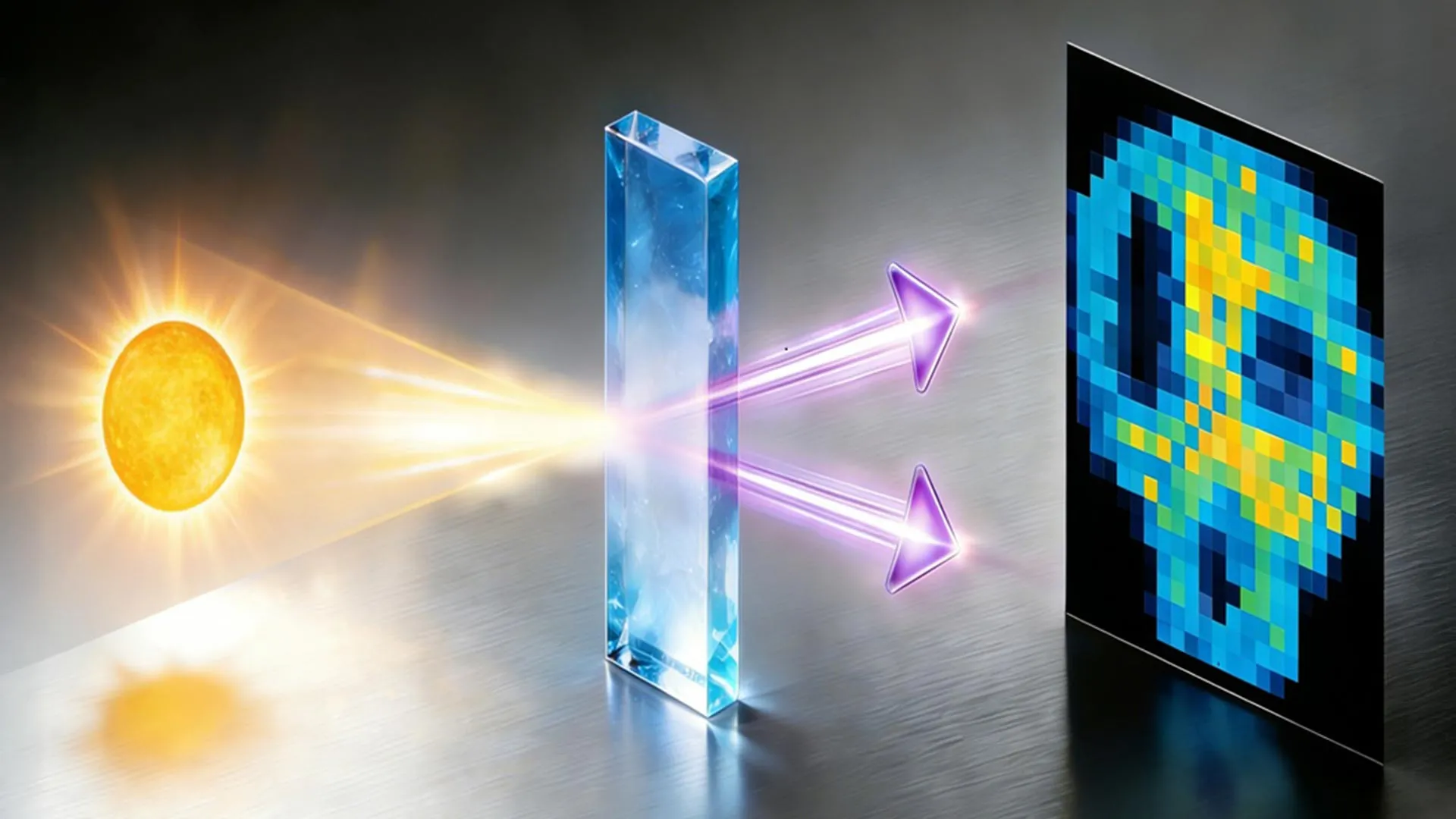
Chinese researchers generate quantum-linked photon pairs using only natural sunlight, achieving 90.7% imaging quality comparable to laboratory lasers.
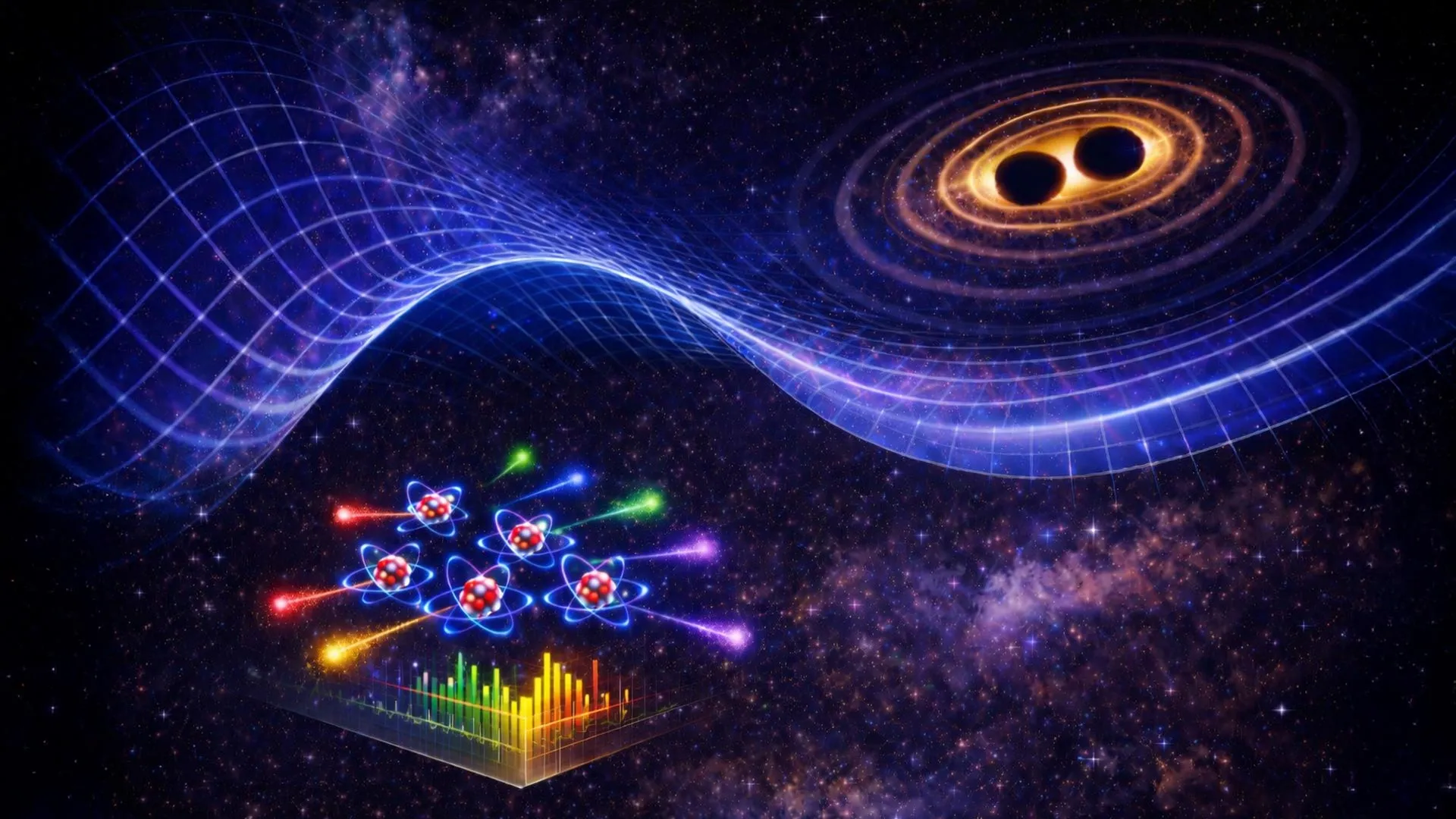
Revolutionary theory proposes detecting cosmic ripples through subtle frequency shifts in atomic light emission, potentially enabling ultra-compact detectors.

New hollow cavity design boosts brightness 20 times and nonlinear signals 25 times in atom-thick materials, overcoming major limitation.