Scientists Discover Gravitational Waves May Have Created Dark Matter in Early Universe
New research suggests ancient ripples in spacetime could have transformed into particles that became the invisible substance shaping galaxies today.
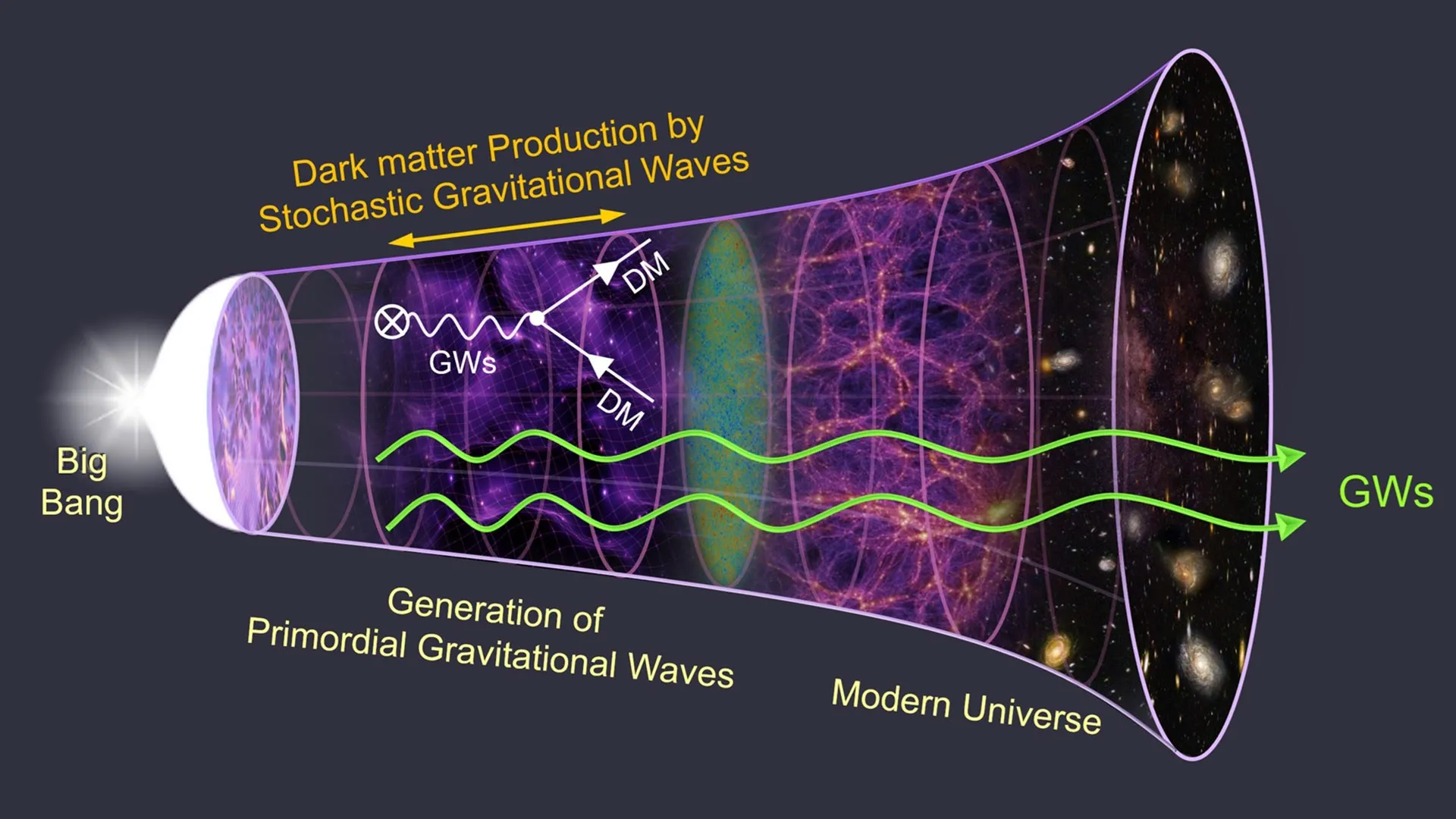
Gravitational waves from the chaotic first moments after the Big Bang may have played a crucial role in creating dark matter, according to groundbreaking new research by Professor Joachim Kopp of Johannes Gutenberg University Mainz and Dr. Azadeh Maleknejad from Swansea University. Published in Physical Review Letters, the study introduces fresh calculations pointing to a previously unexplored process in which stochastic gravitational waves could give rise to the mysterious substance that makes up roughly 23 percent of the universe. This work addresses one of physics' biggest unanswered questions about the origin of dark matter, which remains invisible but shapes the largest cosmic structures.
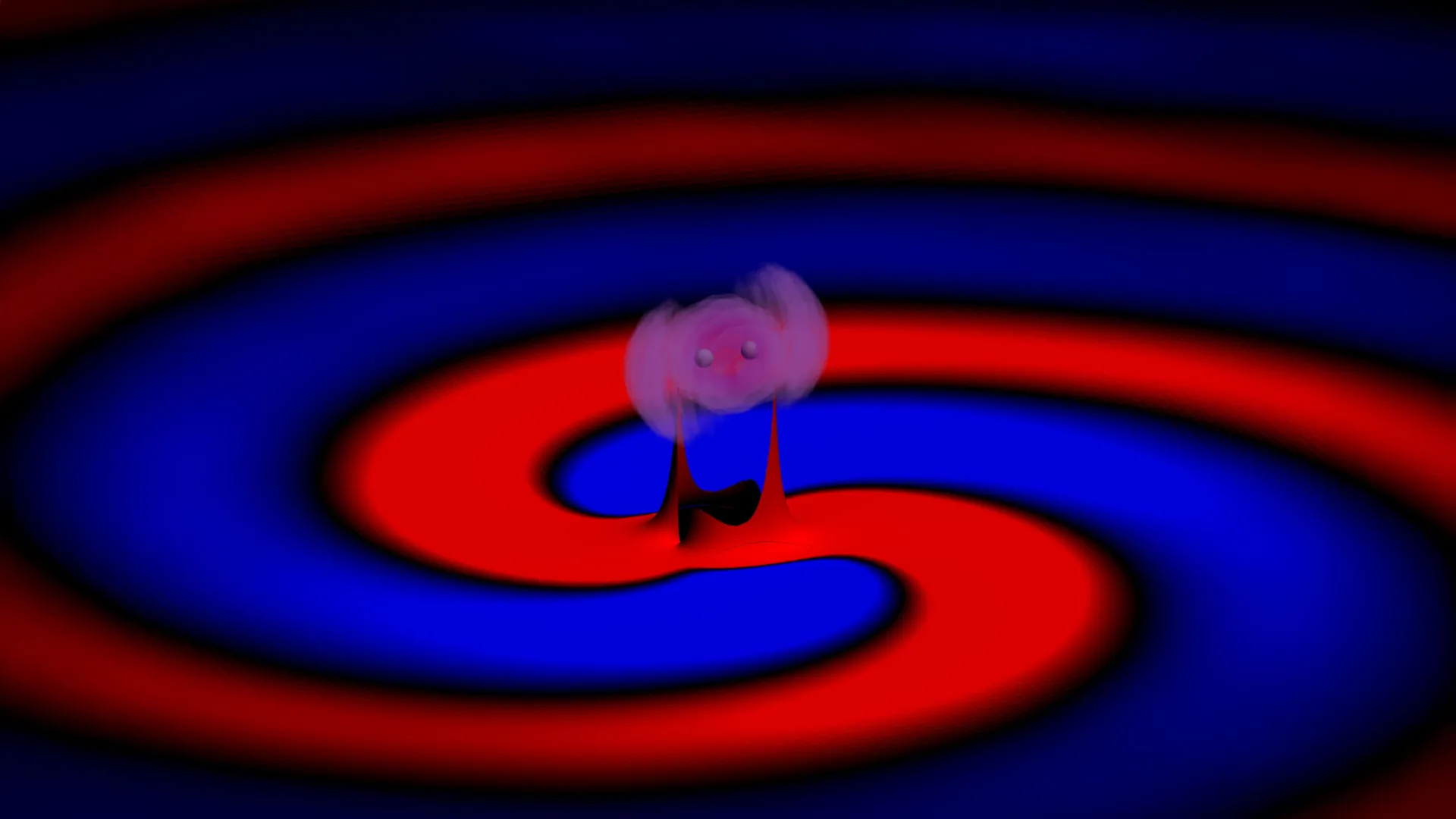
The research focuses on a specific type of gravitational waves called stochastic gravitational waves, which differ significantly from those produced by dramatic cosmic events like black hole collisions. These ancient waves are much weaker and form part of the background signal that fills the universe, dating back to the earliest phases after the Big Bang. Many were generated during key moments in cosmic history, including phase transitions as the universe cooled or from primordial magnetic fields that existed in the universe's infancy.
According to the study, these early gravitational waves could have produced fermions that initially had little or no mass. Fermions are a broad class of particles that includes familiar examples such as electrons, protons, and neutrons. The researchers propose that these early fermions may have later gained mass and evolved into the dark matter particles that exist today. This represents a completely new mechanism of dark matter production that has not been researched before, offering a fresh perspective on how the invisible substance came to dominate the cosmic matter budget.
The implications of this research extend far beyond theoretical physics, potentially reshaping our understanding of the universe's earliest moments and the fundamental processes that created the matter we observe today. Dark matter's influence on galaxy formation and cosmic structure makes understanding its origin crucial for comprehending how the universe evolved from a hot, dense state to the complex cosmic web of galaxies and dark matter halos we see today. The research suggests that gravitational waves, long considered merely ripples in spacetime, may have been active participants in creating the very fabric of cosmic matter.
The next phase of research will involve moving beyond analytical estimates to conduct detailed numerical calculations that can improve the accuracy of these predictions. Scientists also plan to investigate additional possible effects of gravitational waves in the early universe, potentially uncovering more connections between these fundamental spacetime disturbances and the formation of matter. As gravitational wave detection technology continues to advance, future observations may be able to test these theoretical predictions and provide direct evidence for this novel mechanism of dark matter creation.